
As an Amazon Associate we earn from qualifying purchases. Learn more about our affiliate disclaimer.
Naniwa vs Shapton is the premium whetstone comparison. Naniwa’s Professional and Chosera stones are thick ceramic stones on a base with a smooth, slightly softer feel. Shapton’s Kuromaku and GlassStone lines are very hard splash-and-go stones that cut fast and dish slowly. Both make excellent edges on kitchen knives.
Here is how to choose between them.
Quick Answer: The Naniwa vs Shapton
- Best Naniwa StoneNaniwa #1000 Super Ceramic Water Stone with Base
- Best Shapton StoneShapton Kuromaku #1000 (K0702, Orange)
- Best Value NaniwaNaniwa Goken #1000 Medium Whetstone
- Best Shapton FinisherShapton Kuromaku #5000 (K0704)
- Best Naniwa FinisherNaniwa Pure White #8000 Super Finishing Stone
- Best Thin ShaptonShapton GlassStone #1000 (11 micron)
Choose Naniwa, such as the #1000 Professional on its base, if you like a thick stone with smooth feedback that lasts a long time. Choose Shapton, such as the Kuromaku #1000 and #5000, if you want fast, hard stones that need only a splash of water and stay flat. Naniwa’s Goken line is a lower-cost alternative.
Naniwa vs Shapton Comparison Table
| Product | Best For | Type | Key Feature | Buy |
|---|---|---|---|---|
| Naniwa #1000 | Best Naniwa Stone | Ceramic whetstone | #1000 medium, 210 x 70 x 25 mm | Check Price |
| Shapton Kuromaku 1000 | Best Shapton Stone | Ceramic whetstone | #1000 medium, 210 x 70 x 15 mm | Check Price |
| Naniwa Goken 1000 | Best Value Naniwa | Ceramic whetstone | #1000, 210 x 70 x 15 mm | Check Price |
| Shapton Kuromaku 5000 | Best Shapton Finisher | Ceramic finishing stone | #5000 finishing with storage case | Check Price |
| Naniwa Pure White 8000 | Best Naniwa Finisher | Finishing stone | #8000 finishing after medium sharpening | Check Price |
| GlassStone 1000 | Best Thin Shapton | Glass-backed stone | #1000, 11 µm, 8.25 x 2.75 in. | Check Price |
6 Picks: Naniwa and Shapton Stones
Three Naniwa and three Shapton stones.

1. Naniwa #1000 Super Ceramic Water Stone with Base
1. Naniwa #1000.
👍 Pros & Cons
Pros
- The core grit of any whetstone kit
- Comes with a base and dressing stone
- Generous 25 mm thickness
Cons
- Single grit; budget for a finishing stone
- Higher price than combination stones
📄 Detailed Review
- Grit: #1000 (medium grinding)
- Size: 210 x 70 x 25 mm
- Includes: Base + 65 x 47 x 32 mm dressing stone
- Origin: Japan import
This Naniwa #1000 is a medium grinding stone in the same 210 x 70 x 25 mm format as the SS series, supplied with a base and dressing stone.
A #1000 is where most kitchen sharpening happens, so this is the Naniwa stone to buy first.

2. Shapton Kuromaku #1000 (K0702, Orange)
2. Kuromaku 1000.
👍 Pros & Cons
Pros
- Cuts fast enough to double as a coarse stone
- Case doubles as a stone holder
- Hugely popular first stone
Cons
- Single grit only
- Thin compared with soaking stones
📄 Detailed Review
- Grit: #1000 (medium)
- Size: 210 x 70 x 15 mm
- Item: K0702
- Use: Rough or medium sharpening
Shapton describes the orange K0702 as a #1000 medium stone with enough bite to be used for rough or medium sharpening.
It is one of the most recommended first whetstones for kitchen knives because it cuts quickly and stays relatively flat.

3. Naniwa Goken #1000 Medium Whetstone
3. Goken.
👍 Pros & Cons
Pros
- Lower-cost entry to Naniwa
- Full 210 x 70 mm surface
- Suits stainless kitchen knives
Cons
- Thinner than Chosera stones
- No base mentioned
📄 Detailed Review
- Grit: #1000
- Size: 210 x 70 x 15 mm
- Uses: Kitchen knives, scissors, stainless blades, chisels
- Line: Goken (for professionals)
Goken is a newer Naniwa line aimed at professionals. This #1000 measures 210 x 70 x 15 mm and is listed for kitchen knives, scissors and stainless blades.
It is a good-value way to try Naniwa’s feel before investing in Chosera.

4. Shapton Kuromaku #5000 (K0704)
4. Kuromaku 5000.
👍 Pros & Cons
Pros
- Strong polishing power for a finishing stone
- Case doubles as a holder
- Feels less “slick” than many finishers
Cons
- Thin stone; flatten gently
- Needs a #1000–#2000 before it
📄 Detailed Review
- Grit: #5000 (finishing)
- Size: 210 x 70 x 15 mm
- Item: K0704
- Extras: Storage case doubles as holder
Shapton says the K0704 avoids the overly smooth feel of traditional finishing stones while polishing well. The storage case can be used as a holder.
It is a natural partner for the orange #1000.

5. Naniwa Pure White #8000 Super Finishing Stone
5. Pure White.
👍 Pros & Cons
Pros
- High-grit finish from a major Japanese maker
- Good step after a #1000–#3000
- Produces a polished bevel
Cons
- Limited stock at times
- Few details in the listing
📄 Detailed Review
- Grit: #8000
- Model: IF-0001
- Use: Finishing after medium sharpening
- Brand: Naniwa (Japan)
The Pure White #8000 is Naniwa’s super-finishing stone, listed for use after medium sharpening.
It suits cooks who want a polished, refined edge without jumping to five-figure grits.

6. Shapton GlassStone #1000 (11 micron)
6. GlassStone.
👍 Pros & Cons
Pros
- Splash-and-go convenience
- Long-lasting abrasive
- Glass backing keeps it usable when thin
Cons
- Hard feel takes getting used to
- Higher cost than Kuromaku #1000
📄 Detailed Review
- Grit: #1000 (11 micron class)
- Size: 8.25 x 2.75 in.
- Soaking: No need to soak
- Wear: Lasts longer than typical waterstones
Shapton’s GlassStone #1000 is in the 11 micron class, measures 8.25 x 2.75 inches and needs no soaking.
It is the most popular GlassStone grit and a good first stone in the series.
How We Chose the Naniwa vs Shapton
For this naniwa vs shapton guide, we compared whetstones, diamond plates, oil stones and knife sharpeners listed on Amazon US by abrasive type, grit, size, hardness, angle control, speed and price, using product details from the listings and makers rather than a hands-on lab test. We then looked at common praise and complaints in buyer feedback for edge quality, wear, dishing, mess and learning curve. Prices and listings change often, so check the current listing before you buy.
Keep fingers behind the edge, sharpen on a stable non-slip base, keep metal swarf away from food, and wash knives before they touch food again, and follow USDA Food Safety and Inspection Service cleanliness guidance for kitchen hygiene. Our method is explained on the How We Test page.
Naniwa vs Shapton: Key Differences
Feel
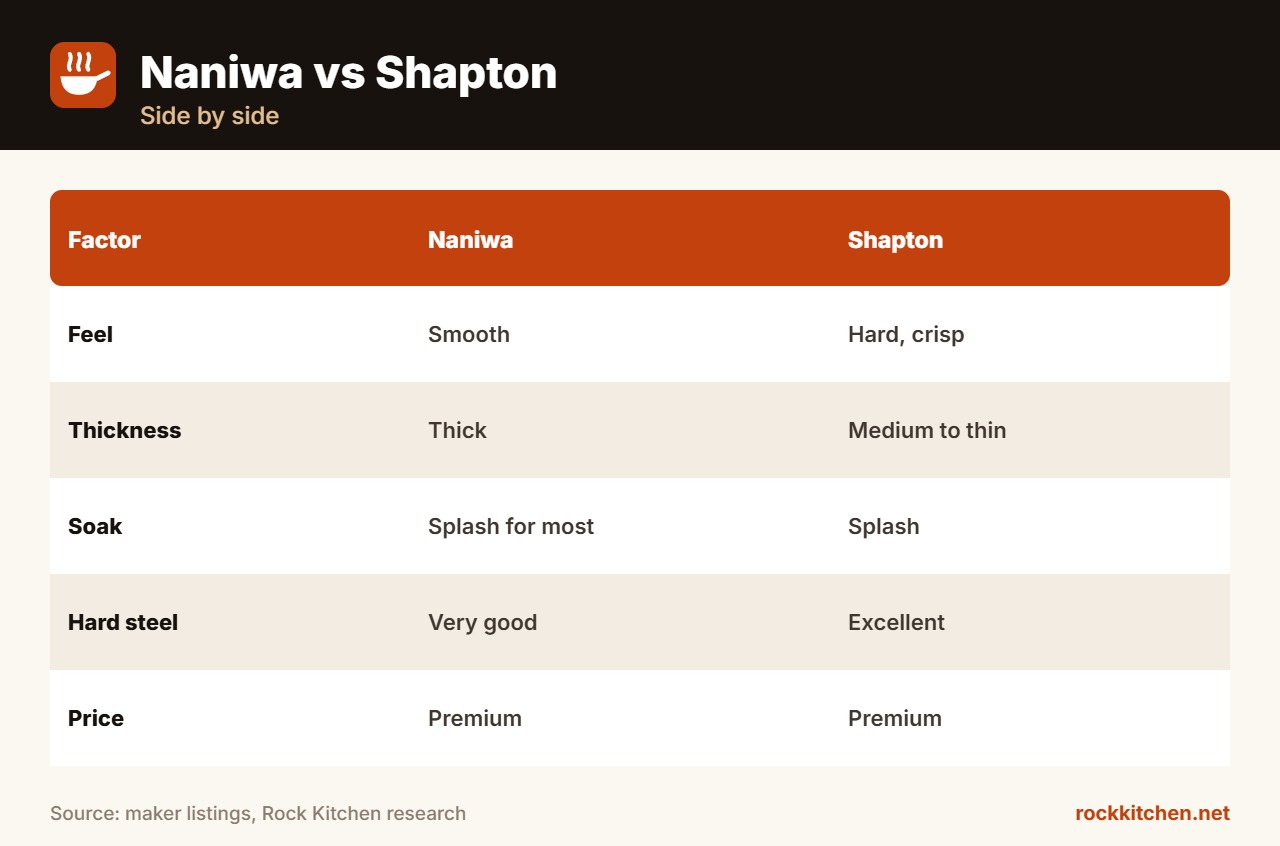
Naniwa Professional stones feel smoother and slightly softer; Shapton feels hard and crisp.
Speed
Both are fast; Shapton is often a little quicker on hard steel.
Soaking
Most Naniwa Professional and Shapton stones are splash-and-go; some Naniwa lines need soaking.
Thickness
Naniwa Professional stones are thick (about 25 mm); Kuromaku about 15 mm; GlassStone is thinner.
Price
Both are premium; compare per-millimeter of usable stone.
Tips for Safer, Sharper Edges
- Hold a steady angle; consistency matters more than the exact number.
- Raise a small burr along the full edge before moving to a finer grit.
- Use light pressure on finishing grits.
- Flatten water stones often so they do not dish.
- Rinse and dry knives, then wipe stones clean after use.
Quick answers to common questions about naniwa vs shapton.
Frequently Asked Questions
Is Chosera the same as Naniwa Professional?
Naniwa renamed the Chosera line Professional; the stones are closely related.
Which lasts longer?
Thick Naniwa stones hold more usable material; Shapton wears slowly too.
Can Naniwa Professional stones be soaked?
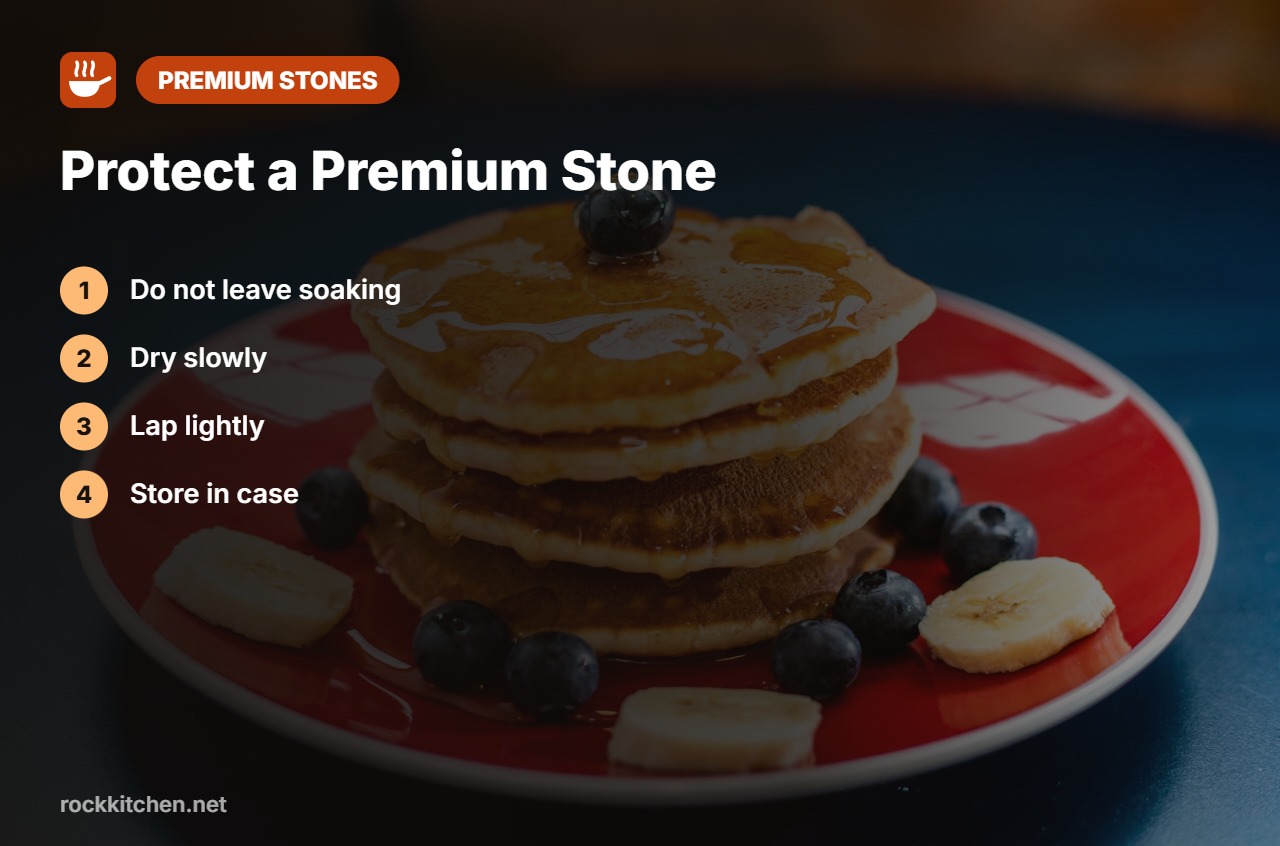
Naniwa advises against long soaking for many lines; check the label.
Which is better for beginners?
Either; beginners often prefer Shapton’s easy no-soak use.
Final Verdict
Our Naniwa vs Shapton verdict: the Naniwa #1000 is the smooth, long-lasting choice, while the Shapton Kuromaku #1000 is the fast, hard choice.
Related Guides
Keep exploring knives and sharpening with these guides:
Prices and availability change often. Check the current listing on Amazon before you buy.