
As an Amazon Associate we earn from qualifying purchases. Learn more about our affiliate disclaimer.
Flattening stone vs lapping plate is the next question once your whetstone starts to dish. A flattening stone is a coarse silicon carbide block, often grooved, that you rub against the whetstone; it is cheap but wears out of flat itself. A lapping plate is a diamond-coated steel or aluminum plate that stays flat and works faster.
Here is which one to buy.
Quick Answer: The Flattening Stone vs Lapping Plate
- Best Lapping PlateDMT Dia-Flat 10 x 4 in. Diamond Lapping Plate
- Best Flattening StoneSharp Pebble Flattening Stone, Dual Grit 120/320
- Best Value Lapping PlateSHARPAL 145H 10 x 4 in. Diamond Lapping Plate
- Best Japanese Flattening StoneNaniwa #220 Straightening Stone (IO-1142)
- Best Atoma for LappingAtoma #140 Coarse Diamond Sharpener
- Best Large Flattening StonePOWERTEC Large Flattening Stone, 120/320 Dual Grit with Diamond Grooves
If you own one or two water stones and sharpen now and then, a grooved flattening stone like the Sharp Pebble 120/320 is enough. If you sharpen often or own several stones, a diamond lapping plate like the DMT Dia-Flat, SHARPAL 145H or Atoma #140 is faster, stays truly flat and lasts much longer.
Flattening Stone vs Lapping Plate Comparison Table
| Product | Best For | Type | Key Feature | Buy |
|---|---|---|---|---|
| DMT Dia-Flat | Best Lapping Plate | Diamond lapping plate | 95 micron / 160 mesh, 40 sq. in. surface | Check Price |
| Sharp Pebble 120/320 Flattener | Best Flattening Stone | Flattening stone | Grooved silicon carbide, two grits | Check Price |
| SHARPAL 145H | Best Value Lapping Plate | Diamond lapping plate | 220 grit (60 µm), flat to ±0.002 in. | Check Price |
| Naniwa #220 flattening stone | Best Japanese Flattening Stone | Flattening stone | #220 for truing whetstones | Check Price |
| Atoma #140 | Best Atoma for Lapping | Diamond plate | #140 coarse diamond for reshaping and lapping | Check Price |
| POWERTEC Large Flattener | Best Large Flattening Stone | Flattening stone | Large grooved flattener | Check Price |
6 Picks: Flattening Stones and Lapping Plates
Three diamond lapping plates and three flattening stones.
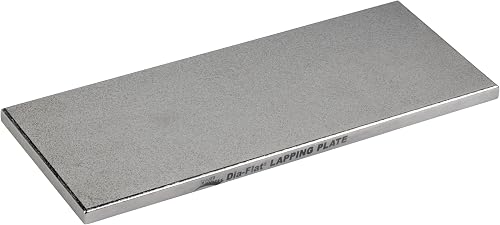
1. DMT Dia-Flat 10 x 4 in. Diamond Lapping Plate
1. Dia-Flat.
👍 Pros & Cons
Pros
- Purpose-built for flattening whetstones
- Large surface flattens long stones in fewer strokes
- Hardcoat designed for long life
Cons
- Too coarse for sharpening knives
- Premium price compared with single-grit plates
📄 Detailed Review
- Size: 10 x 4 in. (40 sq. in. surface)
- Grit: 95 micron / 160 mesh
- Coating: Diamond Hardcoat
- Flattens: Waterstones, oilstones, Arkansas stones
The Dia-Flat is DMT’s dedicated lapping plate. Its 10 by 4 inch, 40-square-inch surface uses an aggressive 95 micron (160 mesh) diamond that flattens waterstones, oilstones and Arkansas stones.
If your sharpening routine revolves around waterstones, this is a tool you buy once. The wide surface covers a full-size stone so you can flatten in long, even strokes.

2. Sharp Pebble Flattening Stone, Dual Grit 120/320
2. Sharp Pebble.
👍 Pros & Cons
Pros
- Cheap
- Two grits
Cons
- Wears and dishes itself over time
- Messy
📄 Detailed Review
- Grit: 120 and 320
- Design: Grooved
- Brand: Sharp Pebble
A cheap grooved flattening stone for water stones.
Best budget flattener.
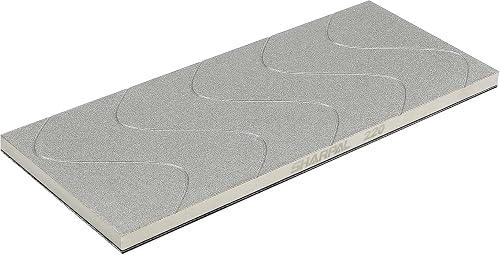
3. SHARPAL 145H 10 x 4 in. Diamond Lapping Plate
3. SHARPAL.
👍 Pros & Cons
Pros
- Stated flatness tolerance of ±0.002 in.
- Large surface flattens big stones
- Cheaper than most premium lapping plates
Cons
- Single grit only
- Not intended as a knife-sharpening surface
📄 Detailed Review
- Grit: Extra coarse 220 (60 µm)
- Size: 10 x 4 in.
- Flatness: ±0.002 in. (0.05 mm)
- Use: Flattening natural and synthetic stones
SHARPAL’s 145H is a dedicated flattener: a 10 by 4 inch plate with 220 grit (60 micron) monocrystalline diamond, precision ground to ±0.002 inch.
SHARPAL says the surface is 60% larger than standard plates, which helps when you flatten wide or long stones.
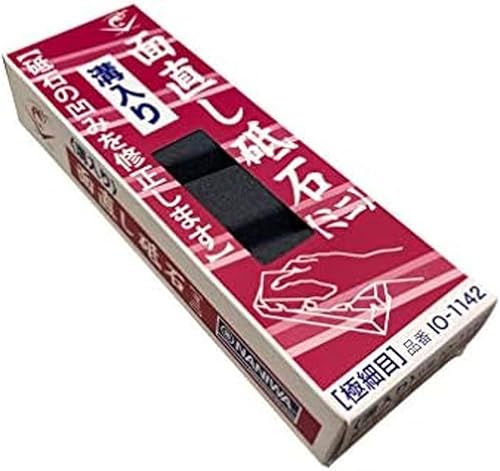
4. Naniwa #220 Straightening Stone (IO-1142)
4. Naniwa #220.
👍 Pros & Cons
Pros
- Low-cost way to keep stones flat
- Same brand as your sharpening stones
Cons
- Wears itself, unlike a diamond plate
- Coarse for very fine stones
📄 Detailed Review
- Grit: #220
- Model: IO-1142
- Use: Straightening (flattening) whetstones
- Brand: Naniwa
The IO-1142 is a #220 straightening stone used to true the surface of whetstones.
It is an inexpensive alternative to a diamond plate, though it will slowly wear as it works.
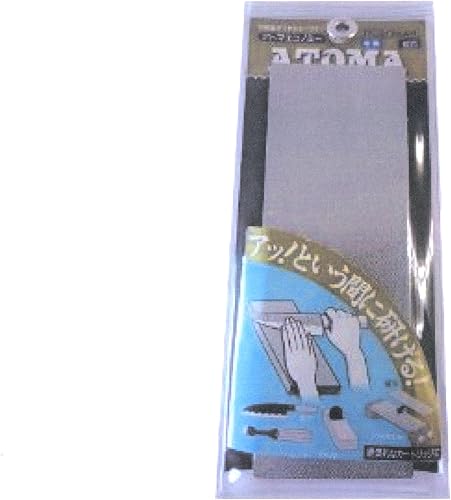
5. Atoma #140 Coarse Diamond Sharpener
5. Atoma #140.
👍 Pros & Cons
Pros
- Very fast metal removal for chipped or neglected edges
- Coarse enough to flatten dished coarse and medium whetstones quickly
- Diamond surface does not wear hollow like a soft stone
Cons
- Far too aggressive for routine kitchen-knife touch-ups
- Leaves a deep scratch pattern that needs a medium stone to refine
📄 Detailed Review
- Brand: Atoma (Tsuboman, Japan)
- Grit: #140 coarse
- Abrasive: Diamond
- Use: Edge repair, flattening coarse stones
The #140 is the roughest grade in the Atoma line, and it is the plate people reach for when an edge needs real repair: a chipped heel, a broken tip or a bevel that has been ground at the wrong angle for years. It also works as a heavy lapping plate for coarse waterstones that have dished badly.
For a kitchen setup, think of it as a specialist. Most cooks will only need it a few times a year, and they should always follow it with a #400–#1000 surface before the finishing stone.

6. POWERTEC Large Flattening Stone, 120/320 Dual Grit with Diamond Grooves
6. POWERTEC.
👍 Pros & Cons
Pros
- Big surface
- Cheap
Cons
- Wears over time
📄 Detailed Review
- Grit: 120 and 320
- Size: Large
- Design: Grooves
A large grooved flattener for wide stones.
Large budget option.
How We Chose the Flattening Stone vs Lapping Plate
For this flattening stone vs lapping plate guide, we compared whetstones, diamond plates, oil stones and knife sharpeners listed on Amazon US by abrasive type, grit, size, hardness, angle control, speed and price, using product details from the listings and makers rather than a hands-on lab test. We then looked at common praise and complaints in buyer feedback for edge quality, wear, dishing, mess and learning curve. Prices and listings change often, so check the current listing before you buy.
Keep fingers behind the edge, sharpen on a stable non-slip base, keep metal swarf away from food, and wash knives before they touch food again, and follow USDA Food Safety and Inspection Service cleanliness guidance for kitchen hygiene. Our method is explained on the How We Test page.
Flattening Stone vs Lapping Plate: Key Differences
Flatness
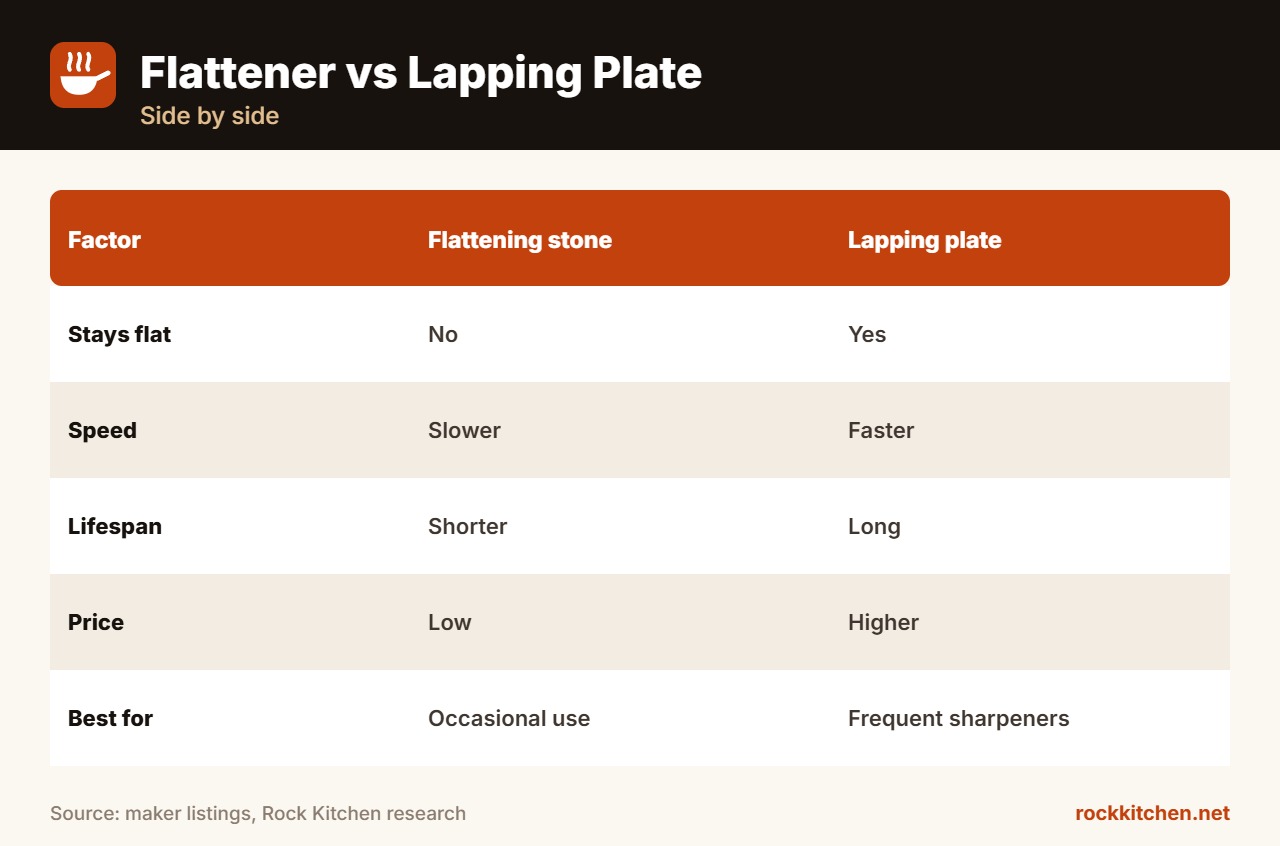
Diamond lapping plates stay flat; flattening stones slowly wear out of flat and need checking.
Speed
Diamond plates true a dished stone in a few minutes; flattening stones take longer.
Lifespan
Lapping plates last years; flattening stones wear down like the stones they flatten.
Mess
Both make slurry; work near a sink and rinse often.
Price
Flattening stones cost far less up front.
Tips for Safer, Sharper Edges
- Hold a steady angle; consistency matters more than the exact number.
- Raise a small burr along the full edge before moving to a finer grit.
- Use light pressure on finishing grits.
- Flatten water stones often so they do not dish.
- Rinse and dry knives, then wipe stones clean after use.
Quick answers to common questions about flattening stone vs lapping plate.
Frequently Asked Questions
How often should I flatten a whetstone?
Check every few sessions; light, frequent flattening is easier than big repairs.
Can I flatten on sandpaper?
Yes, wet-dry paper on glass works, but it costs more over time.
Will a diamond plate damage my stone?
No, it removes the high spots; use light pressure and water.
Do I need to flatten splash-and-go stones?
Yes, all water stones dish with use.
Final Verdict
Our flattening stone vs lapping plate verdict: the DMT Dia-Flat is the long-term buy, while the Sharp Pebble flattener is fine for occasional sharpeners.
Related Guides
Keep exploring knives and sharpening with these guides:
Prices and availability change often. Check the current listing on Amazon before you buy.