

As an Amazon Associate we earn from qualifying purchases. Learn more about our affiliate disclaimer.
Stone vs wood mortar and pestle compares the two oldest mortar materials. Stone mortars, usually granite or marble, are heavy and hard, so they grind dry spices and make smooth pastes. Wooden mortars are light and softer, so they suit mashing garlic, herbs, plantains and pounding foods like fufu, but they absorb oils and smells.
Here is which one fits your cooking.
Quick Answer: The Stone vs Wood Mortar and Pestle
- Best Stone MortarChefSofi Mortar and Pestle Set, Unpolished Granite, 2 Cups (Gray)
- Best Wooden MortarIMUSA Wood Mortar and Pestle, Large
- Best Large StoneChefSofi Extra Large Mortar and Pestle Set, Unpolished Granite, 5 Cups (Gray)
- Best Olive WoodNaturally Med Olive Wood Rustic Mortar and Pestle
- Best MarbleGusto Nostro Natural Marble Mortar and Pestle Set, 6 Inch
- Best for Fufu and MashingIMUSA Chinaberry Wood Mortar and Pestle, XL
Pick a granite mortar like ChefSofi for spices, curry pastes and pesto. Pick a wooden mortar like the IMUSA large or an olive wood set for mashing garlic and herbs, serving, and West African or Latin American dishes that call for a wooden pilón.
Stone vs Wood Mortar and Pestle Comparison Table
| Product | Best For | Type | Key Feature | Buy |
|---|---|---|---|---|
| ChefSofi 2-Cup | Best Stone Mortar | Unpolished granite mortar | 2 cups (470 ml), unpolished interior | Check Price |
| IMUSA Wood Large | Best Wooden Mortar | Wooden mortar | 4 in. wide, curved base | Check Price |
| ChefSofi 5-Cup | Best Large Stone | Extra-large granite mortar | 5 cups (1,170 ml) with two pestles | Check Price |
| Naturally Med Olive Wood | Best Olive Wood | Olive wood mortar | About 4.7 in., handmade Mediterranean olive wood | Check Price |
| Gusto Nostro 6 In. Marble | Best Marble | Marble mortar and pestle | Natural marble bowl, 6 in. | Check Price |
| IMUSA Wood XL | Best for Fufu and Mashing | Large wooden mortar | 5 in. wide, high walls | Check Price |
6 Picks: Stone and Wooden Mortars
Three stone and three wooden sets.

1. ChefSofi Mortar and Pestle Set, Unpolished Granite, 2 Cups (Gray)
1. Granite.
👍 Pros & Cons
Pros
- Rough unpolished bowl grips spices and herbs
- Heavy enough to stay put while you pound
Cons
- Needs seasoning with rice before first use
📄 Detailed Review
- Material: Unpolished granite
- Capacity: 2 cups (470 ml)
- Finish: Rough inside and out
- Extras: Garlic peeler and recipe guide (listing)
ChefSofi is the most-reviewed granite mortar on Amazon US, and the 2-cup size is the one most home cooks buy.
The fully unpolished stone does the work for you: peppercorns, garlic and herbs catch on the texture instead of sliding around.

2. IMUSA Wood Mortar and Pestle, Large
2. IMUSA.
👍 Pros & Cons
Pros
- Very low price
- Light and quiet
Cons
- Smaller than it looks
- Wood can crack if soaked
📄 Detailed Review
- Material: Polished wood
- Diameter: 4 in.
- Base: Curved
- Care: Hand wash
IMUSA’s large wooden pilón is a budget favorite for garlic and herb pastes.
Keep it out of the dishwasher and dry it right away.
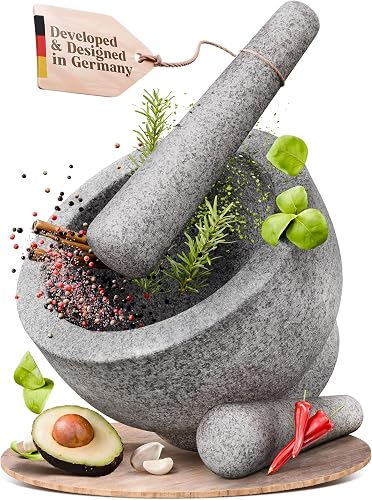
3. ChefSofi Extra Large Mortar and Pestle Set, Unpolished Granite, 5 Cups (Gray)
3. 5 cups.
👍 Pros & Cons
Pros
- Huge bowl for curry paste, guacamole and pesto
- Two pestles: a long one for pounding and a short one for grinding
- Very stable on the counter
Cons
- Very heavy to lift and wash
- Takes up real counter space
📄 Detailed Review
- Material: Unpolished granite
- Capacity: 5 cups (1,170 ml)
- Pestles: 8.5 in. and 6.5 in.
- Finish: Unpolished
The 5-cup ChefSofi is one of the largest well-reviewed granite mortars sold on Amazon.
The long 8.5 in. pestle gives you leverage for pounding fibrous lemongrass, galangal and chiles.

4. Naturally Med Olive Wood Rustic Mortar and Pestle
4. Olive wood.
👍 Pros & Cons
Pros
- Very hard, dense wood
- Each piece is unique
Cons
- Size and shape vary
- Needs oiling now and then
📄 Detailed Review
- Material: Mediterranean olive wood
- Diameter: About 4.7 in.
- Style: Rustic, handmade
- Size: About 5 x 5 x 5 in.
This rustic olive wood mortar is the best-reviewed olive wood set we found.
Olive wood is hard and tight-grained, so it resists cracking better than many woods.

5. Gusto Nostro Natural Marble Mortar and Pestle Set, 6 Inch
5. Marble.
👍 Pros & Cons
Pros
- Attractive on the counter
- Good for herbs and soft pastes
- Heavy base
Cons
- Marble can etch with lemon and vinegar
- Smoother bowl grips less
📄 Detailed Review
- Diameter: 6 in. (listing)
- Material: Marble
- Style: Natural finish
A natural marble set.
Best marble pick.

6. IMUSA Chinaberry Wood Mortar and Pestle, XL
6. XL wood.
👍 Pros & Cons
Pros
- High walls keep food in when pounding
- Made for mofongo and mangu
- Affordable
Cons
- Wood absorbs odors and stains
- Hand wash only
📄 Detailed Review
- Material: Chinaberry wood
- Diameter: 5 in.
- Size: About 5.5 x 7 x 8.5 in.
- Finish: Polished
IMUSA’s XL wooden mortar is a tall, high-walled pilón of the kind used for mofongo, mangu and garlic mojo.
Wood is gentler and quieter than stone for pounding starchy foods.
How We Chose the Stone vs Wood Mortar and Pestle
For this stone vs wood mortar and pestle guide, we compared mortars and pestles, plus the electric tools people compare them with listed on Amazon US by material, bowl size and depth, inside texture, pestle weight, stability and care, using product details from the listings and makers rather than a hands-on lab test. We then looked at common praise and complaints in buyer feedback for chipping, slipping, staining, grit and how well each one grinds. Prices and listings change often, so check the current listing before you buy.
Wash new stone mortars before first use, keep fingers clear when pounding, use a damp towel under light bowls, keep raw garlic pastes and oils chilled and use them within a few days following USDA Food Safety and Inspection Service cleanliness guidance. Our method is explained on the How We Test page.
Stone vs Wood Mortar and Pestle: Key Differences
Grinding power
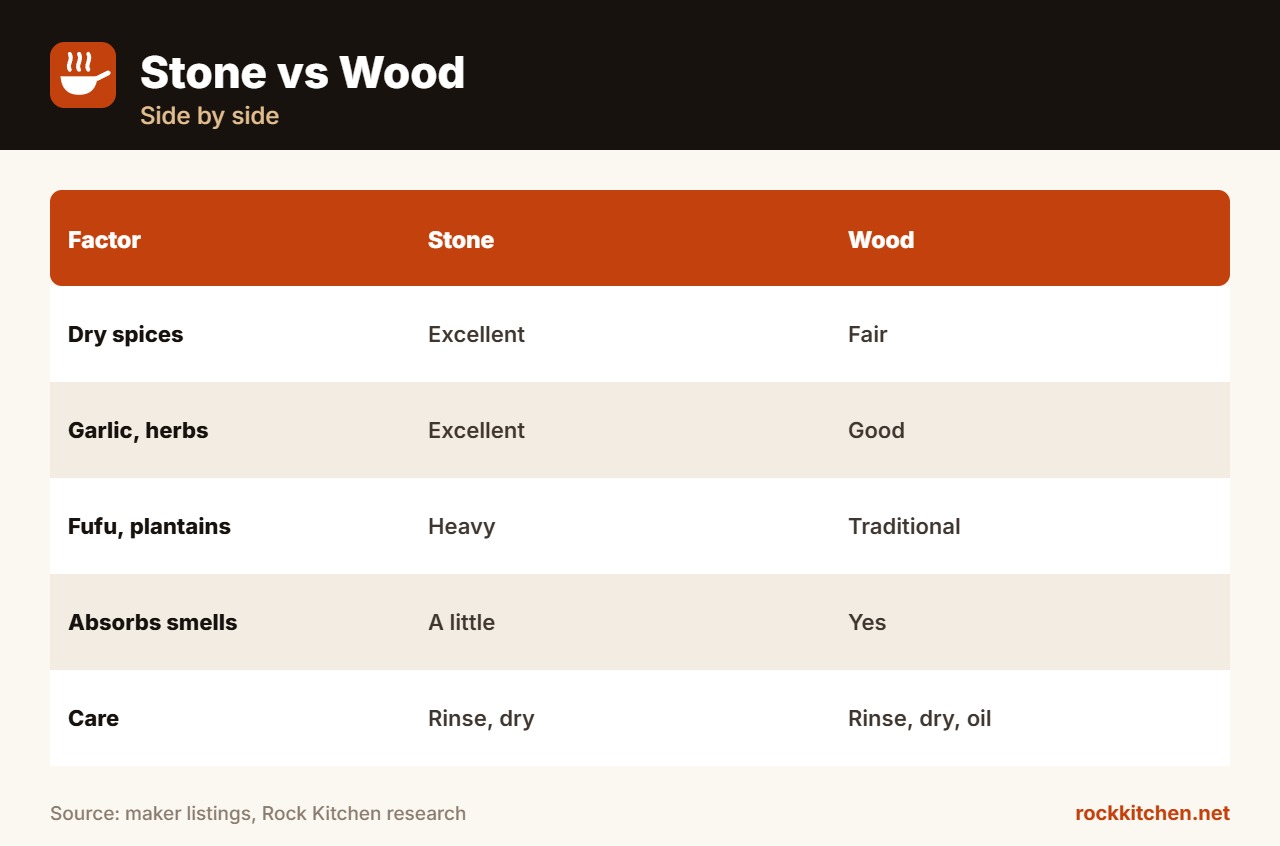
Stone is heavier and harder, so it powders dry spices; wood mostly crushes and mashes.
Odors and oils
Wood absorbs garlic and spice oils; many cooks keep wood for savory use only.
Durability
Wood can crack if soaked or dishwashed; stone can chip if dropped.
Weight
Wood is light and easy to move; stone stays put while you work.
Care
Rinse wood quickly, dry it and oil it with food-grade mineral oil now and then.
Tips for Using a Mortar and Pestle
- Season a new stone mortar by grinding a little rice, then rinse.
- Grind dry spices first, then add wet ingredients.
- Work in small batches; never fill more than a third.
- Add a pinch of coarse salt to help break down garlic and herbs.
- Rinse with warm water; skip soap on porous stone and wood.

Quick answers to common questions about stone vs wood mortar and pestle.
Frequently Asked Questions
Is stone or wood better for a mortar and pestle?
Stone for spices and pastes; wood for mashing and traditional pounded dishes.
Do wooden mortars hold bacteria?
Clean and dry them promptly; replace a wooden mortar with deep cracks.
Can I grind peppercorns in wood?
Yes, but it takes longer than in granite.
Which wood is best?
Dense hardwoods like olive, acacia and chinaberry hold up well.
Final Verdict
Our stone vs wood mortar and pestle verdict: a ChefSofi granite set is the best all-round tool, and an IMUSA wooden mortar is the better pick for mashing and pounded dishes.
Related Guides
Keep exploring mortars, grinders and mills with these guides:
Prices and availability change often. Check the current listing on Amazon before you buy.