
As an Amazon Associate we earn from qualifying purchases. Learn more about our affiliate disclaimer.
Grinding vs pounding mortar and pestle technique decides how your food turns out. Pounding is a straight up-and-down strike that cracks hard seeds and bruises fibers. Grinding is a circular pressing motion that turns cracked pieces and soft ingredients into powder or smooth paste.
Most recipes use both. Here is how, and which mortars suit each.

Quick Answer: The Grinding vs Pounding Mortar and Pestle
- Best for PoundingChefSofi Extra Large Mortar and Pestle Set, Unpolished Granite, 5 Cups (Gray)
- Best for GrindingCole and Mason Granite Mortar and Pestle, 7 Inch, Black
- Best for Thai PoundingThai Mortar and Pestle Set, Clay Bowl with Wooden Pestle
- Best for Fine GrindingHIC Kitchen Porcelain Mortar with Pour Spout and Pestle, 4.25 Inch
- Best All-RounderChefSofi Mortar and Pestle Set, Unpolished Granite, 2 Cups (Gray)
- Best Grinding BowlTIKUSAN Japanese Ceramic Suribachi and Surikogi Set with Spout, 7.1 in., Made in Japan
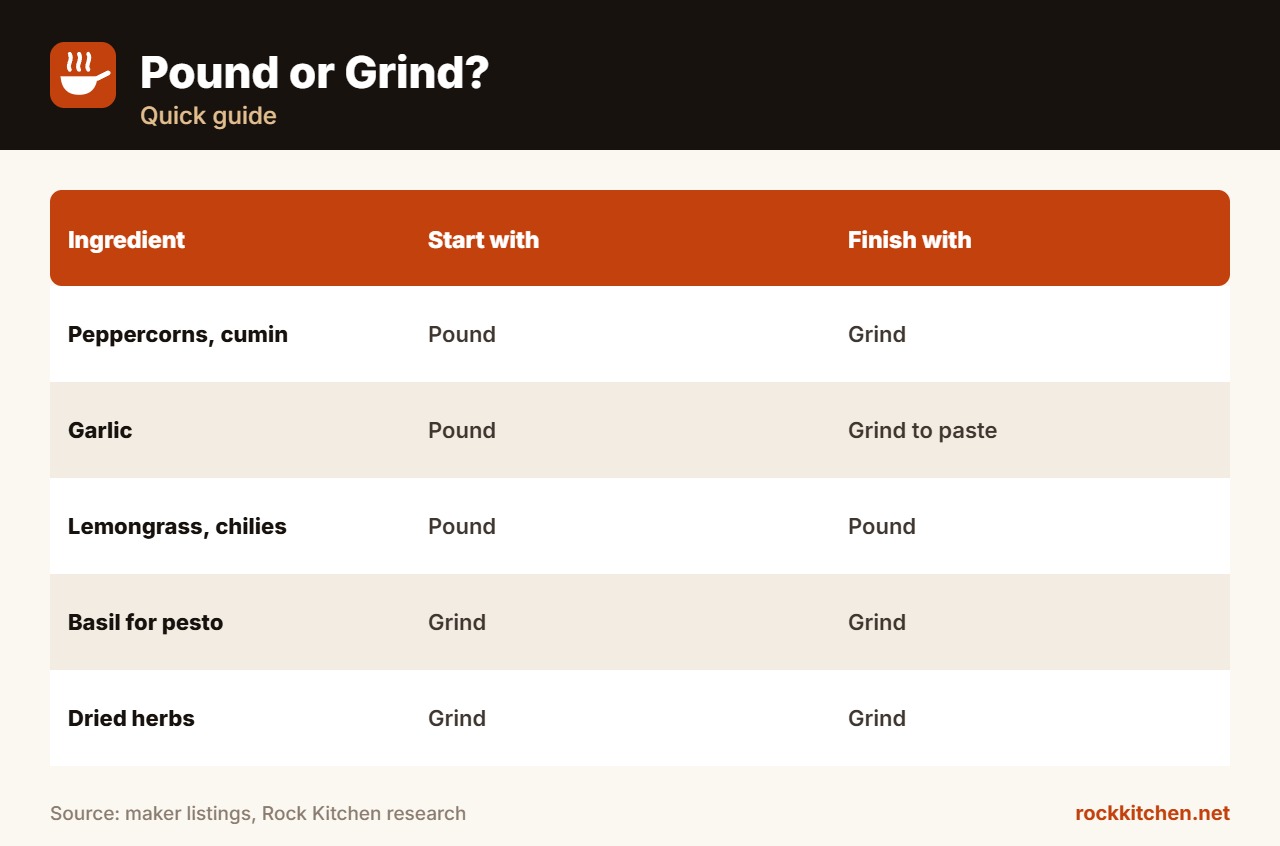
Pound first to crack peppercorns, coriander seed, lemongrass and chilies, then grind in circles to finish. Deep, heavy granite mortars like the ChefSofi 5 cup and Thai clay mortars suit pounding; wider, shallower bowls like the Cole and Mason 7 inch and porcelain mortars suit grinding.
Grinding vs Pounding Mortar and Pestle Comparison Table
| Product | Best For | Type | Key Feature | Buy |
|---|---|---|---|---|
| ChefSofi 5-Cup | Best for Pounding | Extra-large granite mortar | 5 cups (1,170 ml) with two pestles | Check Price |
| Cole & Mason 7 In. Granite | Best for Grinding | Granite mortar and pestle | Mid-size black granite set | Check Price |
| Thai Clay Krok | Best for Thai Pounding | Thai clay mortar (krok) | Clay bowl, wooden pestle | Check Price |
| HIC Porcelain with Spout | Best for Fine Grinding | Porcelain mortar | 4.25 in. with pour spout, 6.4 in. pestle | Check Price |
| ChefSofi 2-Cup | Best All-Rounder | Unpolished granite mortar | 2 cups (470 ml), unpolished interior | Check Price |
| TIKUSAN Suribachi 7.1" | Best Grinding Bowl | Japanese suribachi | Ridged interior, pouring spout | Check Price |
6 Picks for Pounding and Grinding
Mortars matched to each technique.
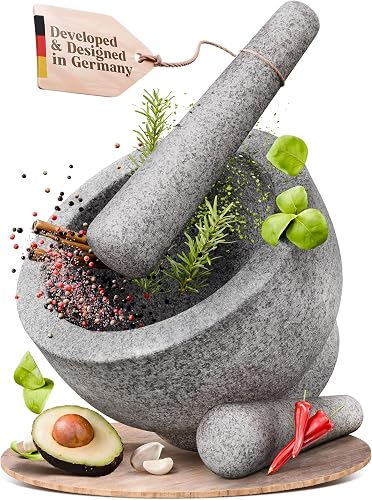
1. ChefSofi Extra Large Mortar and Pestle Set, Unpolished Granite, 5 Cups (Gray)
1. 5 cups.
👍 Pros & Cons
Pros
- Huge bowl for curry paste, guacamole and pesto
- Two pestles: a long one for pounding and a short one for grinding
- Very stable on the counter
Cons
- Very heavy to lift and wash
- Takes up real counter space
📄 Detailed Review
- Material: Unpolished granite
- Capacity: 5 cups (1,170 ml)
- Pestles: 8.5 in. and 6.5 in.
- Finish: Unpolished
The 5-cup ChefSofi is one of the largest well-reviewed granite mortars sold on Amazon.
The long 8.5 in. pestle gives you leverage for pounding fibrous lemongrass, galangal and chiles.

2. Cole and Mason Granite Mortar and Pestle, 7 Inch, Black
2. 7 in.
👍 Pros & Cons
Pros
- Good size for pastes and dressings
- Heavy and stable
- Easy to rinse
Cons
- Polished areas can let seeds slip
- Heavy to move
📄 Detailed Review
- Diameter: 7 in. (listing)
- Material: Granite
- Color: Black
The 7 in. Cole & Mason mortar.
Best all-round Cole & Mason.

3. Thai Mortar and Pestle Set, Clay Bowl with Wooden Pestle
3. Clay.
👍 Pros & Cons
Pros
- Traditional som tum style
- Wood pestle bruises rather than pulverizes
- Moderate price
Cons
- Clay can crack if knocked
📄 Detailed Review
- Material: Clay bowl, wooden pestle
- Style: Thai krok for som tum
- Care: Hand wash
A clay krok with a wooden pestle is the traditional tool for som tum because it bruises papaya without mashing it.

4. HIC Kitchen Porcelain Mortar with Pour Spout and Pestle, 4.25 Inch
4. Porcelain.
👍 Pros & Cons
Pros
- Pour spout for dressings and powders
- Long pestle for its size
Cons
- Light bowl
- Not for heavy pounding
📄 Detailed Review
- Material: Fine porcelain
- Mortar: 4.25 x 4.6 x 2.4 in.
- Pestle: 6.4 in.
- Care: Dishwasher safe
HIC’s spouted porcelain mortar makes it easy to pour sauces and spice powders.
It is dishwasher safe, unlike stone or wood.

5. ChefSofi Mortar and Pestle Set, Unpolished Granite, 2 Cups (Gray)
5. 2 cups.
👍 Pros & Cons
Pros
- Rough unpolished bowl grips spices and herbs
- Heavy enough to stay put while you pound
Cons
- Needs seasoning with rice before first use
📄 Detailed Review
- Material: Unpolished granite
- Capacity: 2 cups (470 ml)
- Finish: Rough inside and out
- Extras: Garlic peeler and recipe guide (listing)
ChefSofi is the most-reviewed granite mortar on Amazon US, and the 2-cup size is the one most home cooks buy.
The fully unpolished stone does the work for you: peppercorns, garlic and herbs catch on the texture instead of sliding around.

6. TIKUSAN Japanese Ceramic Suribachi and Surikogi Set with Spout, 7.1 in., Made in Japan
6. Suribachi.
👍 Pros & Cons
Pros
- Deep, sharp ridges
- Spout for pouring dressings
Cons
- Pricier
- Few reviews
📄 Detailed Review
- Diameter: 7.1 in.
- Made in: Japan
- Extras: Wood surikogi, spout
A Japanese-made suribachi with a spout for dressings.
Our top pick.
How We Chose the Grinding vs Pounding Mortar and Pestle
For this grinding vs pounding mortar and pestle guide, we compared mortars and pestles, plus the electric tools people compare them with listed on Amazon US by material, bowl size and depth, inside texture, pestle weight, stability and care, using product details from the listings and makers rather than a hands-on lab test. We then looked at common praise and complaints in buyer feedback for chipping, slipping, staining, grit and how well each one grinds. Prices and listings change often, so check the current listing before you buy.
Wash new stone mortars before first use, keep fingers clear when pounding, use a damp towel under light bowls, keep raw garlic pastes and oils chilled and use them within a few days following USDA Food Safety and Inspection Service cleanliness guidance. Our method is explained on the How We Test page.
Grinding vs Pounding Mortar and Pestle: How Each Works
Pounding
Short, firm strikes crack seeds and break tough fibers like lemongrass and galangal.
Grinding
Circular pressure smooths cracked spices into powder and garlic into paste.
Order
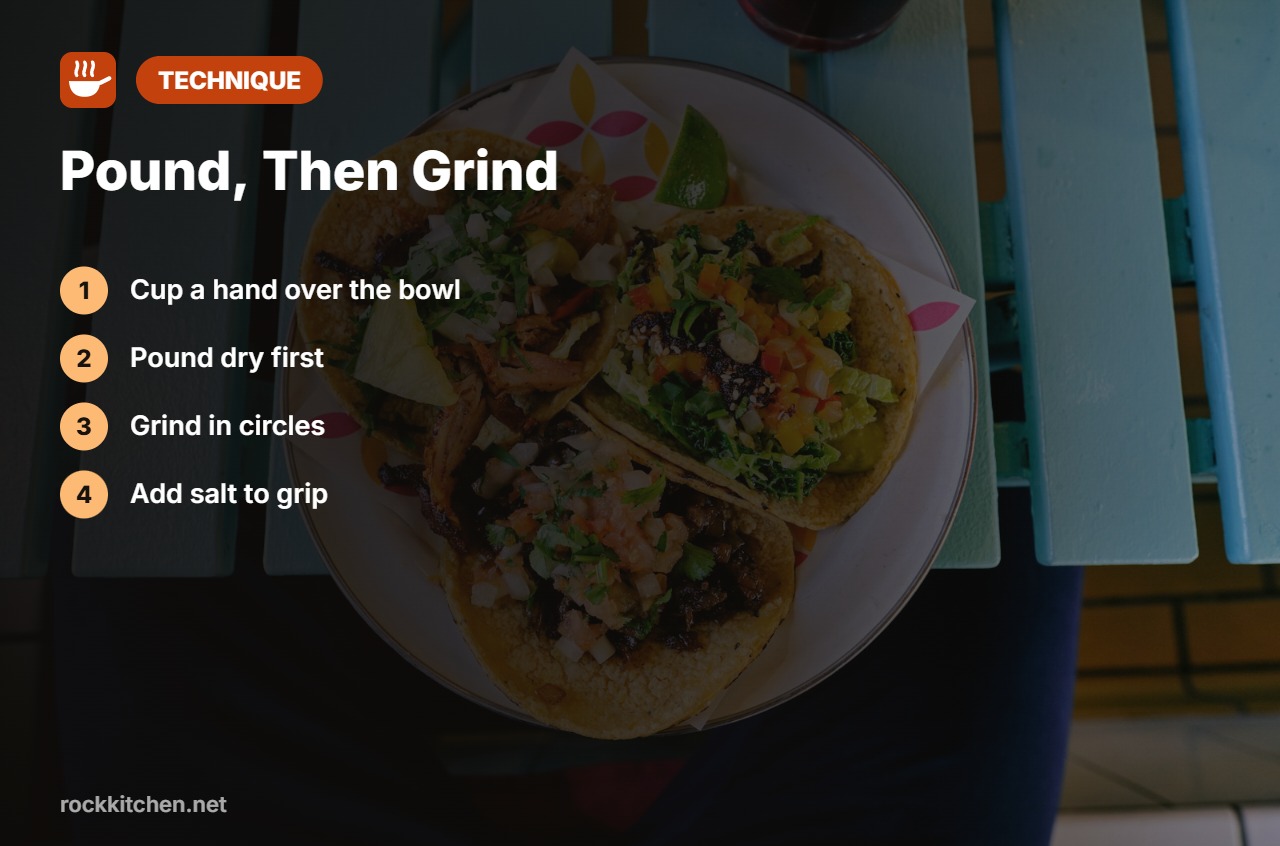
Pound hard and dry ingredients first, then add soft and wet ones and grind.
Salt
A pinch of coarse salt acts as an abrasive and speeds up both motions.
Bowl shape
Deep bowls stop splashing when pounding; wide bowls give room for grinding.
Tips for Using a Mortar and Pestle
- Season a new stone mortar by grinding a little rice, then rinse.
- Grind dry spices first, then add wet ingredients.
- Work in small batches; never fill more than a third.
- Add a pinch of coarse salt to help break down garlic and herbs.
- Rinse with warm water; skip soap on porous stone and wood.
Quick answers to common questions about grinding vs pounding mortar and pestle.
Frequently Asked Questions
Should you pound or grind with a mortar and pestle?
Usually both: pound to break things up, then grind to finish.
Why does Thai cooking pound so much?
Pounding bruises aromatics and releases oils for curry pastes and som tum.
Is grinding better for pesto?
Yes. Grinding basil against salt makes a smoother, greener pesto.
What mortar is best for pounding?
A deep, heavy granite or a tall Thai mortar.
Final Verdict
Our grinding vs pounding mortar and pestle verdict: a deep ChefSofi 5 cup mortar handles pounding best, while a wider Cole and Mason 7 inch is easier for grinding.
Related Guides
Keep exploring mortars, grinders and mills with these guides:
Prices and availability change often. Check the current listing on Amazon before you buy.