

As an Amazon Associate we earn from qualifying purchases. Learn more about our affiliate disclaimer.
Stone ground matcha vs ball milled comes down to how the tea leaf is turned into powder. Stone-ground matcha is milled slowly between granite stones, keeping the leaf cool and producing very fine particles. Ball-milled matcha is tumbled with ceramic or steel balls in a drum, which is faster and cheaper but can warm the tea and leave a wider range of particle sizes.
Below we compare the two methods on texture, heat, color, flavor and price, and suggest tools that help you get the most from either powder.
Quick Answer: The Stone Ground Matcha vs Ball Milled
- Best Whisk KitBuucup Matcha Whisk Set with Ceramic Bowl
- Best SifterMatcha Powder Sifter and Storage Tin Set (40-Mesh)
- Best Home MillKYOCERA Dried Tea and Herb Mill (Ceramic Burr)
- Best Stone GrinderTACHUNE Hand-Crank Bluestone Tea Grinder (25 cm Roller)
In the stone ground matcha vs ball milled debate, stone ground wins for drinking straight: smoother, sweeter and greener. Ball-milled matcha is fine for lattes, smoothies and baking, where milk and sugar hide small flaws.
Stone Ground Matcha vs Ball Milled Comparison Table
| Product | Best For | Type | Key Feature | Buy |
|---|---|---|---|---|
| Buucup Matcha Set | Best Whisk Kit | Matcha whisk set | 7-piece set with bowl, whisk, scoop and sifter | Check Price |
| Matcha Sifter Tin | Best Sifter | Sifter and storage tin | 300 ml tin, 40-mesh sieve, agitator rings | Check Price |
| KYOCERA Tea Mill | Best Home Mill | Manual ceramic burr mill | Adjustable ceramic millstone for tea leaves | Check Price |
| TACHUNE Stone Roller | Best Stone Grinder | Stone roller grinder | 25 cm bluestone roller and deep-grooved trough | Check Price |
Tools That Help With Either Matcha
Whichever side of stone ground matcha vs ball milled you choose, these tools make better tea at home.
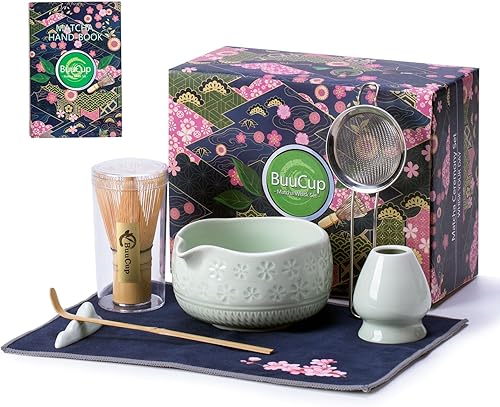
1. Buucup Matcha Whisk Set with Ceramic Bowl
1. A complete set with bowl, chasen and sifter. Essential no matter how your matcha is milled.
👍 Pros & Cons
Pros
- Includes a sifter for lump-free matcha
- Good starter kit
- Highly rated
Cons
- Not a grinder; you still need matcha powder
- Bamboo whisk needs careful drying
📄 Detailed Review
- Pieces: 7 (bowl, chasen, scoop, rest, holder, sifter, towel)
- Whisk: About 100 tines
- Bowl: Glazed ceramic
- Use: Preparing matcha
A grinder only gets you halfway. This 7-piece Buucup kit includes the sifter, bowl and bamboo whisk you need to turn matcha powder into a smooth drink.
Pair it with stone-milled matcha for the best results.

2. Matcha Powder Sifter and Storage Tin Set (40-Mesh)
2. A 40-mesh sifter tin that breaks up clumps in both stone ground and ball-milled powder.
👍 Pros & Cons
Pros
- Breaks up clumps quickly
- Airtight storage protects freshness
- Food-grade stainless steel
Cons
- Very few ratings
- A sifter cannot fix coarse powder
📄 Detailed Review
- Capacity: 300 ml
- Mesh: 40-mesh stainless steel
- Extras: Agitator rings
- Lid: Screw-on airtight
Sifting is the step most home matcha drinkers skip. This tin combines a 40-mesh sieve, agitator rings and an airtight lid.
It is useful whether you buy matcha or grind your own tea powder.

3. KYOCERA Dried Tea and Herb Mill (Ceramic Burr)
3. A ceramic burr mill if you want to grind tea leaves yourself.
👍 Pros & Cons
Pros
- Ceramic burr will not rust or hold flavors
- Adjustable knob for fineness
- Compact and easy to store
Cons
- Hand-cranked, so grinding a full batch takes time
- Powder is coarser than commercial stone-milled matcha
📄 Detailed Review
- Brand: KYOCERA
- Burr: Ceramic millstone
- Weight: 332 g
- Adjustment: Knob for fine to coarse
KYOCERA is known for ceramic blades, and this mill uses a ceramic millstone to grind dried tea leaves and herbs. The adjustable knob lets you tighten the burr for a finer powder.
It is a good choice if you want fresh tea powder for lattes, baking or cooking rather than ceremonial matcha.

4. TACHUNE Hand-Crank Bluestone Tea Grinder (25 cm Roller)
4. A traditional stone roller to try stone grinding at home.
👍 Pros & Cons
Pros
- Wax-free natural stone surface
- Large roller grinds more tea per pass
- Beautiful display piece
Cons
- Very few ratings so far
- Hand work is slow and takes practice
📄 Detailed Review
- Material: Natural bluestone, no wax coating
- Size: 25 cm roller
- Weight: 3 lb
- Style: Traditional Song-dynasty tea grinder
This roller-style grinder copies the traditional Chinese tea mill: a stone wheel rolled back and forth in a grooved trough. The seller states the stone is natural bluestone with no wax coating.
It suits tea enthusiasts who enjoy the ritual; for daily matcha, buy good stone-milled powder and use this for herbs and occasional tea.
How We Chose the Stone Ground Matcha vs Ball Milled
To compare stone ground matcha vs ball milled, we reviewed how Japanese producers describe each milling method, what tea educators say about particle size and heat, and how buyers describe the taste of each style in reviews. We then picked tools that help with preparation.
Store tea powder airtight and handle bowls and whisks hygienically, following USDA Food Safety and Inspection Service cleanliness guidance. Our method is on the How We Test page.
Stone Ground Matcha vs Ball Milled: 5 Key Differences
1. Milling Speed and Heat
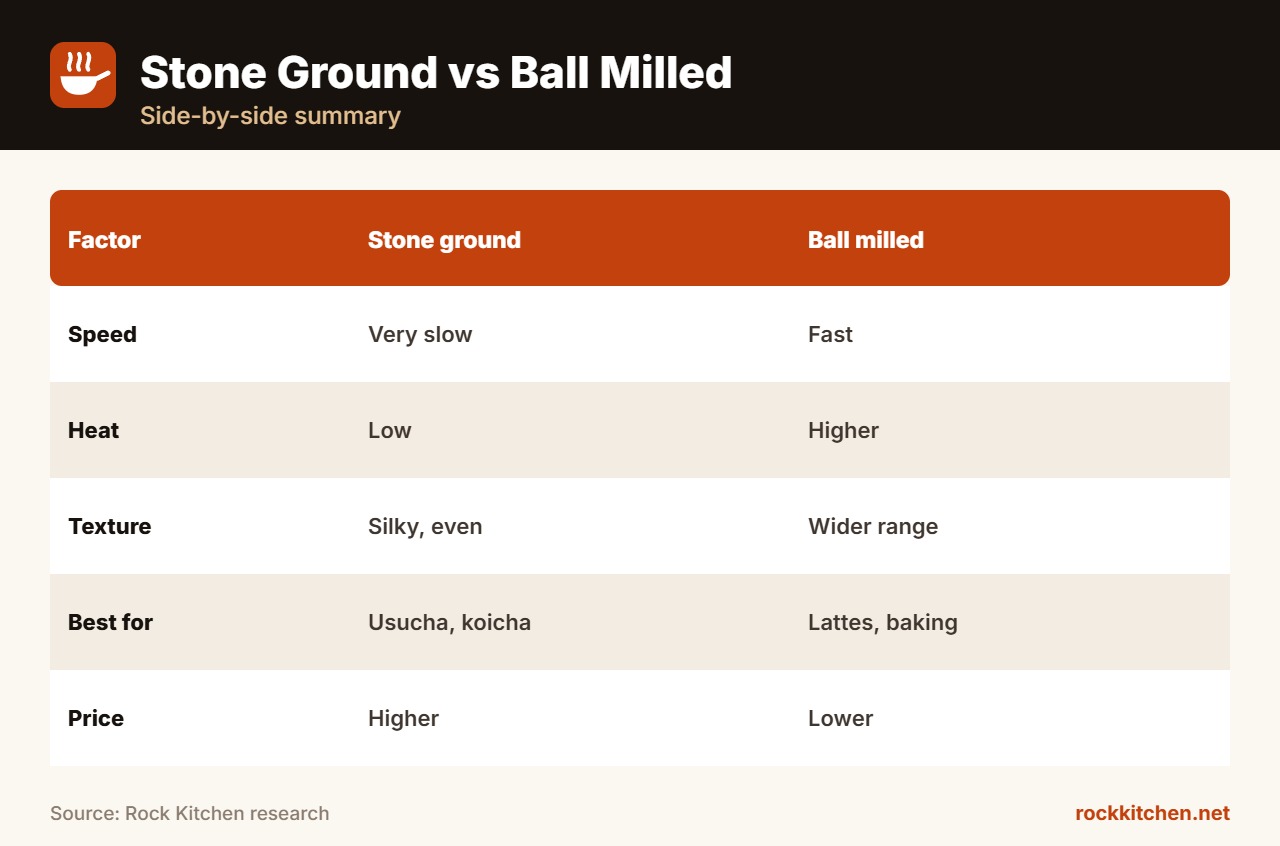
Granite stone mills turn slowly and make only a small amount per hour, which keeps the leaf cool. Ball mills are much faster, and the friction can warm the tea and dull its aroma.
2. Particle Size and Texture
Stone-ground matcha has very fine, even particles that stay suspended and feel silky. Ball-milled powder can be fine too, but often has a wider spread of sizes and settles faster.
3. Color
Cool, slow milling helps keep the vivid green color. Heat and oxidation can push ball-milled powder toward a duller olive tone.
4. Flavor
Stone-ground ceremonial matcha tastes sweeter and more umami-rich. Ball-milled matcha tends to be made from later-harvest leaf and tastes more astringent.
5. Price and Use
Stone grinding is slow and expensive, so it is reserved for ceremonial grades. Ball milling suits culinary grades for lattes, smoothies and baking.
How to Tell Which Matcha You Bought
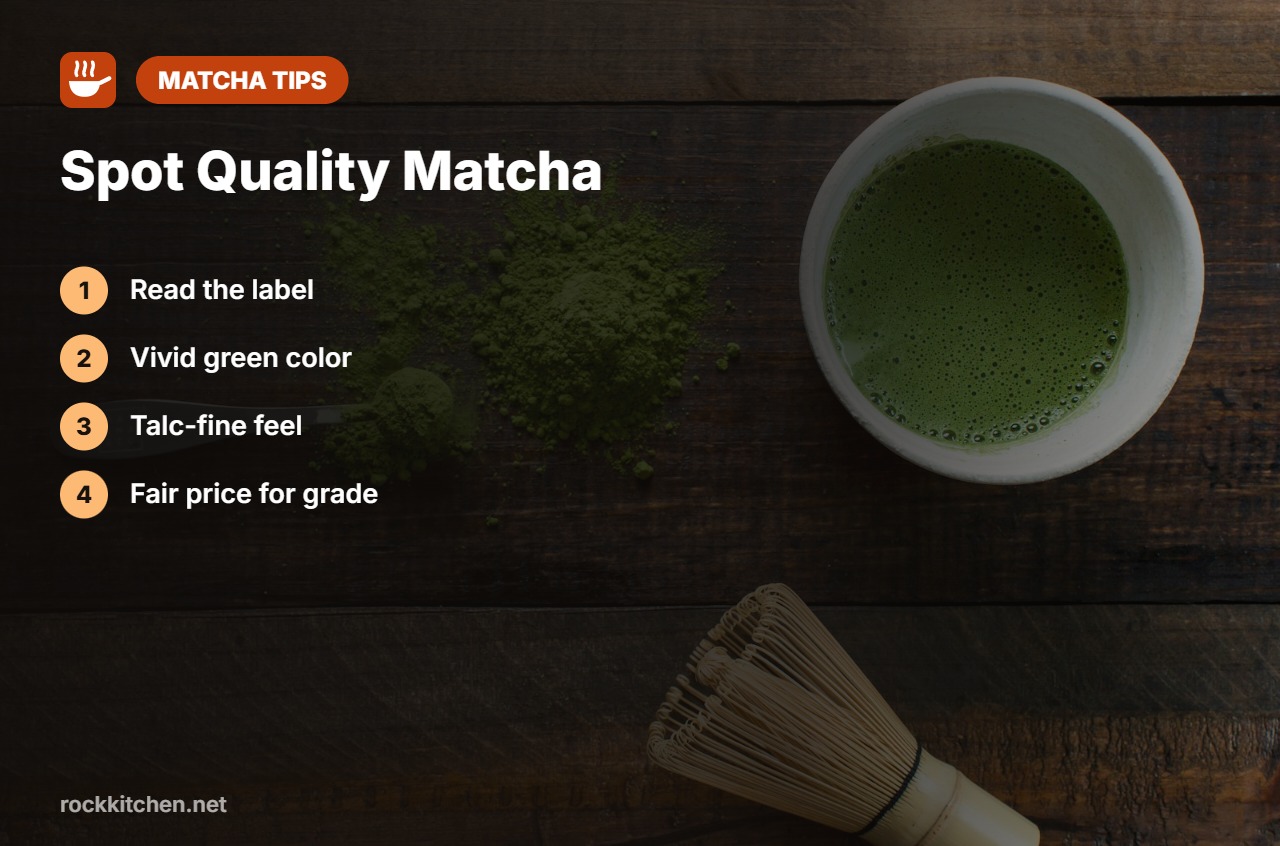
- Check the label for “stone ground” or “stone milled”.
- Look for bright, vivid green color.
- Rub a pinch between fingers: it should feel like talc.
- Ceremonial grade at a very low price is a red flag.
- Ask the seller about harvest and grinding method.
Quick answers to common questions about stone ground matcha vs ball milled.
Frequently Asked Questions
Stone ground matcha vs ball milled: which is better?
For drinking straight, stone ground matcha is better. Ball-milled powder is good value for lattes and baking.
Is ball-milled matcha fake?
No. It is real matcha made with a faster method, usually from culinary-grade leaf.
Can I taste the difference in a latte?
Usually very little. Milk and sweetener mask most texture and bitterness differences.
Why is stone ground matcha expensive?
Each stone mill produces only a small amount per hour, and it is usually paired with premium first-harvest leaf.
Final Verdict
In stone ground matcha vs ball milled, choose stone ground for straight tea and ball milled for lattes. Either way, a good whisk kit and a fine sifter make the biggest difference at home.
Related Guides
Keep exploring stone tools, mortars and grinders with these guides:
- Best Matcha Grinder 2026: 6 Stone, Ceramic and Electric Picks
- Best Electric Matcha Grinder 2026: 5 Honest Picks for Tea Powder
- How We Test and Research Kitchen Gear
- All Mortars & Grinders Guides
Prices and availability change often. Check the current listing on Amazon before you buy.