

As an Amazon Associate we earn from qualifying purchases. Learn more about our affiliate disclaimer.
The best matcha grinder depends on what you expect from it. Traditional matcha is ground between granite millstones so slowly that a factory mill makes only about 30–40 grams an hour. At home, a stone or ceramic mill gets you closest to that texture, while electric grinders trade fineness for speed.
We compared stone roller grinders, rotary stone mills, ceramic burr mills and an electric tea mill, so you can match the tool to how you use tea powder.

Quick Answer: The Best Matcha Grinder
- Best OverallKYOCERA Dried Tea and Herb Mill (Ceramic Burr)
- Best ElectricTWINBIRD Electric Green Tea Grinder (Ryokucyabisai)
- Best TraditionalTACHUNE Hand-Crank Bluestone Tea Grinder (25 cm Roller)
- Best Compact Stone MillABOOFAN Traditional Stone Mill with Hand Crank
- Best LightweightMILLU Ceramic Tea Mill
- Best Add-OnMatcha Powder Sifter and Storage Tin Set (40-Mesh)
The KYOCERA ceramic tea mill is the best matcha grinder for most home cooks: even, adjustable and easy to clean. Choose the TWINBIRD electric mill for convenience or the TACHUNE stone roller for a traditional ritual.
Best Matcha Grinder Comparison Table
| Product | Best For | Type | Key Feature | Buy |
|---|---|---|---|---|
| KYOCERA Tea Mill | Best Overall | Manual ceramic burr mill | Adjustable ceramic millstone for tea leaves | Check Price |
| TWINBIRD Tea Grinder | Best Electric | Electric tea mill | Japanese electric mill for whole tea leaves | Check Price |
| TACHUNE Stone Roller | Best Traditional | Stone roller grinder | 25 cm bluestone roller and deep-grooved trough | Check Price |
| ABOOFAN Stone Mill | Best Compact Stone Mill | Stone mill | Compact hand-crank stone mill for tea and spices | Check Price |
| MILLU Ceramic Mill | Best Lightweight | Manual ceramic tea mill | Ceramic-blade tea mill from Japan | Check Price |
| Matcha Sifter Tin | Best Add-On | Sifter and storage tin | 300 ml tin, 40-mesh sieve, agitator rings | Check Price |
The 6 Best Matcha Grinders
These picks cover every style, so you can find the best matcha grinder for your routine.

1. KYOCERA Dried Tea and Herb Mill (Ceramic Burr)
1. A ceramic millstone that will not rust or hold flavors. It is the best matcha grinder for even, adjustable powder.
👍 Pros & Cons
Pros
- Ceramic burr will not rust or hold flavors
- Adjustable knob for fineness
- Compact and easy to store
Cons
- Hand-cranked, so grinding a full batch takes time
- Powder is coarser than commercial stone-milled matcha
📄 Detailed Review
- Brand: KYOCERA
- Burr: Ceramic millstone
- Weight: 332 g
- Adjustment: Knob for fine to coarse
KYOCERA is known for ceramic blades, and this mill uses a ceramic millstone to grind dried tea leaves and herbs. The adjustable knob lets you tighten the burr for a finer powder.
It is a good choice if you want fresh tea powder for lattes, baking or cooking rather than ceremonial matcha.

2. TWINBIRD Electric Green Tea Grinder (Ryokucyabisai)
2. A Japanese electric tea mill that does the work for you.
👍 Pros & Cons
Pros
- One of the few electric mills built specifically for tea leaves
- Lets you powder sencha or tencha at home
- Long track record with hundreds of ratings
Cons
- Japanese-market product; check voltage and plug before use
- Slow output compared with a blade grinder
📄 Detailed Review
- Brand: TWINBIRD (Japan)
- Power: Electric
- Weight: 846 g
- Use: Grinding dried green tea leaves to powder
TWINBIRD is a Japanese appliance maker, and this compact electric mill is designed to turn dried tea leaves into powdered tea. It is the closest thing on Amazon to a home matcha mill with a motor.
Expect a fine but not ceremonial-grade powder, and sift it before whisking for the smoothest cup.

3. TACHUNE Hand-Crank Bluestone Tea Grinder (25 cm Roller)
3. A natural bluestone roller grinder for the classic tea ritual.
👍 Pros & Cons
Pros
- Wax-free natural stone surface
- Large roller grinds more tea per pass
- Beautiful display piece
Cons
- Very few ratings so far
- Hand work is slow and takes practice
📄 Detailed Review
- Material: Natural bluestone, no wax coating
- Size: 25 cm roller
- Weight: 3 lb
- Style: Traditional Song-dynasty tea grinder
This roller-style grinder copies the traditional Chinese tea mill: a stone wheel rolled back and forth in a grooved trough. The seller states the stone is natural bluestone with no wax coating.
It suits tea enthusiasts who enjoy the ritual; for daily matcha, buy good stone-milled powder and use this for herbs and occasional tea.

4. ABOOFAN Traditional Stone Mill with Hand Crank
4. A small hand-crank stone mill for tea and spices.
👍 Pros & Cons
Pros
- Compact size for a countertop
- Simple hand-crank operation
- Works for spices as well as tea
Cons
- Limited reviews
- Needs several passes for a fine powder
📄 Detailed Review
- Material: Stone and wood
- Weight: 3 lb
- Power: Manual
- Use: Tea, spices, grains
The ABOOFAN mill is a small two-stone rotary mill with a hand crank. Turning the top stone grinds tea leaves, spices or grains between the stones.
It is a budget way to try stone grinding at home, but fineness depends on patience and multiple passes.

5. A light Japanese ceramic-blade tea mill.
👍 Pros & Cons
Pros
- Ceramic blade avoids metallic taste
- Adjustable coarseness
- Light and easy to clean
Cons
- Plastic body
- Only a handful of ratings
📄 Detailed Review
- Brand: Kawasaki Plastic (Japan)
- Blade: Ceramic
- Weight: 230 g
- Body: Polypropylene
MILLU is a small Japanese hand mill with a ceramic blade, designed to turn tea leaves into powdered tea for drinking or cooking.
It is light and simple, a good entry point if you want to experiment with grinding sencha into powder.

6. Matcha Powder Sifter and Storage Tin Set (40-Mesh)
6. A 40-mesh sifter and airtight tin that improves any home-ground powder.
👍 Pros & Cons
Pros
- Breaks up clumps quickly
- Airtight storage protects freshness
- Food-grade stainless steel
Cons
- Very few ratings
- A sifter cannot fix coarse powder
📄 Detailed Review
- Capacity: 300 ml
- Mesh: 40-mesh stainless steel
- Extras: Agitator rings
- Lid: Screw-on airtight
Sifting is the step most home matcha drinkers skip. This tin combines a 40-mesh sieve, agitator rings and an airtight lid.
It is useful whether you buy matcha or grind your own tea powder.
How We Chose the Best Matcha Grinder
To research the best matcha grinder, we compared every tea mill and grinder we could find on Amazon US by mechanism (stone, ceramic burr or blade), power source, capacity and listed uses. We read verified-buyer reviews for fineness, heat, speed and cleaning, and we flagged listings with few or no ratings so you know where the evidence is thin.
Clean grinders between tea and spices and dry them fully, following USDA Food Safety and Inspection Service cleanliness guidance. Our full method is on the How We Test page; this is a research-based guide, not a lab test.
Buying Guide: How to Choose the Best Matcha Grinder
Stone, Ceramic or Blade
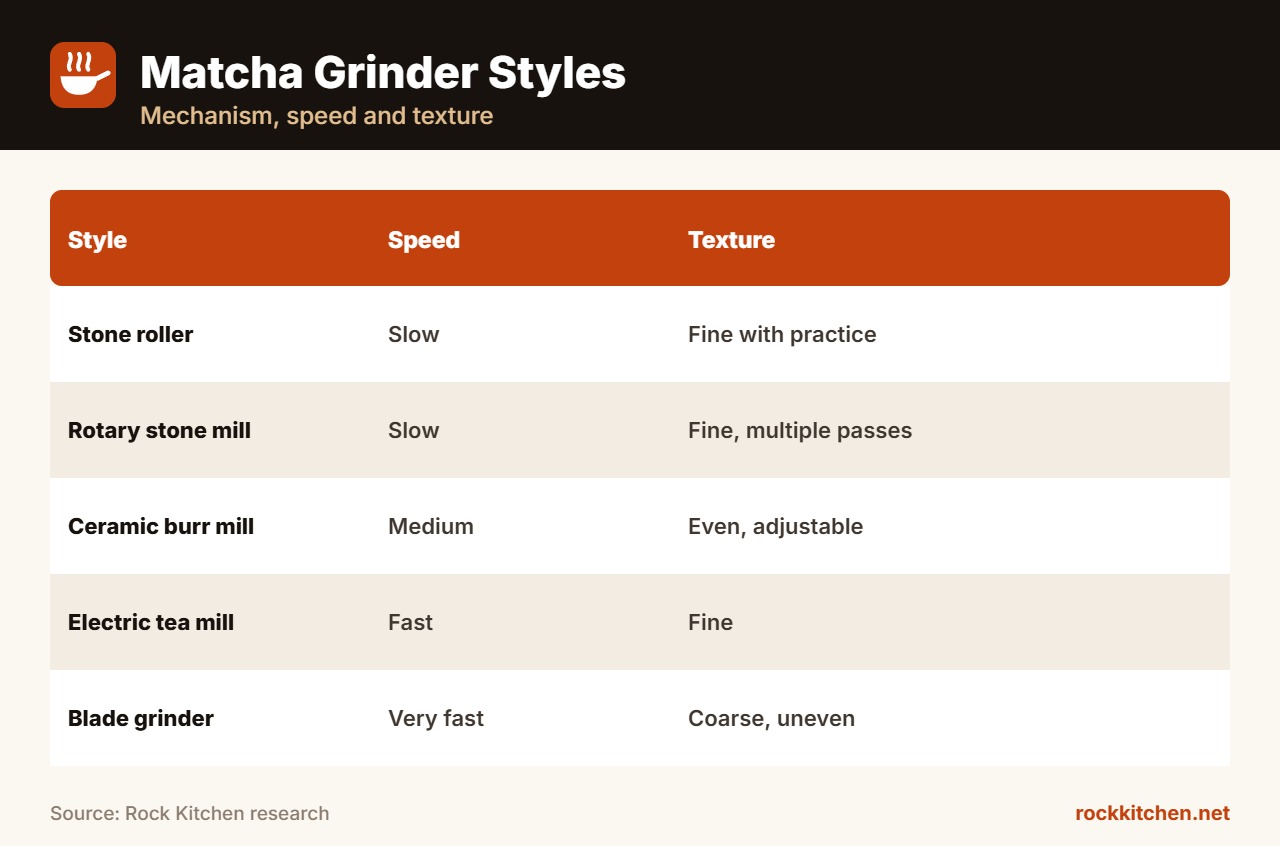
Stone and ceramic mills crush leaves slowly for even particles. Blades chop quickly, add heat and leave a mix of sizes.
Fineness Expectations
Ceremonial matcha is around 5–10 microns. Home mills produce a coarser powder that is great for lattes, cooking and baking.
Effort and Batch Size
Hand mills make a few grams at a time. If you drink matcha daily, an electric mill or good store-bought powder saves time.
Materials and Safety
Look for unwaxed natural stone or ceramic burrs. Avoid stone mills with coatings that could flake into food.
Cleaning
Brush stones dry; wash ceramic parts and dry completely to avoid clumping and mold.
Tips for Using a Matcha Grinder
- Destem tea leaves before grinding.
- Grind twice: once coarse, once fine.
- Sift before every bowl of matcha.
- Keep the grinder dry and store it upright.
- Do not grind oily spices in the same mill.

Quick answers to common questions about best matcha grinder.
Frequently Asked Questions
What is the best matcha grinder for home use?
The KYOCERA ceramic tea mill is the best matcha grinder for most homes; the TWINBIRD is the best electric choice.
Can you make real matcha at home?
You can make tea powder, but true matcha starts with shade-grown tencha and industrial stone mills.
Do stone mills need care?
Yes. Brush them clean, keep them dry and avoid soaking natural stone.
Should I sift after grinding?
Always. Sifting removes clumps and coarse bits for a smoother drink.
Final Verdict
Our final pick for the best matcha grinder is the KYOCERA ceramic mill. Pick the TWINBIRD for electric convenience, or the TACHUNE stone roller for tradition.
Related Guides
Keep exploring stone tools, mortars and grinders with these guides:
- Best Electric Matcha Grinder 2026: 5 Honest Picks for Tea Powder
- How We Test and Research Kitchen Gear
- All Mortars & Grinders Guides
Prices and availability change often. Check the current listing on Amazon before you buy.