
As an Amazon Associate we earn from qualifying purchases. Learn more about our affiliate disclaimer.
Soft Arkansas vs hard Arkansas compares two grades of natural novaculite quarried in Arkansas. Soft Arkansas is more porous and cuts faster, so it sharpens a moderately dull edge. Hard Arkansas is denser and finer, so it polishes and refines an edge that is already sharp. Many sharpeners use both in sequence.
Here is how to choose.
Quick Answer: The Soft Arkansas vs Hard Arkansas
- Best Soft ArkansasDan’s Soft Arkansas Genuine Natural Novaculite Whetstone
- Best Hard ArkansasGenuine Arkansas Hard (Fine) Slip Stone Whetstone
- Best Grade SetDan’s 3-Piece Genuine Arkansas Pocket Stone Set (Soft, Hard, Black)
- Best Tri-Hone KitSmith’s TRI6 Arkansas Tri-Hone Sharpening System (6 in.)
- Best Synthetic PartnerNorton Combination Grit Oil Stone 8 x 2 x 1 in. (Fine/Coarse)
- Best Budget Oil StoneVictorinox Sharpening Stone, Combination Fine and Coarse India Bench Stone, 8 x 2 x 1 in.
Start with a soft Arkansas, such as Dan’s Soft Arkansas bench stone, if you want one natural stone for routine sharpening. Add a hard Arkansas, such as a hard slip or pocket stone, to polish and refine. A combination set like the Smith’s Tri-Hone or Dan’s 3-stone set covers both.
Soft Arkansas vs Hard Arkansas Comparison Table
| Product | Best For | Type | Key Feature | Buy |
|---|---|---|---|---|
| Dan’s Soft Arkansas | Best Soft Arkansas | Natural Arkansas oil stone | Soft (medium) grade novaculite bench stone | Check Price |
| Hard Arkansas Slip Stone | Best Hard Arkansas | Natural Arkansas slip stone | Fine hard Arkansas with rounded edges | Check Price |
| Dan’s 3-Stone Set | Best Grade Set | Arkansas stone set | Soft, Hard and Black pocket stones | Check Price |
| Smith’s Tri-Hone | Best Tri-Hone Kit | Oil stone system | Fine Arkansas plus medium and coarse synthetic stones | Check Price |
| Norton Combination Oil Stone | Best Synthetic Partner | Synthetic oil stone | Coarse and fine sides, prefilled with oil | Check Price |
| Victorinox India Stone | Best Budget Oil Stone | Oil bench stone | Coarse/fine India (aluminum oxide), 8 x 2 x 1 in. | Check Price |
6 Picks: Soft and Hard Arkansas Stones
Natural Arkansas stones plus two kits that combine grades.

1. Dan’s Soft Arkansas Genuine Natural Novaculite Whetstone
1. Dan’s Soft.
👍 Pros & Cons
Pros
- Natural stone that lasts for years
- Good medium polish
- Made in Arkansas
Cons
- Slow on very dull knives
- Needs oil or water and cleanup
📄 Detailed Review
- Stone: Soft Arkansas novaculite (listing)
- Use: With honing oil or water (maker)
- Size: See listing
Dan’s medium-grade stone.
Best soft Arkansas.

2. Genuine Arkansas Hard (Fine) Slip Stone Whetstone
2. Hard slip.
👍 Pros & Cons
Pros
- Very fine polishing grade
- Shaped for curves and gouges
- Lasts a long time
Cons
- Too slow for sharpening dull edges
- Small for long kitchen knives
📄 Detailed Review
- Stone: Hard Arkansas novaculite (listing)
- Shape: Slip stone (listing)
- Use: Fine finishing
A fine hard Arkansas slip.
Best hard Arkansas.

3. Dan’s 3-Piece Genuine Arkansas Pocket Stone Set (Soft, Hard, Black)
3. Soft, hard, black.
👍 Pros & Cons
Pros
- Full Arkansas progression at a low price
- Learn how each grade feels
- Portable
Cons
- Pocket size is small for kitchen knives
- Hand-held only
📄 Detailed Review
- Grades: Soft, Hard, Black
- Size: 3 x 1 x 1/4 in. each
- Storage: Leather pouches
- Origin: Arkansas, USA
This set includes Dan’s three main grades in pocket size.
It is an inexpensive way to learn the Arkansas progression before buying bench stones.

4. Smith’s TRI6 Arkansas Tri-Hone Sharpening System (6 in.)
4. Smith’s.
👍 Pros & Cons
Pros
- Three stones on a rotating base
- Includes oil and an angle guide
Cons
- 6 in. stones are short for chef knives
- Only the fine stone is natural Arkansas
📄 Detailed Review
- Stones: Fine Arkansas, medium and coarse synthetic
- Length: 6 in.
- Base: Rotating, non-skid
- Extras: Angle guide and honing oil
Smith’s Tri-Hone mounts three 6 in. stones on a rotating base, with a natural Arkansas stone as the fine finisher.
It is one of the most popular oil-stone kits on Amazon and a practical all-in-one for home cooks.

5. Norton Combination Grit Oil Stone 8 x 2 x 1 in. (Fine/Coarse)
5. Norton combo.
👍 Pros & Cons
Pros
- Prefilled with oil so it stays lubricated
- Fast on dull knives
Cons
- Fine side is still fairly coarse; add a finisher
- Synthetic
📄 Detailed Review
- Grits: Coarse / fine (listed as 100 and 280)
- Size: 8 x 2 x 1 in.
- Feature: Prefilled with oil
- Brand: Norton
Norton’s oil stones are the classic American bench stones. This combination stone is prefilled with oil.
It repairs dull edges fast; pair it with a Hard Arkansas for a finer finish.

6. Victorinox Sharpening Stone, Combination Fine and Coarse India Bench Stone, 8 x 2 x 1 in.
6. Victorinox.
👍 Pros & Cons
Pros
- Victorinox-branded bench stone
- Tough, slow-wearing oil stone
- Coarse side restores edges
Cons
- Oil stone is slower and messier than water stones
📄 Detailed Review
- Grits: Coarse / Fine
- Material: India alundum (aluminum oxide)
- Size: 8 x 2 x 1 in.
- Brand: Victorinox
Victorinox sells this India combination bench stone for its own knives.
It is a durable, traditional option, though water stones are faster for kitchen knives.
How We Chose the Soft Arkansas vs Hard Arkansas
For this soft arkansas vs hard arkansas guide, we compared whetstones, diamond plates, oil stones and knife sharpeners listed on Amazon US by abrasive type, grit, size, hardness, angle control, speed and price, using product details from the listings and makers rather than a hands-on lab test. We then looked at common praise and complaints in buyer feedback for edge quality, wear, dishing, mess and learning curve. Prices and listings change often, so check the current listing before you buy.
Keep fingers behind the edge, sharpen on a stable non-slip base, keep metal swarf away from food, and wash knives before they touch food again, and follow USDA Food Safety and Inspection Service cleanliness guidance for kitchen hygiene. Our method is explained on the How We Test page.
Soft Arkansas vs Hard Arkansas: Key Differences
Cutting speed
Soft Arkansas cuts faster; hard Arkansas is slow and meant for refining.
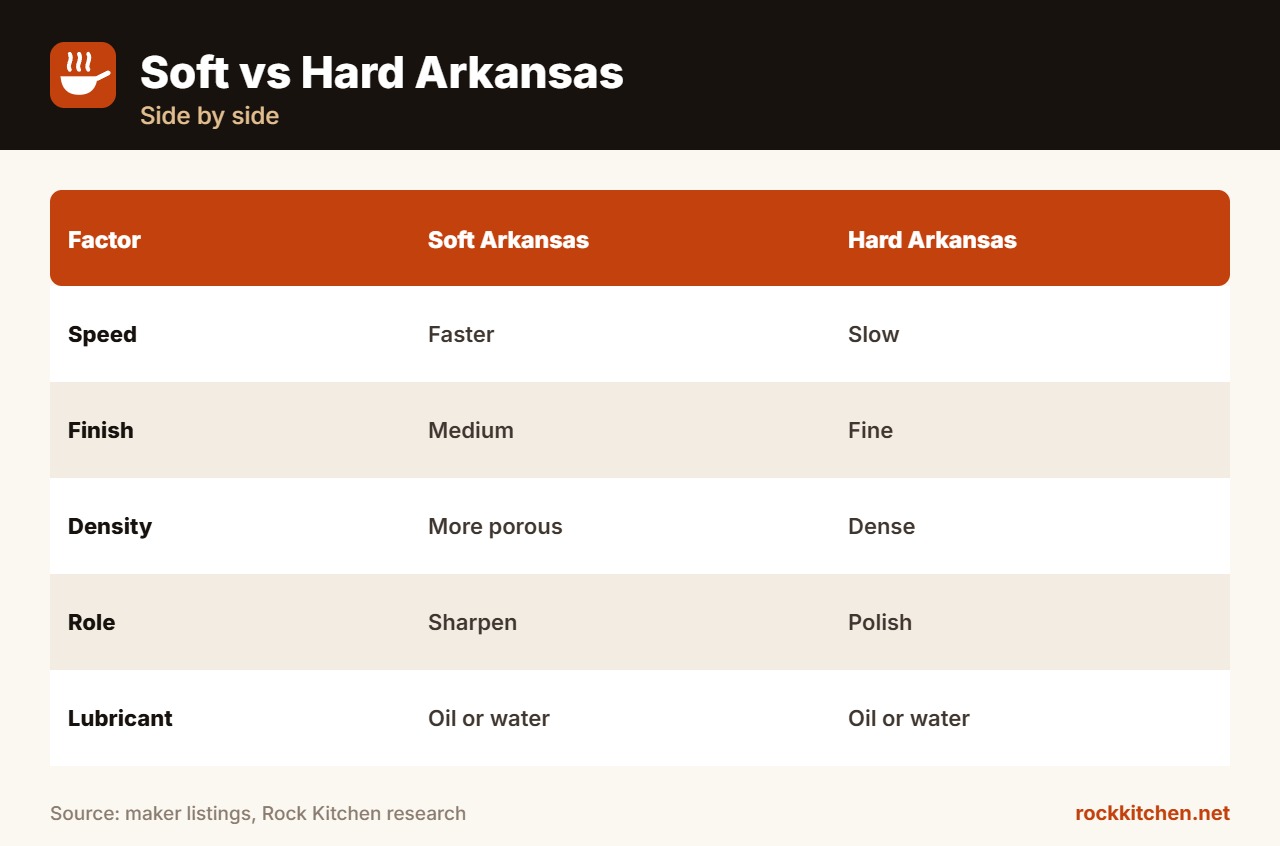
Finish
Hard Arkansas leaves a finer, more polished edge.
Porosity
Soft stones absorb more oil; hard stones are denser.
Lifespan
Both last for many years with care.
Best use
Soft for sharpening, hard for finishing; neither is fast on very dull knives.
Tips for Safer, Sharper Edges
- Hold a steady angle; consistency matters more than the exact number.
- Raise a small burr along the full edge before moving to a finer grit.
- Use light pressure on finishing grits.
- Flatten water stones often so they do not dish.
- Rinse and dry knives, then wipe stones clean after use.
Quick answers to common questions about soft arkansas vs hard arkansas.
Frequently Asked Questions
Which Arkansas stone is best for kitchen knives?
Soft for sharpening; add hard for a finer finish.
Can I use water on Arkansas stones?
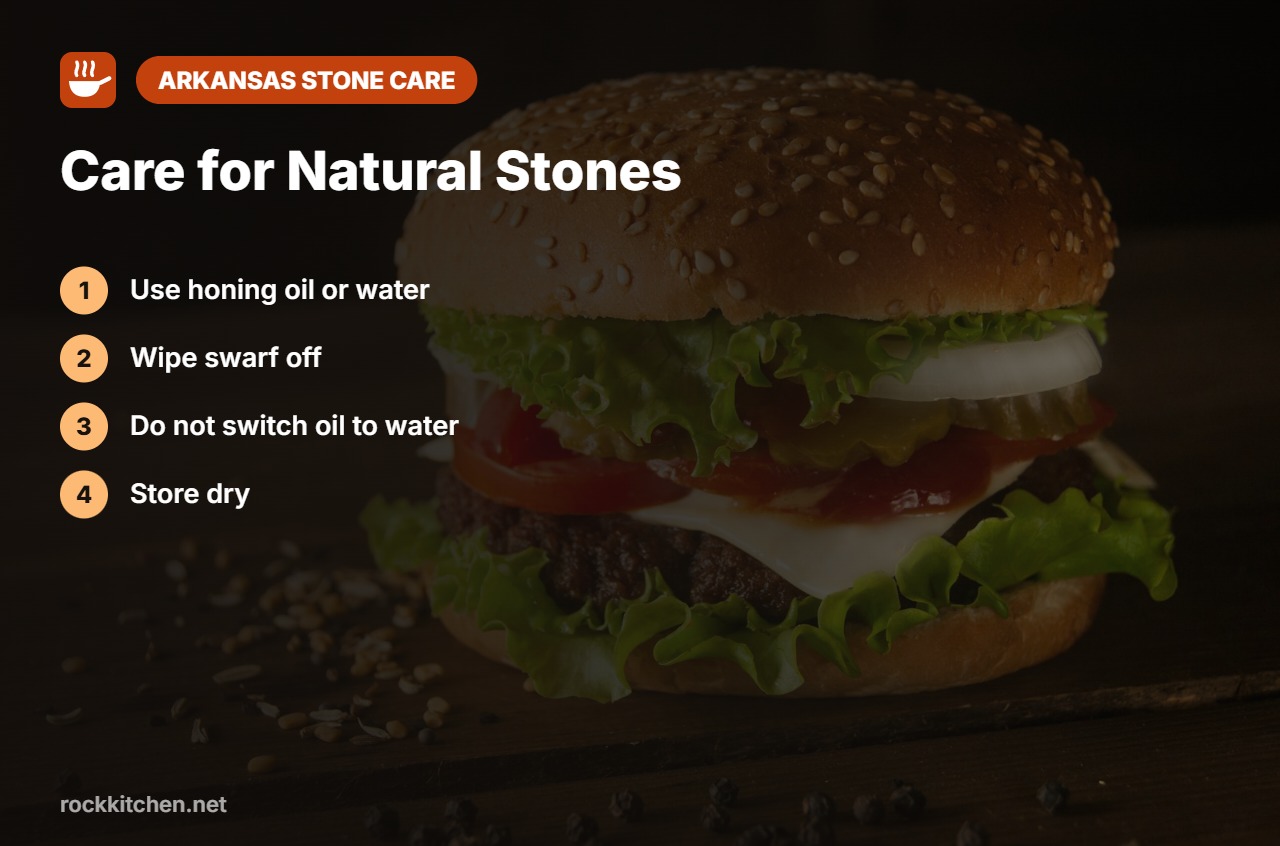
Many makers allow oil or water; once you use oil, keep using oil.
Is black Arkansas finer than hard?
Yes, black and translucent grades are finer polishing stones.
Are Arkansas stones good for Japanese knives?
They work, but are slow on very hard steels.
Final Verdict
Our soft Arkansas vs hard Arkansas verdict: start with a Dan’s Soft Arkansas, then add a hard Arkansas slip to polish.
Related Guides
Keep exploring knives and sharpening with these guides:
Prices and availability change often. Check the current listing on Amazon before you buy.