
As an Amazon Associate we earn from qualifying purchases. Learn more about our affiliate disclaimer.
The best 400 grit whetstone brings a very dull or chipped knife back to life before you move to a #1000 stone. Coarse stones around #320–#400 remove steel quickly, so they are a repair tool you reach for a few times a year, not every week.
We compared coarse waterstones from Naniwa, Shapton, King and Suehiro, plus a budget #400/#1000 combination stone, by grit, size, soaking needs and wear rate.
Quick Answer: The Best 400 Grit Whetstone
- Best OverallNaniwa Chosera / Professional SS-400 (#400)
- Best ValueShapton Kuromaku #320 (K0709)
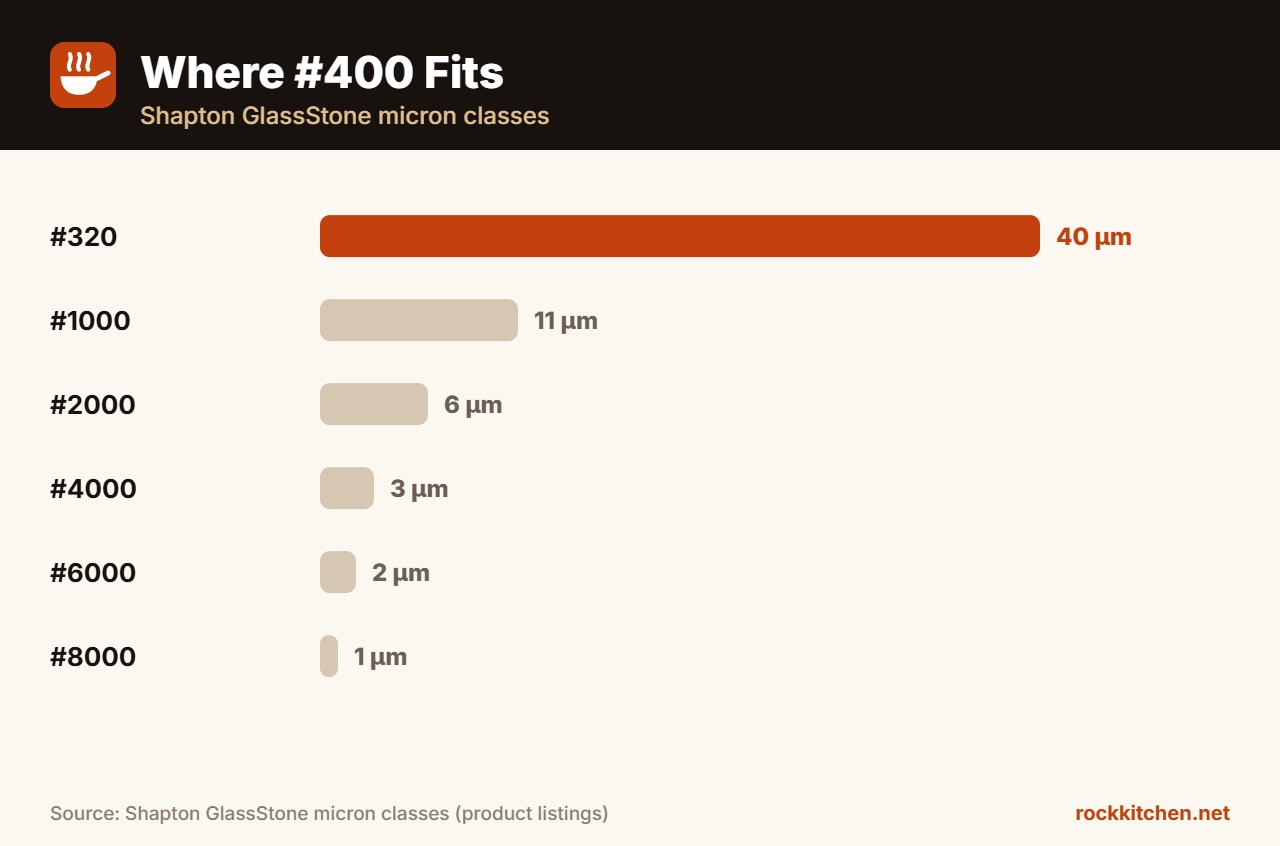
- Best Hard StoneShapton GlassStone #320 (40 micron)
- Best LargeKing Deluxe #400L (Non-Water-Absorbing)
- Best Soaking StoneSuehiro Cerax #320
- Best Budget ComboAmazon Basics 400/1000 Whetstone with Angle Guide
The Naniwa Professional #400 is the best 400 grit whetstone for most kitchens: thick, fast and splash-and-go. The Shapton Kuromaku #320 is the slimmer value pick.
Best 400 Grit Whetstone Comparison Table
| Product | Best For | Type | Key Feature | Buy |
|---|---|---|---|---|
| Naniwa SS-400 | Best Overall | Ceramic whetstone | #400, 210 x 70 x 25 mm on holder | Check Price |
| Shapton Kuromaku 320 | Best Value | Ceramic whetstone | #320 rough, 210 x 70 x 15 mm | Check Price |
| GlassStone 320 | Best Hard Stone | Glass-backed stone | #320, 40 µm, no soaking | Check Price |
| King Deluxe 400L | Best Large | Non-absorbing stone | #400, 220 x 80 x 70 mm, 2.5 kg | Check Price |
| Suehiro Cerax 320 | Best Soaking Stone | Soaking stone | #320, 210 x 75 x 30 mm | Check Price |
| Amazon Basics 400/1000 | Best Budget Combo | Combination water stone | 400/1000 with bamboo base and angle guide | Check Price |
The 6 Best 400 Grit Whetstones
Each pick suits a different kind of repair; the best 400 grit whetstone for you depends on how often you fix damaged edges.
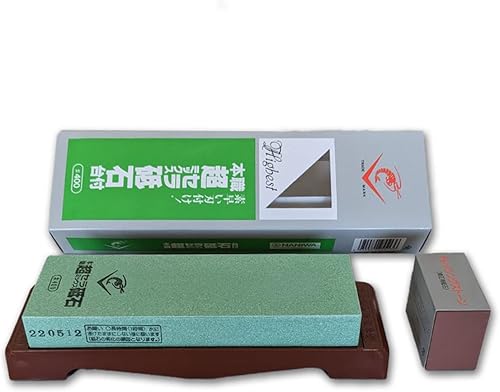
1. Naniwa Chosera / Professional SS-400 (#400)
1. A 25 mm thick #400 with holder and dressing stone. It is the best 400 grit whetstone for long-term use.
👍 Pros & Cons
Pros
- Fast-cutting coarse stone with a firm feel
- Comes on a holder with a dressing stone
- Full-width 70 mm surface
Cons
- Coarse stones dish faster; flatten often
- Premium price for a coarse grit
📄 Detailed Review
- Grit: #400
- Size: 210 x 70 x 25 mm
- Includes: Sturdy holder + 65 x 50 x 30 mm dressing stone
- Line: Chosera / Professional (SS)
The SS-400 is the coarse stone in Naniwa’s Chosera range, now sold as the Professional (SS) line. It measures 210 x 70 x 25 mm and comes mounted on a sturdy holder with a small dressing stone.
Use it to remove chips and reset bevels before moving to an 800 or 1000 stone.

2. Kuromaku #320 for rough grinding, with no long soak and a case that doubles as a holder.
👍 Pros & Cons
Pros
- Fast coarse grinding
- Compact, light stone
- Splash-and-go Kuromaku format
Cons
- 15 mm thickness wears faster on coarse work
- Needs regular flattening
📄 Detailed Review
- Grit: #320 (rough grinding)
- Size: 210 x 70 x 15 mm
- Weight: Approx. 500 g
- Item: K0709
The K0709 is Shapton’s #320 rough grinding stone in the Kuromaku (Ha No Kuromaku) range: 210 x 70 x 15 mm and about 500 g.
It is a quick way to remove chips and reshape tips before moving to the orange #1000.

3. Shapton GlassStone #320 (40 micron)
3. Shapton GlassStone #320 (40 µm class): spray and go, with a long-wearing binder.
👍 Pros & Cons
Pros
- Fast cutting coarse stone
- Ready in seconds, no soaking
- Low wear
Cons
- Premium price for a coarse stone
📄 Detailed Review
- Grit: #320 (40 micron class)
- Soaking: Not needed, spray and go
- Binder: Long-wearing Shapton binder
- Package: 21.2 x 7.6 x 2 cm
The #320 GlassStone is rated in the 40 micron class. Shapton says GlassStones need no soaking, wear slowly thanks to their binder and cut quickly because of high abrasive content.
Use it for repairs and reprofiling.

4. King Deluxe #400L (Non-Water-Absorbing)
4. A massive 220 x 80 x 70 mm King #400 that lasts for years.
👍 Pros & Cons
Pros
- Massive, stable block
- Non-water-absorbing type
Cons
- Very heavy
- Coarse only
📄 Detailed Review
- Grit: #400
- Size: 220 x 80 x 70 mm
- Weight: 2,500 g
- Base: Plastic
The #400L is a large non-absorbing King stone: 220 x 80 x 70 mm and 2.5 kg on a plastic base.
It is a long-lasting coarse stone for frequent sharpeners.

5. A traditional #320 soaking stone; soak 10–15 minutes before use.
👍 Pros & Cons
Pros
- Thick 30 mm stone
- Clear soaking instructions
Cons
- Soak time before use
📄 Detailed Review
- Grit: #320
- Size: 210 x 75 x 30 mm
- Prep: Soak 10–15 min until bubbles stop
The Cerax #320 measures 210 x 75 x 30 mm. Suehiro advises soaking it in room-temperature water for 10–15 minutes, until it stops bubbling.
It is a comfortable coarse stone for chip repair.
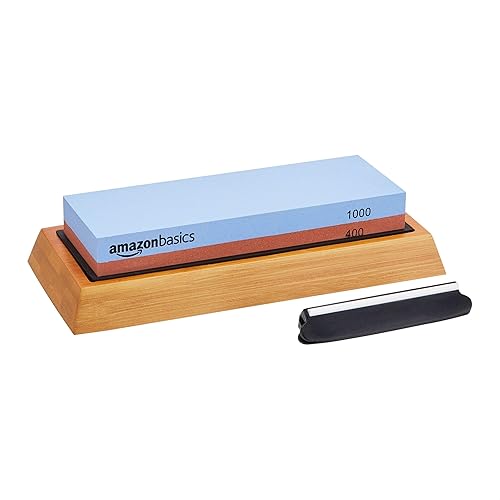
6. Amazon Basics 400/1000 Whetstone with Angle Guide
6. A #400/#1000 combination stone with holder and angle guide.
👍 Pros & Cons
Pros
- Low-cost starter
- Angle guide included
Cons
- Less refined than Japanese brand stones
📄 Detailed Review
- Grits: #400 / #1000
- Lubricant: Water
- Extras: Angle guide, silicone holder, bamboo base
Amazon Basics pairs #400 and #1000 with an angle guide, silicone holder and bamboo base.
It is an easy budget entry into whetstone sharpening.
How We Chose the Best 400 Grit Whetstone
To choose the best 400 grit whetstone, we compared grit, thickness, soaking needs and holders, then read owner feedback on cutting speed, dishing and mess. We also looked at price per millimetre of usable stone, the quality of included holders and how clearly each maker explains soaking, flattening and care, since those details shape how pleasant a stone is to use week after week.
Coarse stones create a lot of metal slurry, so wash your knife and board after sharpening, following USDA Food Safety and Inspection Service cleanliness guidance. Our full method is on the How We Test page.
Buying Guide: How to Choose the Best 400 Grit Whetstone
When You Need #400
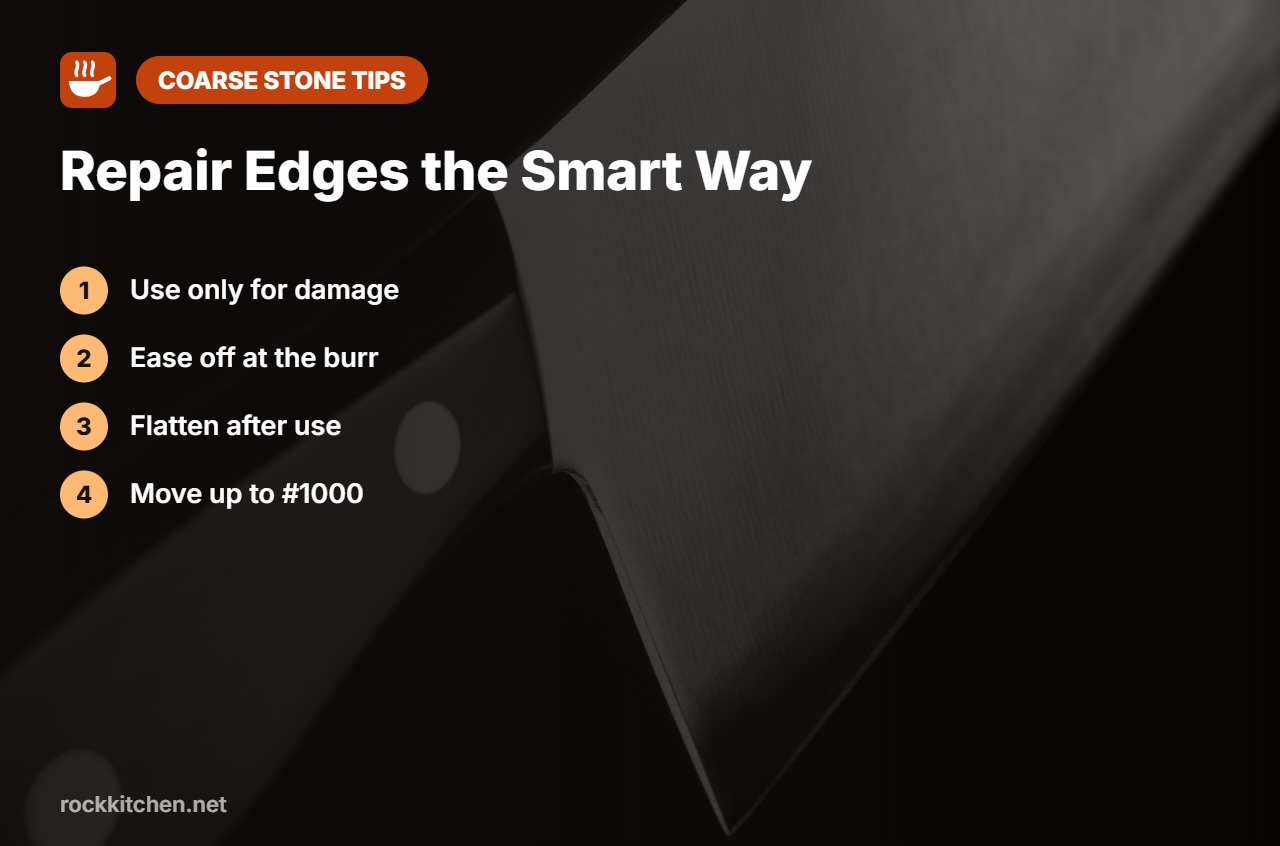
Use it for chips, very dull edges and changing the bevel angle. For routine sharpening, start at #1000. A coarse stone is the quickest way to remove a chip, but every pass also removes healthy steel, so check your progress often and stop as soon as the damage is gone.
Soaking vs. Splash-and-Go
Naniwa Professional, Shapton Kuromaku and GlassStone need only water on the surface; Suehiro coarse stones need soaking. Splash-and-go stones are convenient for occasional repairs because they are ready in seconds, while soaking stones feel softer and build slurry that some sharpeners prefer.
Thickness and Life
Coarse stones wear fast, so thicker stones last longer. A stone that is 20 mm thick or more will survive years of occasional repair work, while thin stones on a holder are easier to store in a small kitchen.
Flatten Often
Coarse stones dish quickly; flatten them with a diamond plate after each session. Draw a pencil grid on the surface, rub it on a diamond plate or flattening stone, and stop when every line is gone; a flat stone keeps your bevel straight.
Next Step
Follow #400 with #1000 to remove scratches, then a finishing stone if you like. Skipping the #1000 step leaves deep scratches that make the edge feel rough and dull quickly, even if it seems sharp at first.
Tips for Using a 400 Grit Whetstone
- Only use #400 on damaged or very dull edges.
- Use light pressure once a burr forms.
- Keep the stone wet and clean off thick slurry.
- Flatten the stone after each session.
- Wash and dry the knife afterwards.
Common questions about the best 400 grit whetstone.
Frequently Asked Questions
What is the best 400 grit whetstone for beginners?
The Naniwa Professional #400 or Shapton Kuromaku #320 is the best 400 grit whetstone to start with, since neither needs a long soak.
Do I need a 400 grit whetstone?
Only if your knives are chipped or very dull. Otherwise start at #1000.
Is #320 the same as #400?
Close. Both are coarse; #320 removes a bit more steel.
What comes after #400?
A #1000 stone, then #3000–#6000 to refine the edge.
Final Verdict
Our final pick for the best 400 grit whetstone is the Naniwa Professional #400. Choose the Shapton Kuromaku #320 for value or the GlassStone #320 for a hard, fast stone.
Related Guides
Keep building your sharpening setup with these guides:
- Best Shapton Whetstone 2026
- Best Naniwa Whetstone 2026
- Best Coarse Diamond Plate 2026
- How We Test and Research Kitchen Gear
- All Knife Sharpening Guides
Prices and availability change often. Check the current listing on Amazon before you buy.