
As an Amazon Associate we earn from qualifying purchases. Learn more about our affiliate disclaimer.
Stone ground cornmeal vs regular cornmeal is mostly about how the corn is milled. Stone ground cornmeal is milled slowly between stones and often keeps some or all of the germ and bran, so it tastes more like corn and has a varied texture. Regular supermarket cornmeal is usually roller milled and degerminated, so it is finer, milder and keeps longer.
Here is how they differ and what to buy.
Quick Answer: The Stone Ground Cornmeal vs Regular
- Best Stone Ground CornmealIndian Head Old Fashioned Stone Ground Yellow Corn Meal, 2 lb
- Best Regular CornmealQuaker Yellow Cornmeal, 2 lb Bag
- Best Coarse Stone GroundLamb’s Stone Ground Yellow Cornmeal, Original Coarse Grind
- Best Medium GrindBob’s Red Mill Medium Grind Cornmeal, 24 oz
- Best OrganicArrowhead Mills Organic Yellow Cornmeal, 22 Ounce
- Best Mill for CornCorona Manual Grain Mill, Cast Iron (High Hopper)
For cornbread, grits and polenta with real corn flavor, choose a stone ground cornmeal like Indian Head Old Fashioned or Lamb’s coarse grind, and keep it in the fridge. For a mild, fine texture and long pantry life, regular cornmeal like Quaker works well. If you want to mill your own, a Corona mill handles dry corn.
Stone Ground Cornmeal vs Regular Comparison Table
| Product | Best For | Type | Key Feature | Buy |
|---|---|---|---|---|
| Indian Head Stone Ground Yellow | Best Stone Ground Cornmeal | Stone ground cornmeal | Old-fashioned stone ground yellow cornmeal | Check Price |
| Quaker Yellow Cornmeal | Best Regular Cornmeal | Regular cornmeal | Common enriched yellow cornmeal | Check Price |
| Lamb’s Stone Ground Coarse | Best Coarse Stone Ground | Stone ground cornmeal | Coarse stone ground cornmeal | Check Price |
| Bob’s Red Mill Medium Cornmeal | Best Medium Grind | Medium grind cornmeal | Medium grind whole grain cornmeal | Check Price |
| Arrowhead Mills Organic Cornmeal | Best Organic | Organic cornmeal | Organic yellow cornmeal | Check Price |
| Corona (High Hopper) | Best Mill for Corn | Cast iron plate mill | Tin-plated cast iron, tall hopper | Check Price |
6 Picks: Stone Ground and Regular Cornmeal
Stone ground, regular and a mill.
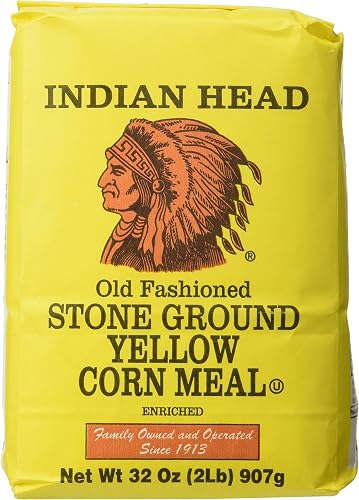
1. Indian Head Old Fashioned Stone Ground Yellow Corn Meal, 2 lb
1. Indian Head.
👍 Pros & Cons
Pros
- Classic stone ground flavor
- Easy to find
- Good for cornbread
Cons
- Check the label for whole-grain status
- Store cool and dry
📄 Detailed Review
- Weight: 2 lb (listing)
- Grind: Stone ground (maker)
- Color: Yellow
A classic stone ground cornmeal.
Best everyday stone ground.

2. Quaker Yellow Cornmeal, 2 lb Bag
2. Quaker.
👍 Pros & Cons
Pros
- Fine, even texture
- Long shelf life
- Low price
Cons
- Milder corn flavor
- Usually degerminated (check label)
📄 Detailed Review
- Weight: 2 lb (listing)
- Type: Regular yellow cornmeal
- Brand: Quaker
The regular cornmeal benchmark.
Best regular cornmeal.
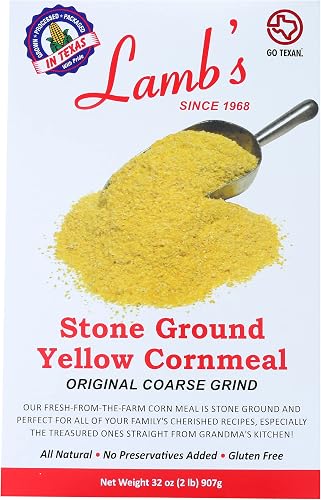
3. Lamb’s Stone Ground Yellow Cornmeal, Original Coarse Grind
3. Lamb’s.
👍 Pros & Cons
Pros
- Coarse texture for polenta and grits
- Rich corn flavor
- Small-mill style
Cons
- Coarse grind is gritty for cakes
- Shorter shelf life
📄 Detailed Review
- Grind: Coarse, stone ground (listing)
- Color: Yellow
- Use: Grits, polenta, cornbread
A coarse stone ground option.
Best coarse grind.

4. Bob’s Red Mill Medium Grind Cornmeal, 24 oz
4. Bob’s Red Mill.
👍 Pros & Cons
Pros
- Rolls well under dough
- Classic pizzeria crunch
- Also for cornbread
Cons
- Gritty texture on the crust
- Can burn and smoke in very hot ovens
📄 Detailed Review
- Grain: Corn (listing)
- Grind: Medium (listing)
- Size: 24 oz (listing)
Medium cornmeal for dusting.
Best cornmeal.

5. Arrowhead Mills Organic Yellow Cornmeal, 22 Ounce
5. Arrowhead Mills.
👍 Pros & Cons
Pros
- Organic
- Good flavor
- Works in most recipes
Cons
- Check grind on the label
- Store chilled after opening
📄 Detailed Review
- Weight: 22 oz (listing)
- Certification: USDA Organic (listing)
- Color: Yellow
An organic cornmeal.
Best organic.

6. Corona Manual Grain Mill, Cast Iron (High Hopper)
6. Corona.
👍 Pros & Cons
Pros
- Bigger hopper for corn
- Inexpensive
Cons
- Coarse texture
- Needs seasoning and drying
📄 Detailed Review
- Material: Cast iron, tin-plated
- Hopper: High hopper
- Weight: About 9.5 lb
- Origin: Colombia
The high-hopper Corona holds more corn per load for tamales, arepas and grits.
Run grain twice for a finer texture.
How We Chose the Stone Ground Cornmeal vs Regular
For this stone ground cornmeal vs regular guide, we compared grain mills, wheat berries and stone ground products listed on Amazon US by mill type, burr material, flour fineness, speed, heat, capacity and price, using product details from the listings and makers rather than a hands-on lab test. We then looked at common praise and complaints in buyer feedback for flour texture, noise, heat, cleaning and long-term reliability. Prices and listings change often, so check the current listing before you buy.
Do not eat raw flour or raw dough, store whole grain flour cold, keep fingers out of mill hoppers and unplug electric mills before cleaning following USDA Food Safety and Inspection Service cleanliness guidance. Our method is explained on the How We Test page.
Stone Ground Cornmeal vs Regular: Key Differences
Milling
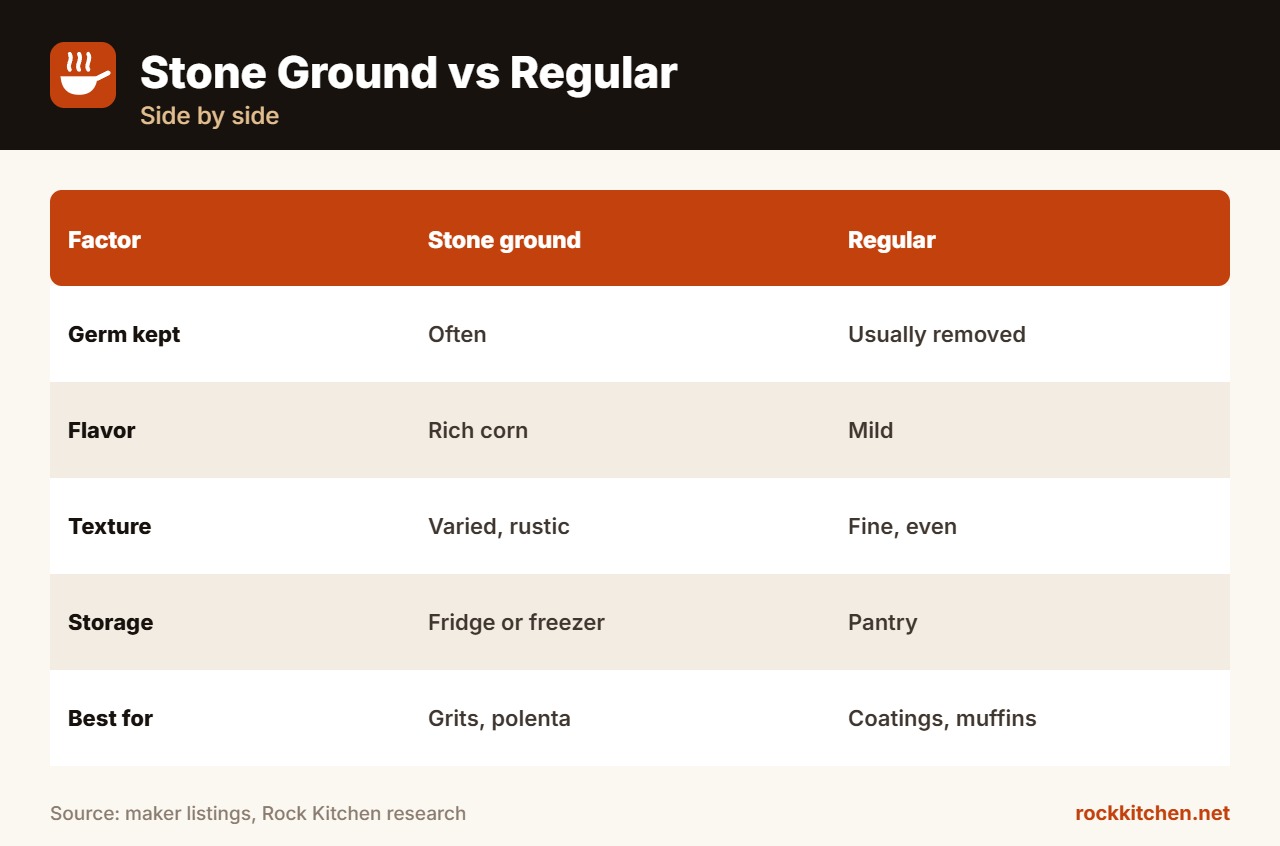
Stone mills grind slowly and keep more of the kernel; steel rollers separate the germ for a finer product.
Flavor
Stone ground tastes sweeter and more corn-forward; regular is milder.
Texture
Stone ground has a mix of particle sizes; regular is even and fine.
Nutrition
Whole-grain stone ground keeps more fiber and natural oils; regular is often enriched.
Shelf life
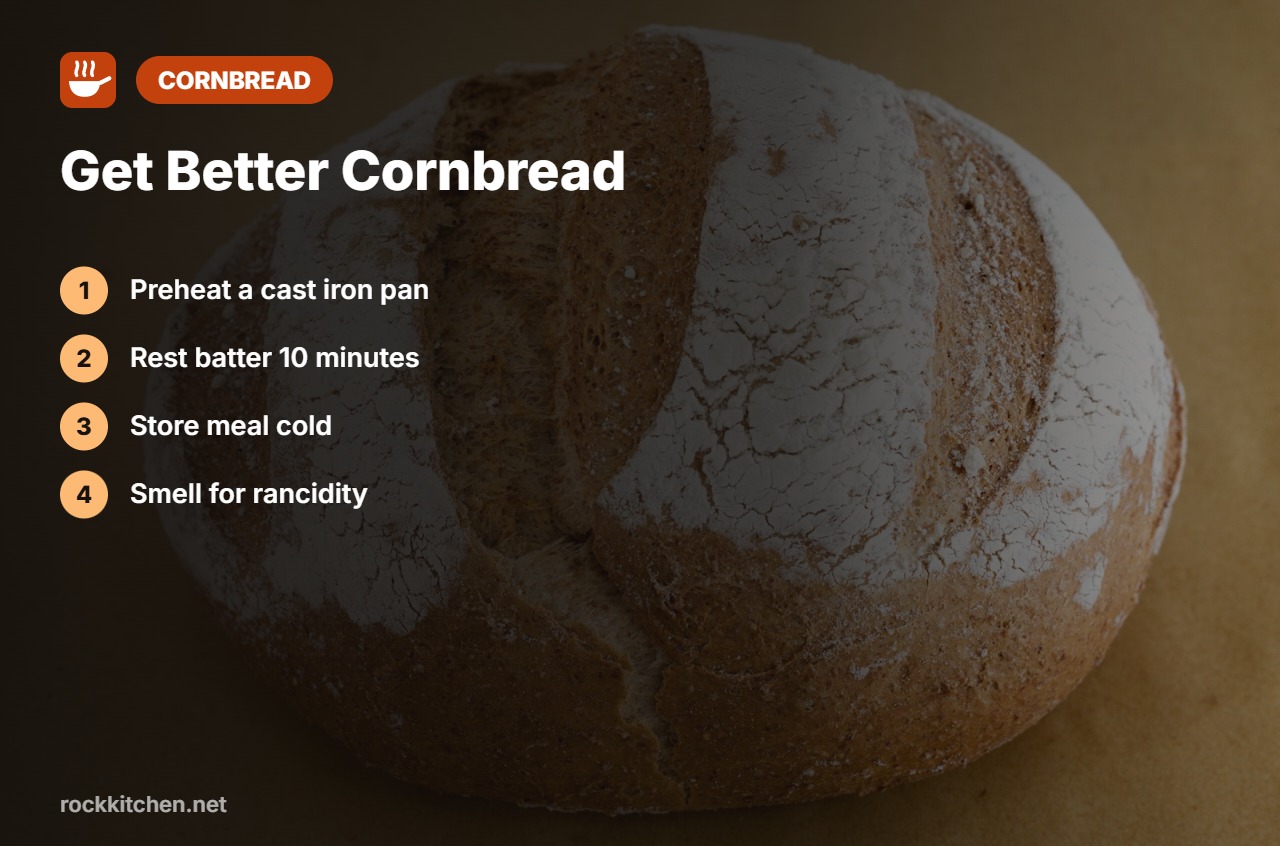
The germ’s oils can go rancid, so stone ground keeps best in the fridge or freezer.
Tips for Milling and Storing Whole Grains
- Mill only what you need for a few days.
- Store fresh flour in the fridge or freezer.
- Keep berries dry, cool and airtight.
- Never mill oily seeds in a dry stone mill.
- Clean burrs per the maker before switching grains.
Quick answers to common questions about stone ground cornmeal vs regular.
Frequently Asked Questions
Is stone ground cornmeal healthier?
Whole-grain stone ground cornmeal keeps more fiber and natural oils; check the label for whole grain.
Can I swap stone ground for regular?
Yes, but expect a coarser texture and stronger corn flavor.
Does stone ground cornmeal go bad?
Yes, faster than regular; refrigerate or freeze it.
Is cornmeal gluten free?
Corn is gluten free, but check the label for cross-contact if you need certified gluten free.
Final Verdict
Our stone ground cornmeal vs regular verdict: pick Indian Head stone ground for flavor, and Quaker regular cornmeal for mild, fine, shelf-stable baking.
Related Guides
Keep exploring mortars, grinders and mills with these guides:
Prices and availability change often. Check the current listing on Amazon before you buy.