
As an Amazon Associate we earn from qualifying purchases. Learn more about our affiliate disclaimer.
The glazed vs unglazed pizza stone choice is about the surface, not the stone inside. A glazed stone has a sealed, glassy top that resists stains and wipes clean. An unglazed stone, usually cordierite, is porous: it pulls a little moisture from the dough for a slightly drier, crisper base, but it stains and must never be washed with soap.
Here is how to choose, with three stones of each type.
Quick Answer: The Glazed vs Unglazed Pizza Stone
- Best UnglazedROCKSHEAT 15 x 12 In. Cordierite Pizza Stone with Built-In Handles
- Best Value UnglazedUnicook Pizza Stone for Oven and Grill, 15 x 12 Inch
- Best Thick UnglazedKitchenStar 16 Inch Round Cordierite Pizza Stone, 5/8 In. Thick
- Best GlazedEmile Henry Flame Top 14.5 Inch Ceramic Pizza Stone
- Best Glazed RoundOld Stone Pizza Kitchen Glazed Round Pizza Stone
- Best Glazed RectangleOld Stone Pizza Kitchen Glazed Rectangle Pizza Stone
Choose unglazed cordierite, such as ROCKSHEAT, Unicook or KitchenStar, if crisp crust and low price matter most. Choose glazed, such as Emile Henry’s 14.5-inch or Old Stone’s glazed round and rectangle, if you want easy cleanup and a stone you can carry to the table.
Glazed vs Unglazed Pizza Stone Comparison Table
| Product | Best For | Type | Key Feature | Buy |
|---|---|---|---|---|
| ROCKSHEAT 15 x 12 Stone | Best Unglazed | Cordierite stone | Cordierite with grip handles | Check Price |
| Unicook 15 x 12 Stone | Best Value Unglazed | Cordierite stone | Rectangular cordierite stone | Check Price |
| KitchenStar 16 In. Stone | Best Thick Unglazed | Thick cordierite stone | Thick round stone that stores heat | Check Price |
| Emile Henry 14.5 In. Stone | Best Glazed | Glazed ceramic stone | Glazed ceramic with handles, made in France | Check Price |
| Old Stone Glazed Round | Best Glazed Round | Glazed pizza stone | Glazed top for easier cleanup | Check Price |
| Old Stone Glazed Rectangle | Best Glazed Rectangle | Glazed pizza stone | Rectangular glazed stone | Check Price |
6 Picks: Glazed and Unglazed Stones
Unglazed first, then glazed.

1. ROCKSHEAT 15 x 12 In. Cordierite Pizza Stone with Built-In Handles
1. ROCKSHEAT.
👍 Pros & Cons
Pros
- Handles help move it
- Good thermal shock resistance
- Low price
Cons
- Handles reduce usable area
- Stains with use (normal)
📄 Detailed Review
- Size: 15 x 12 in. (listing)
- Material: Cordierite (listing)
- Handles: Built-in
A popular cordierite stone.
Cordierite value.

2. Unicook Pizza Stone for Oven and Grill, 15 x 12 Inch
2. Unicook.
👍 Pros & Cons
Pros
- Popular everyday size
- Low price
- Works on grills
Cons
- No handles
- Stains with use (normal)
📄 Detailed Review
- Size: 15 x 12 in. (listing)
- Material: Cordierite (listing)
- Use: Oven and grill (listing)
Unicook’s standard stone.
The reviewed stone.

3. KitchenStar 16 Inch Round Cordierite Pizza Stone, 5/8 In. Thick
3. KitchenStar.
👍 Pros & Cons
Pros
- Thick for heat storage
- Large round surface
- Good for back-to-back pizzas
Cons
- Heavy
- Longer preheat
📄 Detailed Review
- Size: 16 in. round (listing)
- Thickness: 5/8 in. (listing)
- Material: Cordierite
A thick round cordierite stone.
Thick stone.

4. Emile Henry Flame Top 14.5 Inch Ceramic Pizza Stone
4. Emile Henry.
👍 Pros & Cons
Pros
- Glaze resists stains
- Handles for carrying
- Oven and grill safe (maker)
Cons
- Costs more than cordierite
- Smaller than many stones
📄 Detailed Review
- Size: 14.5 in. round (maker)
- Material: Glazed ceramic (maker)
- Made in: France (maker)
Emile Henry’s glazed pizza stone.
The reviewed stone.

5. Old Stone Pizza Kitchen Glazed Round Pizza Stone
5. Old Stone.
👍 Pros & Cons
Pros
- Glaze resists stains
- Easy wipe-down
- Known brand
Cons
- Glaze can make crust less crisp than raw stone
- Avoid sudden temperature changes
📄 Detailed Review
- Size: Round (listing)
- Finish: Glazed (listing)
- Material: Stone (listing)
A glazed version of the Old Stone line.
Glazed pick.

6. Old Stone Pizza Kitchen Glazed Rectangle Pizza Stone
6. Old Stone.
👍 Pros & Cons
Pros
- Fits more of a rack
- Easy to clean
- Good for flatbreads
Cons
- Not for very high heat shock
- Costs more than raw stones
📄 Detailed Review
- Shape: Rectangle (listing)
- Finish: Glazed (listing)
- Use: Oven
A rectangular glazed stone.
Glazed rectangle.
How We Chose the Glazed vs Unglazed Pizza Stone
For this glazed vs unglazed pizza stone guide, we compared pizza stones, steels and pans listed on Amazon US by material, size, thickness, weight, heat limits and care, using product details from the listings and makers rather than a hands-on lab test. We then looked at common praise and complaints in buyer feedback for crust browning, cracking, sticking, rust and ease of cleaning. Ratings and prices change often, so check the current listing before you buy.
Preheat stones and steels slowly with the oven, never put a cold or wet stone into a hot oven, use thick oven mitts, keep hot surfaces away from children and cook meat toppings to safe temperatures following USDA Food Safety and Inspection Service cleanliness guidance. Our method is explained on the How We Test page.
Glazed vs Unglazed Pizza Stone: What Changes
Crust
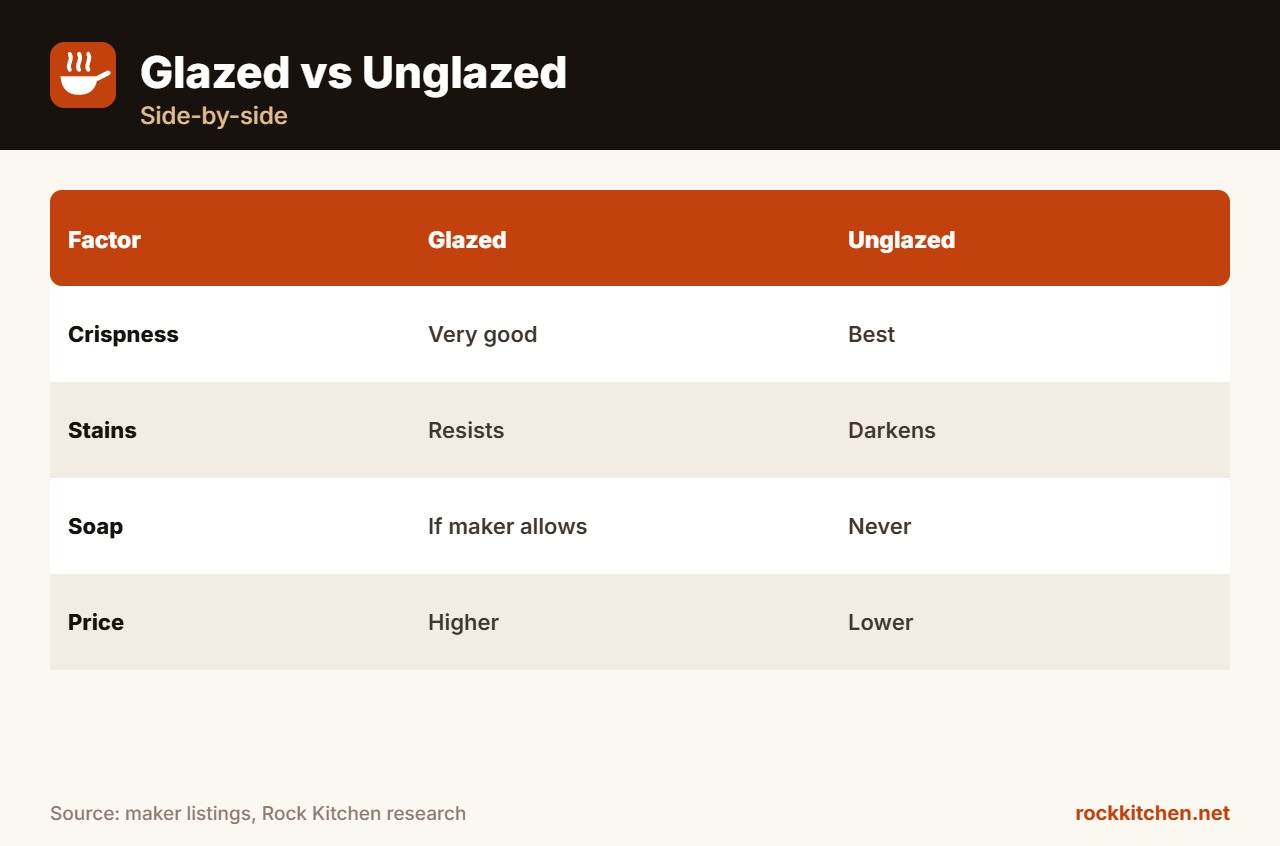
Unglazed stones absorb some surface moisture, which helps a crisp base; glazed stones crisp well but slightly less.
Sticking
A glazed top releases baked cheese more easily; on unglazed stones, use semolina and scrape off spills once cool.
Stains
Unglazed stones darken with use, which is normal; glazed stones stay cleaner looking.
Cleaning
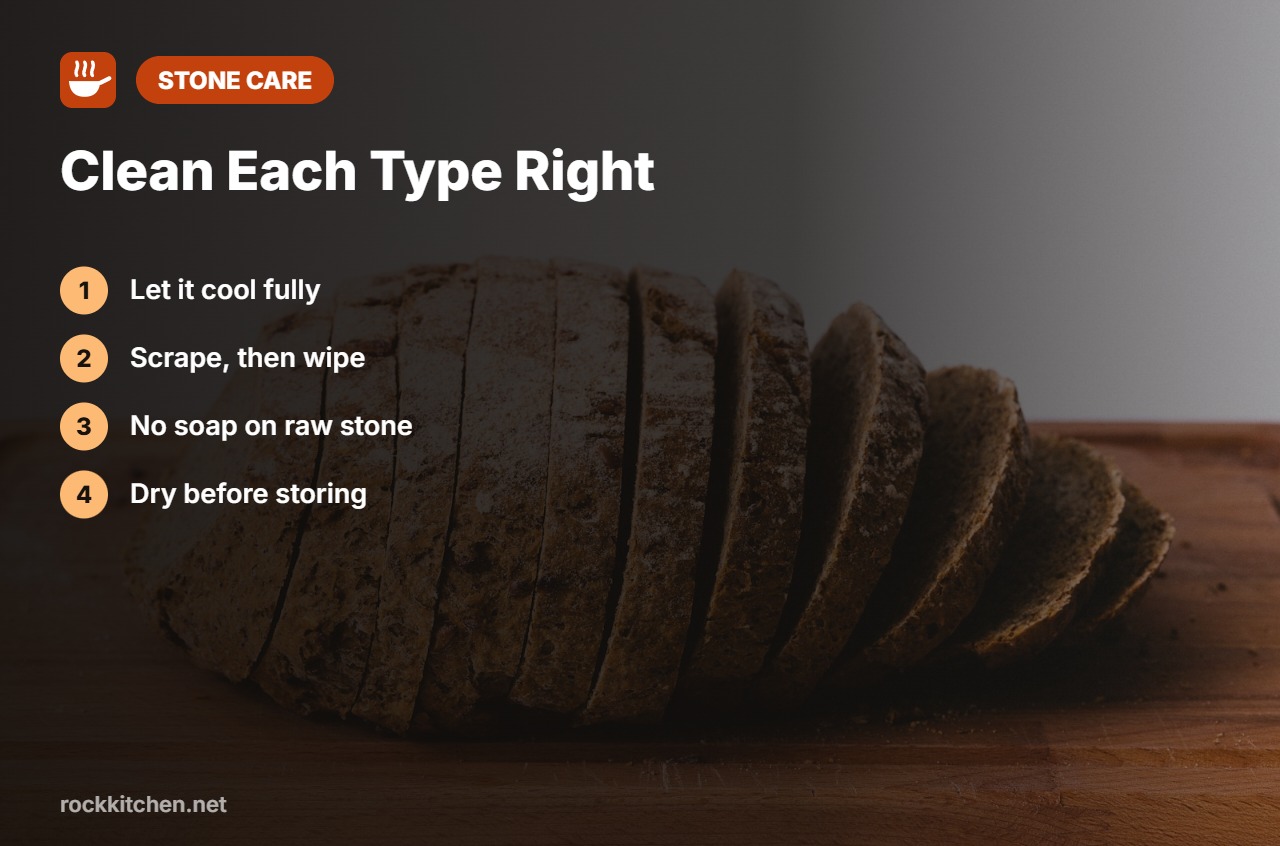
Glazed stones can be washed with warm water and a mild soap if the maker allows; unglazed stones need water and a scraper only.
Serving
Glazed stones can go from oven to table on a trivet; unglazed stones are kitchen tools.
Tips for a Crisper Home Pizza
- Preheat the stone or steel with the oven for 45 to 60 minutes.
- Bake on a rack near the heat source that browns your base best.
- Use semolina or flour on the peel so the dough slides.
- Keep sauce and toppings light for a crisp center.
- Let stones cool in the oven; never wet a hot stone.
Quick answers to common questions about glazed vs unglazed pizza stone.
Frequently Asked Questions
Is a glazed pizza stone better?
It is easier to clean and nicer to serve on; an unglazed stone gives a slightly crisper crust for less money.
Why is my unglazed pizza stone black?
Oil and cheese bake into the pores. Dark spots are normal and do not affect baking.
Can I use soap on a glazed pizza stone?
Many glazed stones allow mild soap; check the maker’s care guide first.
Do glazed stones need preheating?
Yes, preheat any stone slowly with the oven for best results.
Final Verdict
Our glazed vs unglazed pizza stone verdict: buy an unglazed ROCKSHEAT for the crispest crust per dollar, or a glazed Emile Henry for easy care and serving.
Related Guides
Keep exploring pizza and baking gear with these guides:
Prices and availability change often. Check the current listing on Amazon before you buy.