

As an Amazon Associate we earn from qualifying purchases. Learn more about our affiliate disclaimer.
Should you put a pizza stone on bottom rack or top rack? In most home ovens the best spot is the lower-middle rack: close enough to the bottom element to stay hot, with room above for the top of the pizza to brown. The answer changes if your oven heats mainly from the broiler or if the base burns before the top is done.
Here is how to choose, plus five tools that help.
Quick Answer: The Pizza Stone on Bottom Rack or Top Rack
- Best StoneROCKSHEAT 15 x 12 In. Cordierite Pizza Stone with Built-In Handles
- Best Value StoneUnicook Pizza Stone for Oven and Grill, 15 x 12 Inch
- Best Thick StoneKitchenStar 16 Inch Round Cordierite Pizza Stone, 5/8 In. Thick
- Best for Top-Rack BroilingTHERMICHEF 16 x 16 In. Pizza Steel, 1/4 In.
- Best ThermometerEtekcity Lasergrip 1080 Infrared Thermometer, -58°F to 1130°F
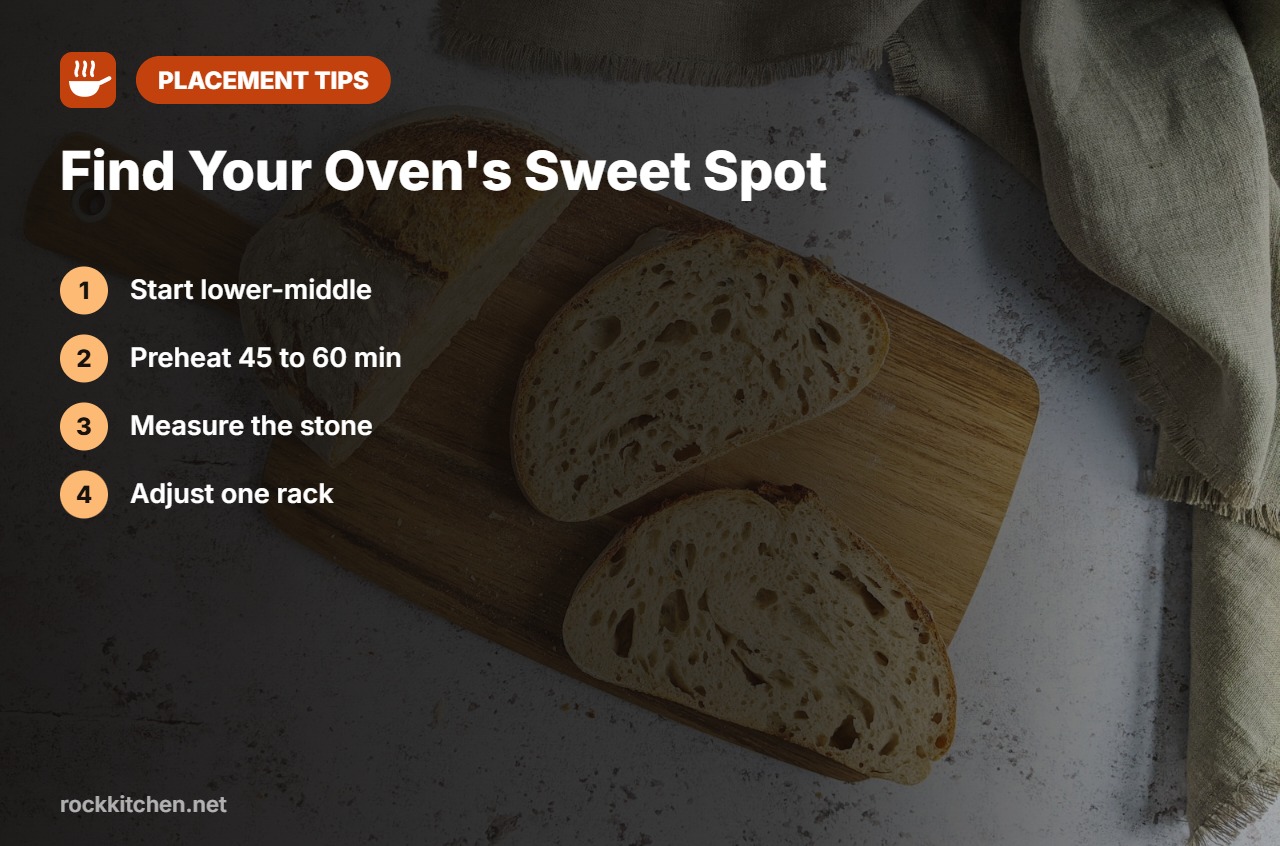
Start on the lower-middle rack and preheat 45 to 60 minutes at your oven’s highest setting. If the bottom burns, move up a rack. If the top is pale, move to the upper-middle rack and use the broiler for the last 1 to 2 minutes. An infrared thermometer, such as the Etekcity 1080, shows the stone’s real temperature.
Pizza Stone on Bottom Rack or Top Rack Comparison Table
| Product | Best For | Type | Key Feature | Buy |
|---|---|---|---|---|
| ROCKSHEAT 15 x 12 Stone | Best Stone | Cordierite stone | Cordierite with grip handles | Check Price |
| Unicook 15 x 12 Stone | Best Value Stone | Cordierite stone | Rectangular cordierite stone | Check Price |
| KitchenStar 16 In. Stone | Best Thick Stone | Thick cordierite stone | Thick round stone that stores heat | Check Price |
| ThermiChef 16 x 16 Steel | Best for Top-Rack Broiling | Pizza steel | Steel plate for fast, crisp bakes | Check Price |
| Etekcity Lasergrip 1080 | Best Thermometer | Infrared thermometer | To 1130°F, adjustable emissivity | Check Price |
5 Picks for Better Stone Placement
Stones, a steel and a thermometer.

1. ROCKSHEAT 15 x 12 In. Cordierite Pizza Stone with Built-In Handles
1. ROCKSHEAT.
👍 Pros & Cons
Pros
- Handles help move it
- Good thermal shock resistance
- Low price
Cons
- Handles reduce usable area
- Stains with use (normal)
📄 Detailed Review
- Size: 15 x 12 in. (listing)
- Material: Cordierite (listing)
- Handles: Built-in
A popular cordierite stone.
Cordierite value.

2. Unicook Pizza Stone for Oven and Grill, 15 x 12 Inch
2. Unicook.
👍 Pros & Cons
Pros
- Popular everyday size
- Low price
- Works on grills
Cons
- No handles
- Stains with use (normal)
📄 Detailed Review
- Size: 15 x 12 in. (listing)
- Material: Cordierite (listing)
- Use: Oven and grill (listing)
Unicook’s standard stone.
The reviewed stone.

3. KitchenStar 16 Inch Round Cordierite Pizza Stone, 5/8 In. Thick
3. KitchenStar.
👍 Pros & Cons
Pros
- Thick for heat storage
- Large round surface
- Good for back-to-back pizzas
Cons
- Heavy
- Longer preheat
📄 Detailed Review
- Size: 16 in. round (listing)
- Thickness: 5/8 in. (listing)
- Material: Cordierite
A thick round cordierite stone.
Thick stone.

4. THERMICHEF 16 x 16 In. Pizza Steel, 1/4 In.
4. Steel.
👍 Pros & Cons
Pros
- Faster browning than stone
- Will not crack
- Large area
Cons
- Heavy
- Needs seasoning to prevent rust
📄 Detailed Review
- Size: 16 x 16 in. (listing)
- Thickness: 1/4 in. (listing)
- Material: Steel
A popular pizza steel.
Steel pick.

5. Etekcity Lasergrip 1080 Infrared Thermometer, -58°F to 1130°F
5. Etekcity.
👍 Pros & Cons
Pros
- Covers wood-fired oven temperatures
- Adjustable emissivity
- Proven reliability
Cons
- Single laser
- Reads surface only, not air
📄 Detailed Review
- Range: -58°F to 1130°F
- Emissivity: 0.1–1.0 adjustable
- D:S ratio: 12:1
- Ratings: About 37,600
The Lasergrip 1080 reads up to 1130°F, enough for the hottest gas and wood-fired pizza ovens.
Adjustable emissivity improves accuracy on dark stones.
How We Chose the Pizza Stone on Bottom Rack or Top Rack
For this where to put a pizza stone guide, we compared pizza stones, steels and pans listed on Amazon US by material, size, thickness, weight, heat limits and care, using product details from the listings and makers rather than a hands-on lab test. We then looked at common praise and complaints in buyer feedback for crust browning, cracking, sticking, rust and ease of cleaning. Ratings and prices change often, so check the current listing before you buy.
Preheat stones and steels slowly with the oven, never put a cold or wet stone into a hot oven, use thick oven mitts, keep hot surfaces away from children and cook meat toppings to safe temperatures following USDA Food Safety and Inspection Service cleanliness guidance. Our method is explained on the How We Test page.
Pizza Stone on Bottom Rack or Top Rack: How to Decide
Default spot
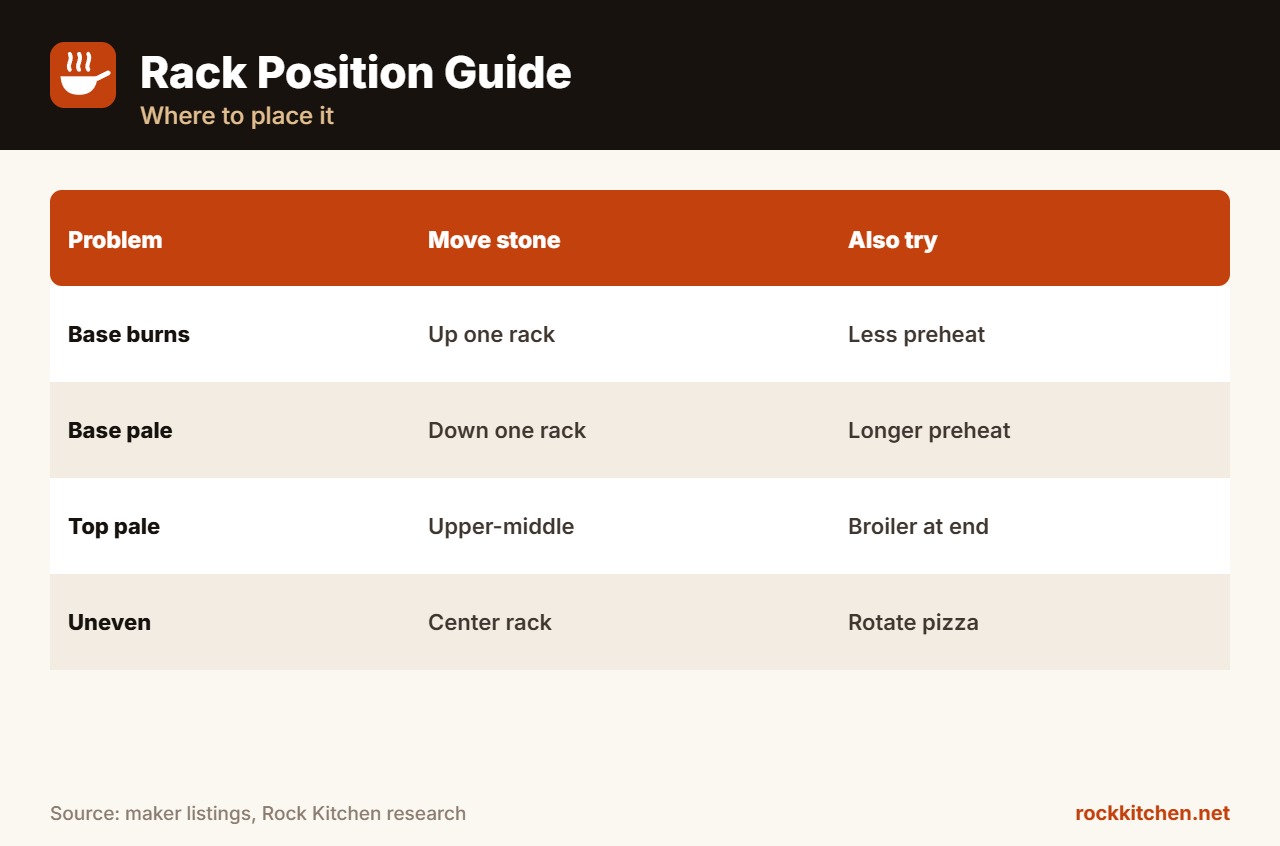
Lower-middle rack works in most ovens; it balances base and top browning.
Bottom rack
Use it if your oven runs cool or the base is pale; watch for burning in gas ovens with a strong bottom flame.
Oven floor
Do not set a stone directly on the oven floor or over vents unless your oven maker allows it.
Top rack
Use the upper-middle rack with the broiler for fast, Neapolitan-style tops, especially with a steel.
Check heat
Measure the stone with an infrared thermometer; aim for about 500 to 550 degrees F before launching.
Tips for a Crisper Home Pizza
- Preheat the stone or steel with the oven for 45 to 60 minutes.
- Bake on a rack near the heat source that browns your base best.
- Use semolina or flour on the peel so the dough slides.
- Keep sauce and toppings light for a crisp center.
- Let stones cool in the oven; never wet a hot stone.
Quick answers to common questions about where to put a pizza stone.
Frequently Asked Questions
Should a pizza stone go on the bottom rack?
The lower-middle rack is the best start; the very bottom can burn the base in some ovens.
Can I put a pizza stone on the top rack?
Yes, with the broiler, for faster top browning, but preheat the stone fully first.
Can I put a pizza stone on the oven floor?
Only if your oven maker allows it, since it can block vents and overheat elements.
How long should a pizza stone preheat?
About 45 to 60 minutes at the oven’s highest normal temperature.
Final Verdict
Our pizza stone on bottom rack or top rack verdict: start lower-middle with a ROCKSHEAT stone, then adjust one rack at a time using an infrared thermometer.
Related Guides
Keep exploring pizza and baking gear with these guides:
Prices and availability change often. Check the current listing on Amazon before you buy.