
As an Amazon Associate we earn from qualifying purchases. Learn more about our affiliate disclaimer.
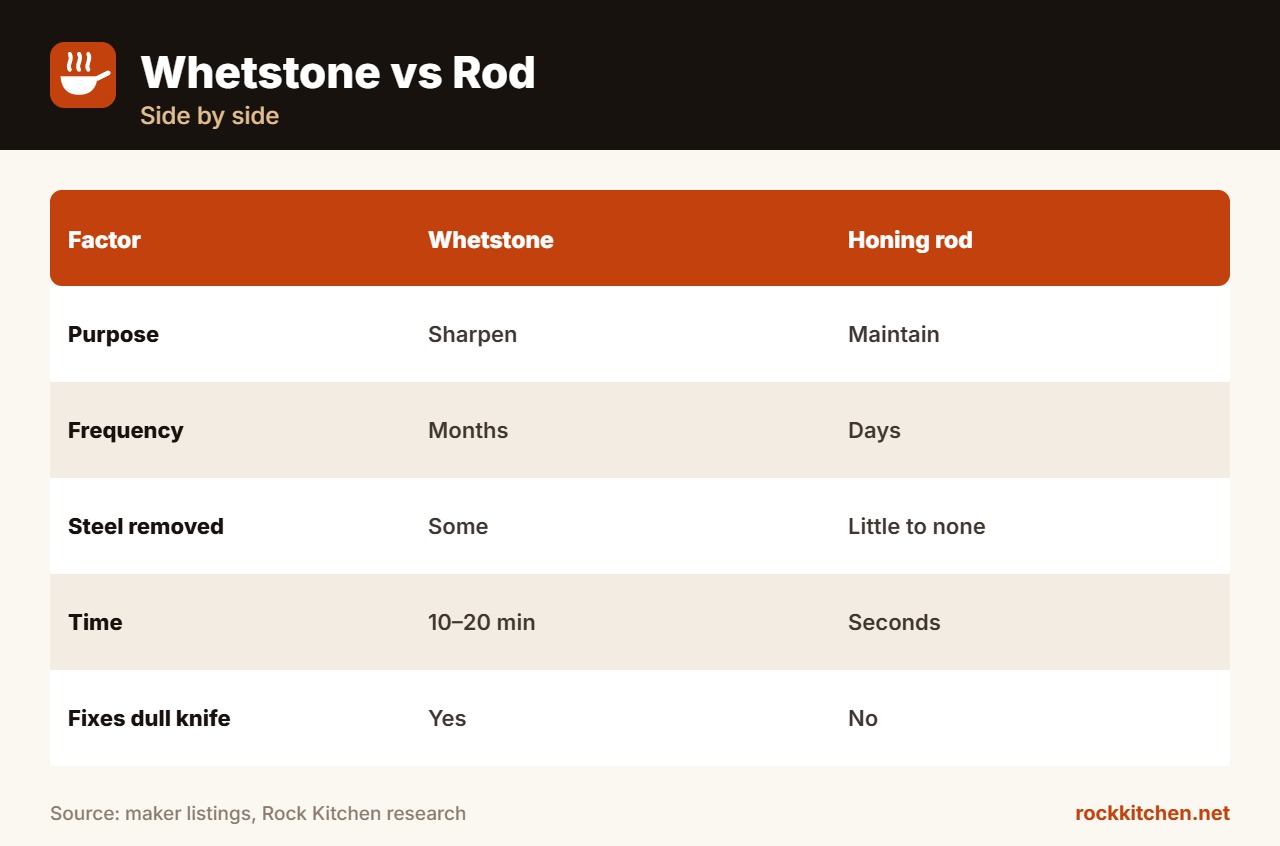
Whetstone vs honing rod is not really either-or. A whetstone sharpens: it grinds away steel to make a new edge when a knife is dull. A honing rod straightens and lightly refines an edge that has rolled during use, so it stays sharp longer between sharpenings. Ceramic rods also remove a tiny amount of steel.
Here is how to use both.
Quick Answer: The Whetstone vs Honing Rod
- Best WhetstoneKING KW65 1000/6000 Grit Combination Whetstone with Base
- Best Ceramic Honing RodGreen Elephant Ceramic Honing Rod, 11 Inch, 1500 Grit, Shatterproof
- Best Steel Honing RodWÜSTHOF 9 Inch Honing Steel
- Best Premium WhetstoneShapton Kuromaku #1000 (K0702, Orange)
- Best Rod With GuideWork Sharp Kitchen Ceramic Honing Rod with Angle Guide
- Best Compact Ceramic RodMac Knife Ceramic Honing Rod, 8-1/2 Inch
Use a honing rod like the Green Elephant ceramic rod or a Wüsthof steel every few cooking sessions, and a whetstone like the KING KW65 every few months when honing no longer brings the edge back. Ceramic rods suit harder Japanese knives; steel rods suit softer German knives.
Whetstone vs Honing Rod Comparison Table
| Product | Best For | Type | Key Feature | Buy |
|---|---|---|---|---|
| KING KW65 | Best Whetstone | Synthetic combination waterstone | 1000/6000 grit with plastic base | Check Price |
| Green Elephant Ceramic Rod 11" | Best Ceramic Honing Rod | Ceramic honing rod | 1500 grit, shatter-resistant (maker) | Check Price |
| Wüsthof 9" Honing Steel | Best Steel Honing Rod | Steel honing rod | Classic German honing steel | Check Price |
| Shapton Kuromaku 1000 | Best Premium Whetstone | Ceramic whetstone | #1000 medium, 210 x 70 x 15 mm | Check Price |
| Work Sharp Ceramic Rod | Best Rod With Guide | Ceramic honing rod | Built-in 17° angle guide (maker) | Check Price |
| Mac Ceramic Rod 8.5" | Best Compact Ceramic Rod | Ceramic honing rod | Compact rod from a Japanese knife maker | Check Price |
6 Picks: Whetstones and Honing Rods
Two whetstones, three ceramic rods and one steel.

1. KING KW65 1000/6000 Grit Combination Whetstone with Base
1. KING KW65.
👍 Pros & Cons
Pros
- The classic Japanese starter stone
- Builds the skills you need before a natural stone
Cons
- Soaking stone
- Wears and dishes faster than hard stones
📄 Detailed Review
- Grits: 1000 / 6000
- Size: 8 x 2.5 x 1 in.
- Base: Plastic stand
- Made in: Japan
Most sharpeners learn on a 1000/6000 synthetic before buying a natural stone. The King KW65 is the most common choice.
Use the 1000 side to set the edge, then move to a natural finishing stone when your angle is consistent.

2. Green Elephant Ceramic Honing Rod, 11 Inch, 1500 Grit, Shatterproof
2. Green Elephant.
👍 Pros & Cons
Pros
- Fine grit safe for Japanese knives
- Durable build
Cons
- Can load with metal; clean often
- Longer than some drawers
📄 Detailed Review
- Length: 11 in.
- Abrasive: Ceramic, 1500 grit
- Feature: Shatterproof design (maker)
A popular ceramic honing rod.
Our top ceramic rod.

3. WÜSTHOF 9 Inch Honing Steel
3. Wüsthof.
👍 Pros & Cons
Pros
- Trusted brand
- Matches German knives
Cons
- Not ideal for very hard steel
- Pricier than generic rods
📄 Detailed Review
- Length: 9 in.
- Material: Steel
- Brand: Wüsthof
Wüsthof’s classic steel for German knives.
Best brand-name steel.

4. Shapton Kuromaku #1000 (K0702, Orange)
4. Kuromaku.
👍 Pros & Cons
Pros
- Cuts fast enough to double as a coarse stone
- Case doubles as a stone holder
- Hugely popular first stone
Cons
- Single grit only
- Thin compared with soaking stones
📄 Detailed Review
- Grit: #1000 (medium)
- Size: 210 x 70 x 15 mm
- Item: K0702
- Use: Rough or medium sharpening
Shapton describes the orange K0702 as a #1000 medium stone with enough bite to be used for rough or medium sharpening.
It is one of the most recommended first whetstones for kitchen knives because it cuts quickly and stays relatively flat.

5. Work Sharp Kitchen Ceramic Honing Rod with Angle Guide
5. Work Sharp.
👍 Pros & Cons
Pros
- Angle guide helps beginners
- Two grits on one rod
Cons
- Pricier than basic rods
- Guide adds bulk
📄 Detailed Review
- Abrasive: Ceramic
- Guide: Built-in angle guide
- Brand: Work Sharp
A guided ceramic rod that takes the guesswork out of the angle.
Best for beginners.

6. Mac Knife Ceramic Honing Rod, 8-1/2 Inch
6. Mac.
👍 Pros & Cons
Pros
- Made for Japanese knives
- Compact
Cons
- Short for long slicers
- Pricier
📄 Detailed Review
- Length: 8.5 in.
- Abrasive: Ceramic
- Brand: Mac (Japan)
Mac’s compact ceramic rod suits Japanese gyutos.
Best for Japanese knives.
How We Chose the Whetstone vs Honing Rod
For this whetstone vs honing rod guide, we compared whetstones, diamond plates, oil stones and knife sharpeners listed on Amazon US by abrasive type, grit, size, hardness, angle control, speed and price, using product details from the listings and makers rather than a hands-on lab test. We then looked at common praise and complaints in buyer feedback for edge quality, wear, dishing, mess and learning curve. Prices and listings change often, so check the current listing before you buy.
Keep fingers behind the edge, sharpen on a stable non-slip base, keep metal swarf away from food, and wash knives before they touch food again, and follow USDA Food Safety and Inspection Service cleanliness guidance for kitchen hygiene. Our method is explained on the How We Test page.
Whetstone vs Honing Rod: Key Differences
What each does
Whetstones create a new edge; rods realign and touch up an existing one.
How often
Hone every few uses; sharpen every few months.
Steel vs ceramic
Steel rods realign; ceramic rods realign and lightly abrade.
Knife type
Use ceramic for hard Japanese steel; steel or ceramic for German knives.
Technique
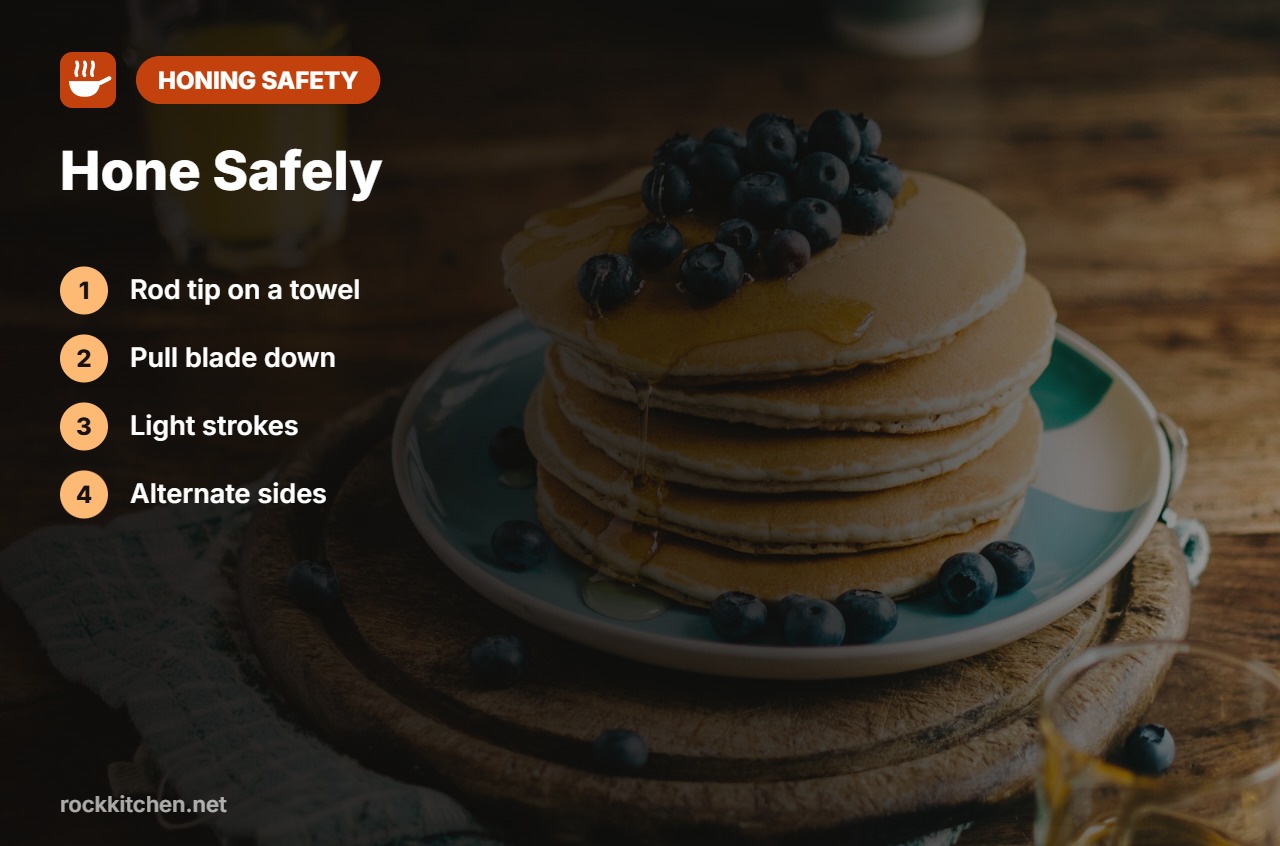
Use light, matching strokes on a rod at the same angle as the edge.
Tips for Safer, Sharper Edges
- Hold a steady angle; consistency matters more than the exact number.
- Raise a small burr along the full edge before moving to a finer grit.
- Use light pressure on finishing grits.
- Flatten water stones often so they do not dish.
- Rinse and dry knives, then wipe stones clean after use.
Quick answers to common questions about whetstone vs honing rod.
Frequently Asked Questions
Does a honing rod sharpen?
Steel rods mostly realign; ceramic rods lightly sharpen.
Can I skip the whetstone?
Not forever; once honing stops working, the knife needs sharpening.
Is a ceramic rod safe for Japanese knives?
Yes, ceramic is the usual choice for harder steels.
How many strokes?
Five to eight light strokes per side is plenty.
Final Verdict
Our whetstone vs honing rod verdict: use a Green Elephant ceramic rod to maintain the edge and a KING KW65 to sharpen when needed.
Related Guides
Keep exploring knives and sharpening with these guides:
Prices and availability change often. Check the current listing on Amazon before you buy.