
As an Amazon Associate we earn from qualifying purchases. Learn more about our affiliate disclaimer.
The mineral oil vs board butter choice is really about order. Mineral oil soaks deep into wood fibers to keep them from drying and cracking; board butter, a mix of oil and beeswax or carnauba, sits closer to the surface and helps water bead off.
Below we compare them and list products for each step.
Quick Answer: The Mineral Oil vs Board Butter
- Best Board ButterHoward Butcher Block Conditioner, 12 oz.
- Best Mineral OilThirteen Chefs Food Grade Mineral Oil, 12 oz.
- Best Oil and Wax KitCLARK’S Maple Cutting Board Care Kit, Oil and Wax
- Best Wood CreamBeeswax Woodcut Wood Cream, Food Safe, 14 oz.
- Best Branded OilJohn Boos Mystery Butcher Block Oil, 16 oz.
- Best Small WaxCutting Board Wax, Food-Safe, 3.5 fl oz.
Use mineral oil to saturate a new or dry board, then finish with board butter every few oilings for a smoother, more water-resistant surface. If you only buy one, mineral oil is the essential step.
Mineral Oil vs Board Butter Comparison Table
| Product | Best For | Type | Key Feature | Buy |
|---|---|---|---|---|
| Howard Butcher Block Conditioner | Best Board Butter | Mineral oil and wax conditioner | Food-grade oil blended with beeswax and carnauba (maker) | Check Price |
| Thirteen Chefs Mineral Oil | Best Mineral Oil | Food-grade mineral oil | Simple USP-style mineral oil (maker) | Check Price |
| CLARK’S Care Kit | Best Oil and Wax Kit | Board oil and wax kit | Oil plus finishing wax with applicator | Check Price |
| Woodcut Wood Cream 14 oz. | Best Wood Cream | Beeswax wood cream | Soft cream for boards and spoons | Check Price |
| John Boos Mystery Oil | Best Branded Oil | Food-grade board oil | Board maker’s own oil | Check Price |
| Cutting Board Wax 3.5 oz. | Best Small Wax | Cutting board wax | Small tin of food-safe wax | Check Price |
Our 6 Top Mineral Oils and Board Butters
Oils to soak in, butters to finish.

1. Howard Butcher Block Conditioner, 12 oz.
1. Howard conditioner.
👍 Pros & Cons
Pros
- Oil and wax in one step
- Easy to apply
- Widely used
Cons
- Thinner than a true paste butter
- Needs buffing
📄 Detailed Review
- Ingredients: Mineral oil, beeswax, carnauba wax (maker)
- Size: 12 oz.
- Use: Boards, butcher block
The easiest board butter-style finish.
Our top pick.

2. Thirteen Chefs Food Grade Mineral Oil, 12 oz.
2. Thirteen Chefs.
👍 Pros & Cons
Pros
- Low cost
- Odorless
- Also for knives and stone
Cons
- Plain oil, no wax
- Re-coat often
📄 Detailed Review
- Type: Food-grade mineral oil (maker)
- Size: 12 oz.
- Use: Boards, utensils
The best-value board oil.
Best value.

3. CLARK’S Maple Cutting Board Care Kit, Oil and Wax
3. CLARK’S kit.
👍 Pros & Cons
Pros
- Complete kit
- Wax seals after oiling
- Applicator keeps hands clean
Cons
- Scented options may not suit all
- Pricier than oil alone
📄 Detailed Review
- Includes: Oil, wax, applicator (listing)
- Scent: Varies (listing)
- Use: Boards, utensils
A two-step kit for well-kept boards.
Best kit.

4. Beeswax Woodcut Wood Cream, Food Safe, 14 oz.
4. Beeswax cream.
👍 Pros & Cons
Pros
- Large amount
- Soft and easy to spread
- Leaves a satin finish
Cons
- Less known brand
- Buff off extra
📄 Detailed Review
- Ingredients: Beeswax blend (listing)
- Size: 14 oz. total (listing)
- Use: Boards, spoons
A big tub of board butter.
Best value.

5. John Boos Mystery Butcher Block Oil, 16 oz.
5. John Boos.
👍 Pros & Cons
Pros
- Made by a board maker
- Soaks in well
- Easy to find
Cons
- Costs more than plain mineral oil
- Needs frequent coats on new boards
📄 Detailed Review
- Ingredients: Food-grade mineral oil blend (maker)
- Size: 16 oz.
- Use: Boards, butcher block
The board maker’s choice.
Our top pick.

6. Cutting Board Wax, Food-Safe, 3.5 fl oz.
6. Board wax.
👍 Pros & Cons
Pros
- Small tin to try
- Easy to store
- Simple use
Cons
- Small amount
- Newer listing
📄 Detailed Review
- Size: 3.5 fl oz. (listing)
- Use: Boards
- Claim: Food-safe (listing)
A small tin to test board butter.
Best small.
How We Chose the Mineral Oil vs Board Butter
To build this guide to the mineral oil vs board butter, we compared cutting board oils and board butters listed on Amazon US by ingredients, food-safe claims, size and applicator, using product details from the listings and makers. We then looked at common praise and complaints in buyer feedback for greasy feel, smell, how long a coat lasts and value. Ratings and prices change often, so check the current listing before you buy.
Use only food-grade products on boards, test nut oils if anyone has allergies and wash boards with warm soapy water following USDA Food Safety and Inspection Service cleanliness guidance. Our method is explained on the How We Test page; this is a research-based guide, not a lab test.
Mineral Oil vs Board Butter: Key Differences
What it does
Oil penetrates; butter adds a surface layer.
Water resistance
Butter makes water bead more than oil alone.
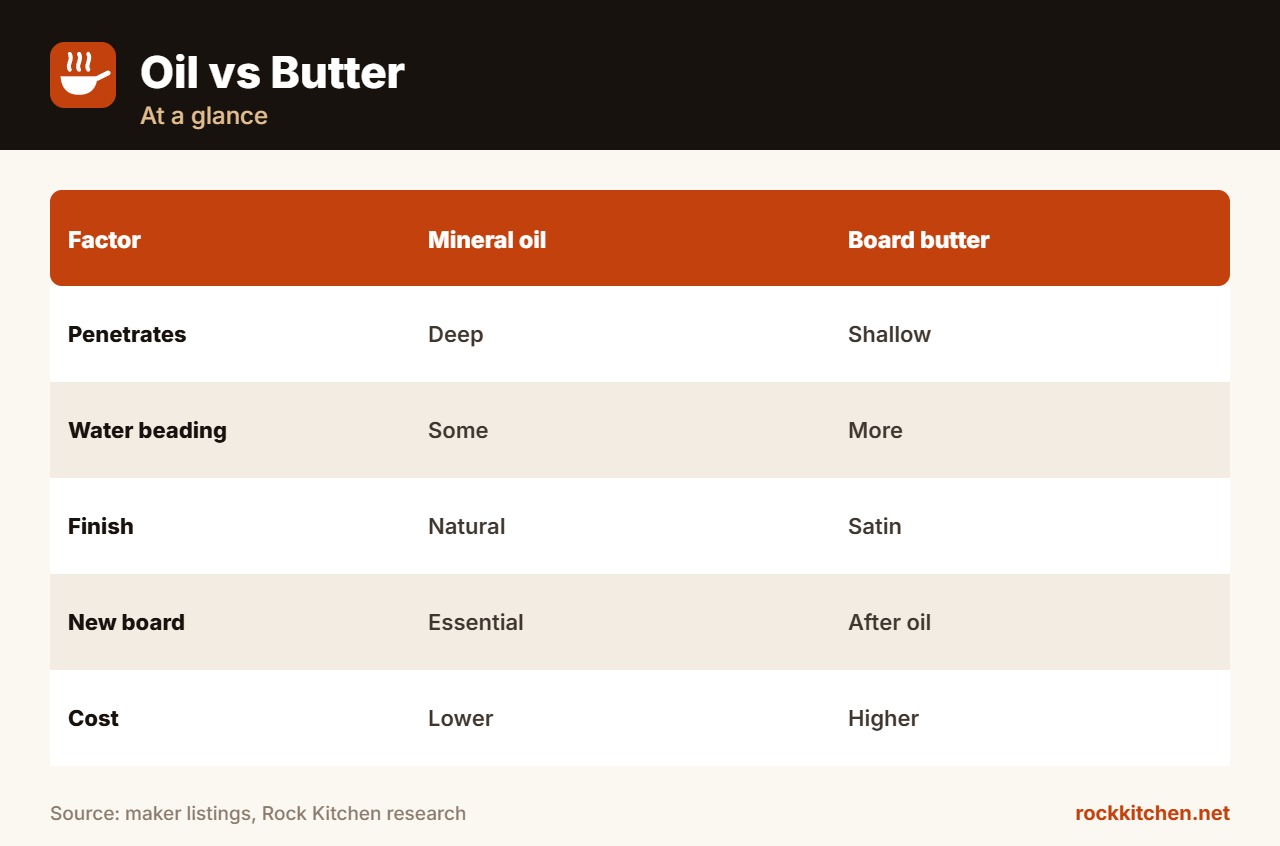
Feel
Butter leaves a silky, slightly satin finish.
Frequency
Oil monthly; butter every few oilings.
Best routine
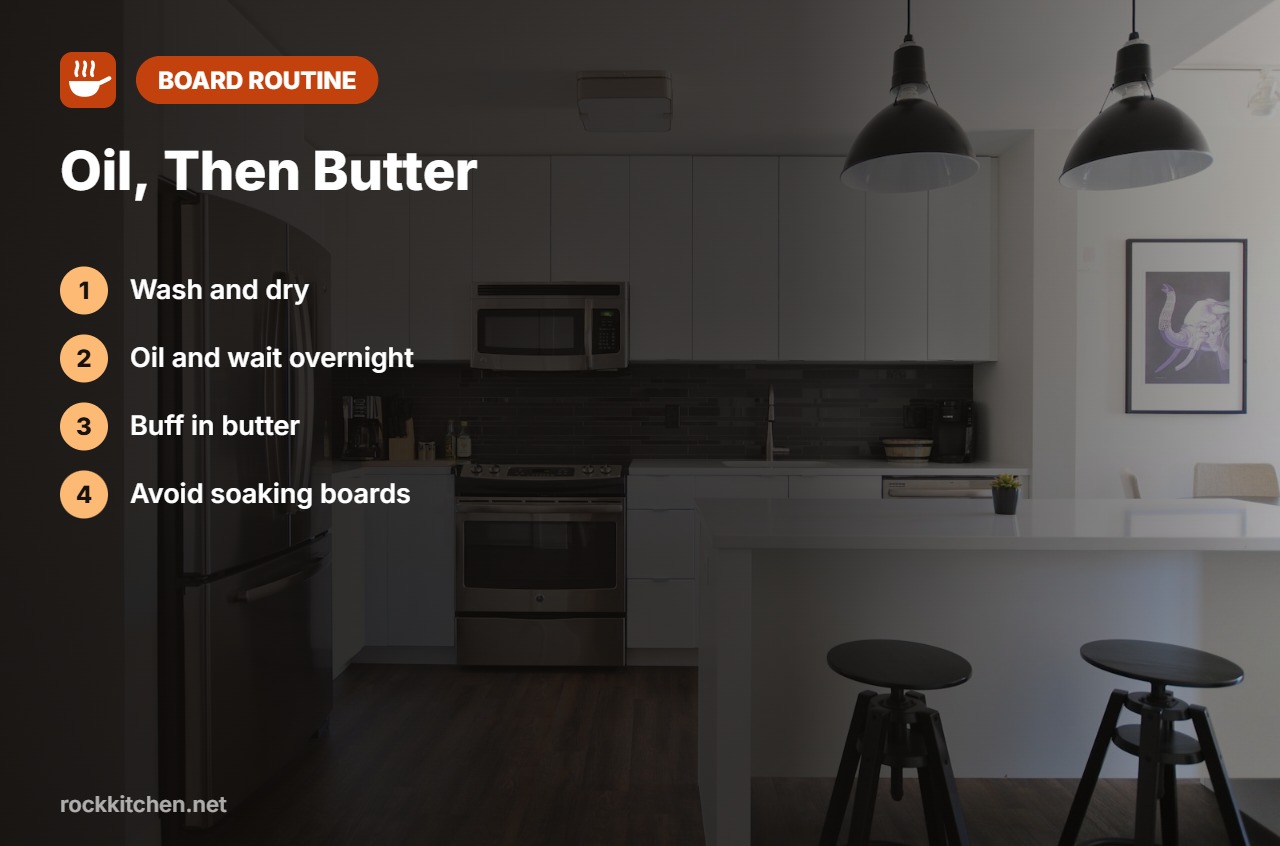
Oil first, let it soak, then buff in butter.
Tips for Oiling a Cutting Board
- Start with a clean, fully dry board.
- Apply a thin coat and let it soak overnight.
- Wipe off extra oil the next day.
- Re-oil when the wood looks pale or dry.
- Never soak a wood board or put it in the dishwasher.
Quick answers to common questions about the mineral oil vs board butter.
Frequently Asked Questions
Is board butter better than mineral oil?
They do different jobs; use both for best results.
Can I use only board butter?
It helps, but dry boards need oil to soak in first.
Is beeswax food safe?
Food-grade beeswax blends are sold for cutting boards; check the label.
Who wins mineral oil vs board butter for a new board?
Mineral oil first, then butter.
Final Verdict
In mineral oil vs board butter, use both: soak with mineral oil, then finish with the Howard board butter.
Related Guides
Keep exploring kitchen storage and accessories with these guides:
Prices and availability change often. Check the current listing on Amazon before you buy.