
As an Amazon Associate we earn from qualifying purchases. Learn more about our affiliate disclaimer.
The best whetstone for chef knife sharpening is long and wide enough for an 8 to 10 inch blade, flat enough to keep the curve of the edge consistent, and fast enough that you can sharpen the whole edge from heel to tip without tiring.
We compared six stones on Amazon that suit Western and Japanese chef knives.
Quick Answer: The Best Whetstone for Chef Knife
- Best OverallShapton Kuromaku #1000 (K0702, Orange)
- Best PremiumNaniwa #1000 Super Ceramic Water Stone with Base
- Best ValueKING KW65 1000/6000 Combination Whetstone
- Best CombinationSuehiro Cerax 1000/3000 Combination Waterstone
- Best FinisherShapton Kuromaku #5000 (K0704)
- Best Beginner KitSharp Pebble Whetstone Knife Sharpener, 1000/6000 Grit with Bamboo Base and Angle Guide
The Shapton Kuromaku #1000 is our top pick for chef knives: 210 mm long, hard and fast. The Naniwa #1000 offers a thicker, premium alternative, and the King KW65 is the best value combination stone.
Best Whetstone for Chef Knife Comparison Table
| Product | Best For | Type | Key Feature | Buy |
|---|---|---|---|---|
| Shapton Kuromaku 1000 | Best Overall | Ceramic whetstone | #1000 medium, 210 x 70 x 15 mm | Check Price |
| Naniwa #1000 | Best Premium | Ceramic whetstone | #1000 medium, 210 x 70 x 25 mm | Check Price |
| King KW65 | Best Value | Combination soaking stone | 1000/6000 with plastic base, 8 x 2.5 x 1 in. | Check Price |
| Suehiro Cerax 1000/3000 | Best Combination | Combination soaking stone | #1000/#3000, 7-1/4 x 2-1/2 in. | Check Price |
| Shapton Kuromaku 5000 | Best Finisher | Ceramic finishing stone | #5000 finishing with storage case | Check Price |
| Sharp Pebble 1000/6000 | Best Beginner Kit | Combination whetstone kit | 1000/6000 corundum stone, bamboo base, angle guide | Check Price |
The 6 Best Whetstones for Chef Knives
Ranked by size, flatness and speed for long blades to find the best whetstone for chef knife work.

1. Shapton Kuromaku #1000 (K0702, Orange)
1. 210 mm, fast and flat.
👍 Pros & Cons
Pros
- Cuts fast enough to double as a coarse stone
- Case doubles as a stone holder
- Hugely popular first stone
Cons
- Single grit only
- Thin compared with soaking stones
📄 Detailed Review
- Grit: #1000 (medium)
- Size: 210 x 70 x 15 mm
- Item: K0702
- Use: Rough or medium sharpening
Shapton describes the orange K0702 as a #1000 medium stone with enough bite to be used for rough or medium sharpening.
It is one of the most recommended first whetstones for kitchen knives because it cuts quickly and stays relatively flat.

2. Naniwa #1000 Super Ceramic Water Stone with Base
2. Thick 25 mm stone with base.
👍 Pros & Cons
Pros
- The core grit of any whetstone kit
- Comes with a base and dressing stone
- Generous 25 mm thickness
Cons
- Single grit; budget for a finishing stone
- Higher price than combination stones
📄 Detailed Review
- Grit: #1000 (medium grinding)
- Size: 210 x 70 x 25 mm
- Includes: Base + 65 x 47 x 32 mm dressing stone
- Origin: Japan import
This Naniwa #1000 is a medium grinding stone in the same 210 x 70 x 25 mm format as the SS series, supplied with a base and dressing stone.
A #1000 is where most kitchen sharpening happens, so this is the Naniwa stone to buy first.

3. KING KW65 1000/6000 Combination Whetstone
3. 1000/6000 for sharpen and polish.
👍 Pros & Cons
Pros
- Classic, affordable two-grit stone
- Covers sharpening and finishing
- Includes a base
Cons
- Needs soaking before use
- Softer stone; flatten regularly
📄 Detailed Review
- Grits: #1000 / #6000
- Size: 8 x 2.5 x 1 in.
- Base: Plastic
- Brand: King (Japan)
The KW65 is King’s best-known combination stone: #1000 on one side, #6000 on the other, 8 x 2.5 x 1 inches, with a plastic base.
It has introduced generations of cooks to whetstones because it is affordable and covers the two most important grits.

4. Suehiro Cerax 1000/3000 Combination Waterstone
4. 1000/3000 soaking stone.
👍 Pros & Cons
Pros
- Fast cutting and durable
- Excellent beginner grit pairing
Cons
- Shorter than 8 in. stones
- Soaking required
📄 Detailed Review
- Grits: #1000 / #3000
- Size: 7-1/4 x 2-1/2 in.
- Prep: Soak before use
Suehiro’s Cerax combination stone joins #1000 and #3000 in one 7-1/4 x 2-1/2 inch waterstone. Suehiro calls it fast cutting and durable.
The 1000/3000 pairing is ideal for home cooks who want a sharp but not over-polished edge.

5. Polish after #1000.
👍 Pros & Cons
Pros
- Strong polishing power for a finishing stone
- Case doubles as a holder
- Feels less “slick” than many finishers
Cons
- Thin stone; flatten gently
- Needs a #1000–#2000 before it
📄 Detailed Review
- Grit: #5000 (finishing)
- Size: 210 x 70 x 15 mm
- Item: K0704
- Extras: Storage case doubles as holder
Shapton says the K0704 avoids the overly smooth feel of traditional finishing stones while polishing well. The storage case can be used as a holder.
It is a natural partner for the orange #1000.

6. Sharp Pebble Whetstone Knife Sharpener, 1000/6000 Grit with Bamboo Base and Angle Guide
6. Base and angle guide.
👍 Pros & Cons
Pros
- About 25,700 ratings, 4.6 average
- Two useful grits in one stone
- Base and angle guide help beginners
Cons
- Soaking stone; needs flattening over time
- Angle guide is a crutch for very thin Japanese edges
📄 Detailed Review
- Grits: #1000 / #6000
- Abrasive: Corundum (aluminum oxide)
- Size: 7.25 x 2.25 x 1 in.
- Includes: Bamboo base, angle guide, instructions
Sharp Pebble’s 1000/6000 kit is the most-reviewed whetstone we found on Amazon US, and it is many home cooks’ first stone.
The #1000 side sets a sharp edge and the #6000 side polishes it, which covers routine sharpening for most kitchen knives.
How We Chose the Best Whetstone for Chef Knife
To build this guide, we compared whetstones sold on Amazon US by grit, abrasive type (ceramic, diamond or natural stone), size, thickness, soaking needs, base and accessories. We then read patterns in verified-buyer reviews for cutting speed, dishing, flatness, ease of use and how well each stone suits the knives in question, and we noted when ratings are shared across variants or when the evidence is thin.
Most synthetic whetstones use aluminum oxide or silicon carbide abrasives, while diamond plates use industrial diamond, a material tracked by the U.S. Geological Survey industrial diamond data. Wash knives after sharpening to remove metal swarf before they touch food, following USDA Food Safety and Inspection Service cleanliness guidance. Our method is explained on the How We Test page; this is a research-based guide, not a lab test.
Buying Guide: Choosing a Stone for a Chef Knife
Length
Choose a stone at least 7–8 in. long so you can sweep the whole edge.
Width
A 2.5–3 in. width gives a stable platform for the blade.
Flatness
Long edges show dishing quickly; flatten often or choose hard stones.
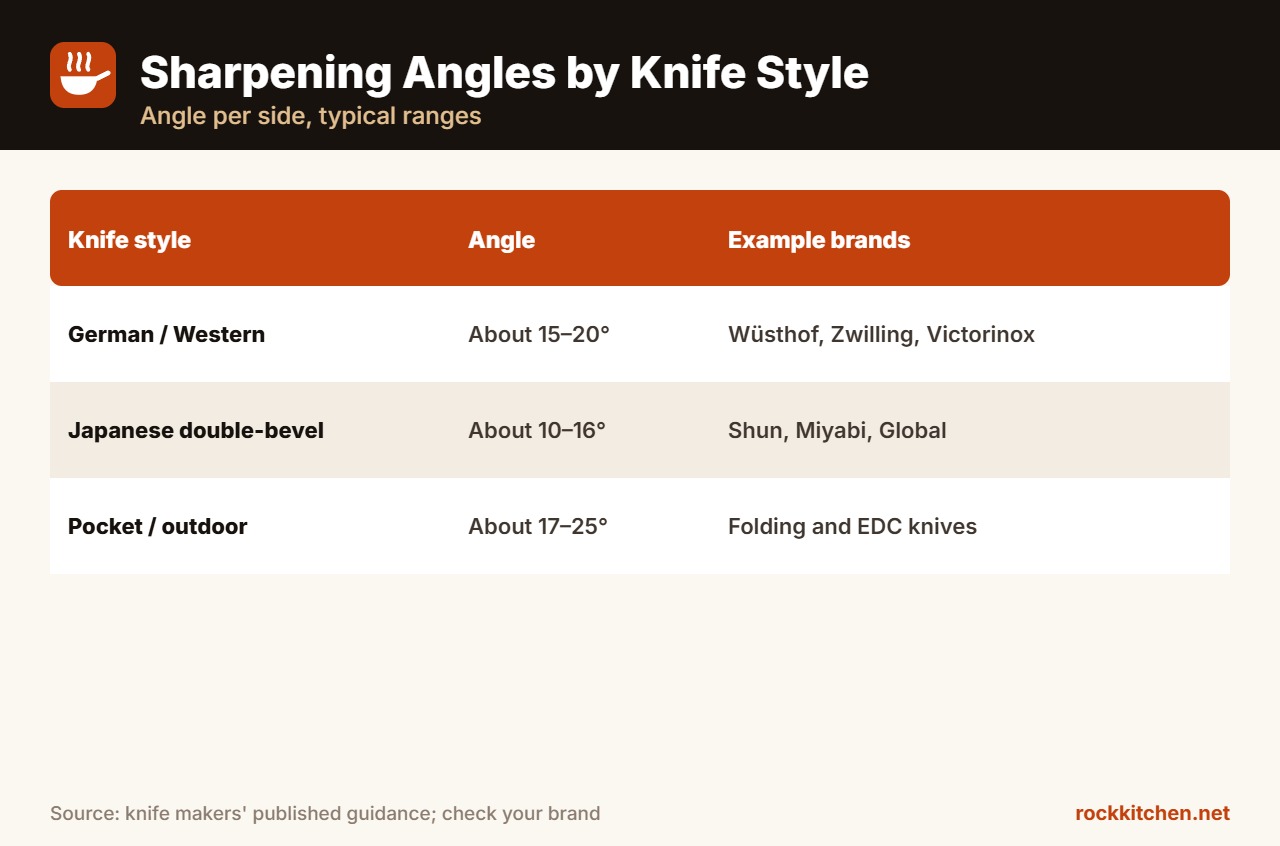
Angle
About 15–20° for Western chef knives, 12–16° for Japanese gyuto.
The Tip
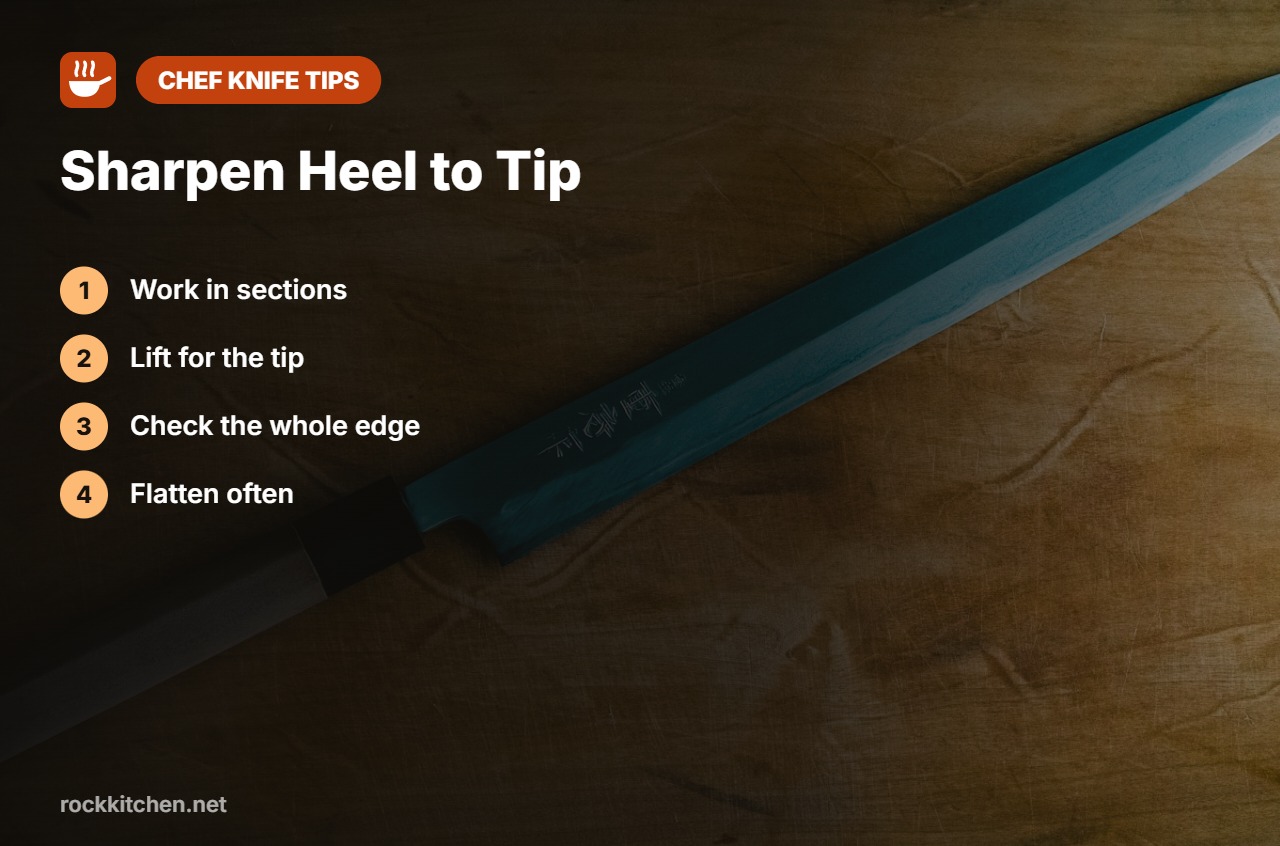
Lift the handle slightly as you reach the tip to follow the curve.
Tips for Sharpening on a Whetstone
- Soak soaking stones until bubbles stop; splash-and-go stones only need a spray of water.
- Hold a steady angle and count strokes per side so both bevels stay even.
- Raise a small burr along the whole edge before moving to the next grit.
- Flatten stones every few sessions with a lapping plate or coarse diamond plate.
- Rinse and dry the knife after sharpening, then let stones air-dry before storing.
Quick answers to common questions.
Frequently Asked Questions
What is the best whetstone for a chef knife?
The Shapton Kuromaku #1000 is our top pick.
Can a short stone sharpen a chef knife?
Yes, by working in sections, but a long stone is easier.
What angle for a chef knife?
About 15–20° for German, 12–16° for Japanese knives.
Do I need a finishing stone?
It helps, especially for Japanese gyuto.
Final Verdict
Our pick for the best whetstone for chef knife sharpening is the Shapton Kuromaku #1000. Choose the King KW65 for value.
Related Guides
Keep sharpening smarter with these guides:
Prices and availability change often. Check the current listing on Amazon before you buy.