
As an Amazon Associate we earn from qualifying purchases. Learn more about our affiliate disclaimer.
The best knife sharpener for Japanese knives works at a low angle, about 15° or less, and removes metal gently. Japanese blades are hard and thin, so aggressive carbide slots can chip them; water stones, ceramic wheels and 15° diamond sharpeners are safer.
We compared six sharpeners and stones on Amazon US by angle, abrasive and reviews.
Quick Answer: The Best Knife Sharpener for Japanese Knives
- Best OverallShapton Kuromaku #1000 (K0702, Orange)
- Best BudgetKai Seki Magoroku Diamond and Ceramic Sharpener (AP-0308)
- Best Gentle WheelMinoSharp 3 Sharpener, Black/Red
- Best ElectricChef’sChoice 15XV EdgeSelect Professional Electric Knife Sharpener, 100% Diamond Abrasives
- Best HoningShun Classic 9 Inch Combination Honing Steel, Built-In Angle Guide
- Best Rod SharpenerZWILLING V-Edge Knife Sharpener, Adjustable Angle
Shapton’s Kuromaku #1000 is our top pick for the best edge on hard steel. Kai’s Seki Magoroku is the best budget sharpener from a Japanese brand, MinoSharp 3 is a gentle water-wheel option, Chef’sChoice’s 15XV is the best electric, Shun’s Classic steel hones with a built-in guide and Zwilling’s V-Edge uses gentle ceramic rods.
Best Knife Sharpener for Japanese Knives Comparison Table
| Product | Best For | Type | Key Feature | Buy |
|---|---|---|---|---|
| Shapton Kuromaku 1000 | Best Overall | Ceramic whetstone | #1000 medium, 210 x 70 x 15 mm | Check Price |
| Kai Seki Magoroku | Best Budget | Manual sharpener | Diamond and ceramic wheels, Japanese brand | Check Price |
| MinoSharp 3 | Best Gentle Wheel | Water wheel sharpener | Three ceramic wheels, water bath | Check Price |
| Chef’sChoice 15XV | Best Electric | Electric knife sharpener | 3 stages, converts edges to 15° | Check Price |
| Shun Classic 9" Honing Steel | Best Honing | Steel honing rod | Smooth and micro-ribbed sides, 16° guide | Check Price |
| Zwilling V-Edge | Best Rod Sharpener | Manual rod sharpener | Ceramic rods at set angles | Check Price |
The 6 Best Knife Sharpeners for Japanese Knives
Ranked by edge quality and gentleness.

1. Shapton Kuromaku #1000 (K0702, Orange)
1. Hard ceramic stone.
👍 Pros & Cons
Pros
- Cuts fast enough to double as a coarse stone
- Case doubles as a stone holder
- Hugely popular first stone
Cons
- Single grit only
- Thin compared with soaking stones
📄 Detailed Review
- Grit: #1000 (medium)
- Size: 210 x 70 x 15 mm
- Item: K0702
- Use: Rough or medium sharpening
Shapton describes the orange K0702 as a #1000 medium stone with enough bite to be used for rough or medium sharpening.
It is one of the most recommended first whetstones for kitchen knives because it cuts quickly and stays relatively flat.

2. Kai Seki Magoroku Diamond and Ceramic Sharpener (AP-0308)
2. 15,000 ratings.
👍 Pros & Cons
Pros
- About 15,000 ratings, 4.4 average
- Japanese brand
- Cheap
Cons
- Not for single-bevel knives
- Small
📄 Detailed Review
- Abrasives: Diamond, ceramic
- Brand: Kai (Japan)
- Use: Japanese double-bevel knives
A cheap, well-reviewed sharpener from Japan’s Kai.
Best budget for Japanese knives.

3. MinoSharp 3 Sharpener, Black/Red
3. Ceramic.
👍 Pros & Cons
Pros
- About 650 ratings, 4.6 average
- Gentle ceramic
- Designed for Global knives
Cons
- Slower than electric
- Needs water
📄 Detailed Review
- Wheels: 3 ceramic
- Use: Japanese knives
- Brand: MinoSharp (Global)
A gentle water-wheel sharpener made for Japanese blades.
Best gentle option for Japanese knives.

4. Chef’sChoice 15XV EdgeSelect Professional Electric Knife Sharpener, 100% Diamond Abrasives
4. 15°.
👍 Pros & Cons
Pros
- About 14,400 ratings, 4.6 average
- Very sharp results fast
- Handles German and Japanese knives
Cons
- Expensive
- Removes more metal than stones
📄 Detailed Review
- Stages: 3
- Angle: 15° (maker)
- Abrasives: Diamond and stropping
The most popular premium electric sharpener on Amazon.
Our top electric pick.

5. Shun Classic 9 Inch Combination Honing Steel, Built-In Angle Guide
5. 16° guide.
👍 Pros & Cons
Pros
- About 1,200 ratings, 4.7 average
- Made for Japanese edges
- Angle guide
Cons
- Pricier
- Best with Shun’s 16° angle
📄 Detailed Review
- Length: 9 in.
- Surfaces: Smooth and micro-ribbed
- Guide: Built-in 16° angle guide
Shun’s honing steel with a built-in angle guide for Japanese knives.
Best steel for Japanese knives.

6. ZWILLING V-Edge Knife Sharpener, Adjustable Angle
6. Ceramic rods.
👍 Pros & Cons
Pros
- About 2,500 ratings, 4.3 average
- Ceramic is gentle
- Adjustable angle
Cons
- Pricey
- Slower than pull-throughs
📄 Detailed Review
- Angle: Adjustable
- Abrasives: Ceramic rods
- Use: German and Japanese
A rod-style manual sharpener with adjustable angles.
Best gentle manual.
How We Chose the Best Knife Sharpener for Japanese Knives
To build this guide to the best knife sharpener for japanese knives, we compared knife sharpeners sold on Amazon US, including electric, manual, pull-through, guided and honing-rod designs, by abrasive type, angle options, stages, build quality and price. We then read patterns in verified-buyer reviews for edge quality, metal removal, ease of use, durability and how each sharpener handles Western, Japanese and serrated knives.
Clean blades after sharpening to remove metal dust before they touch food, following USDA Food Safety and Inspection Service cleanliness guidance. Our method is explained on the How We Test page; this is a research-based guide, not a lab test.
Buying Guide: Sharpeners for Japanese Knives
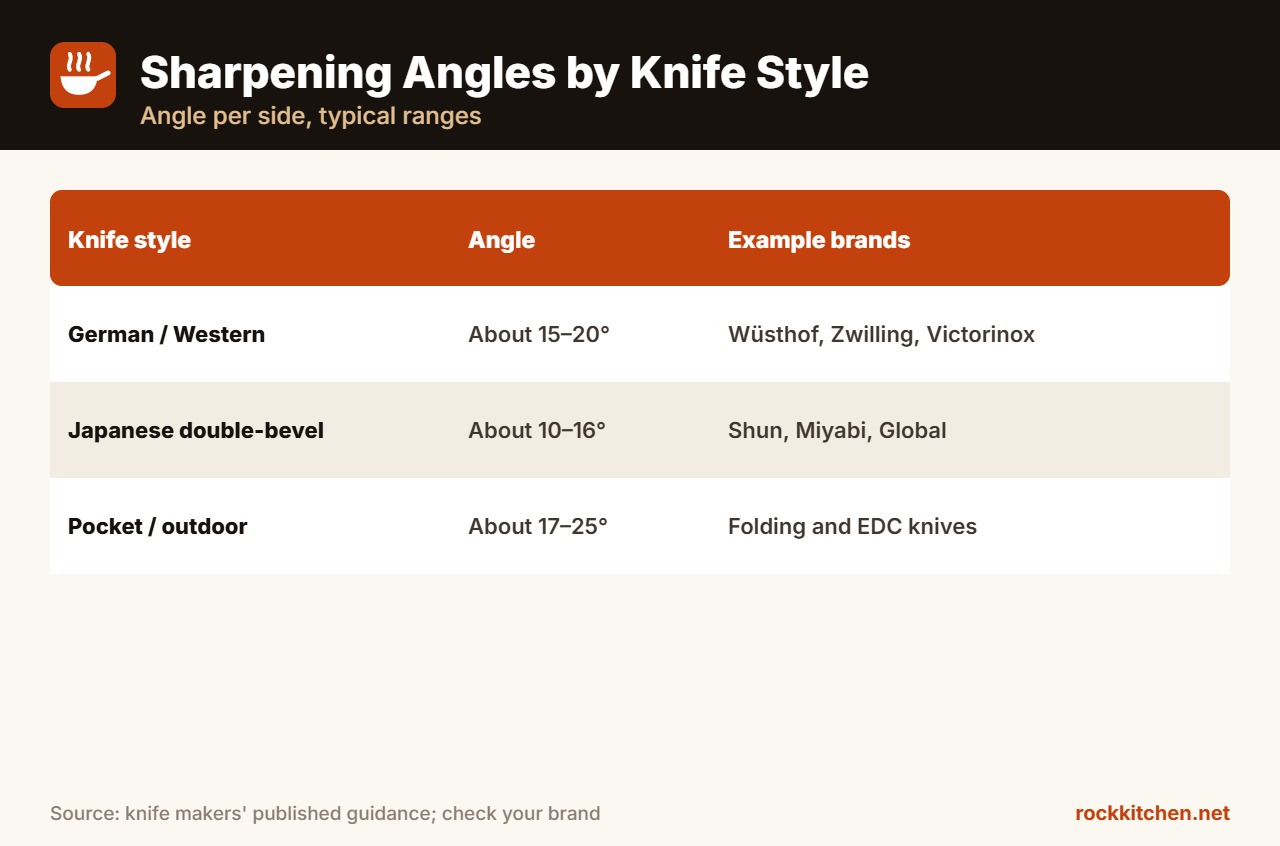
Angle
About 10–16° per side.
Abrasive
Ceramic and diamond suit hard steel.
Avoid
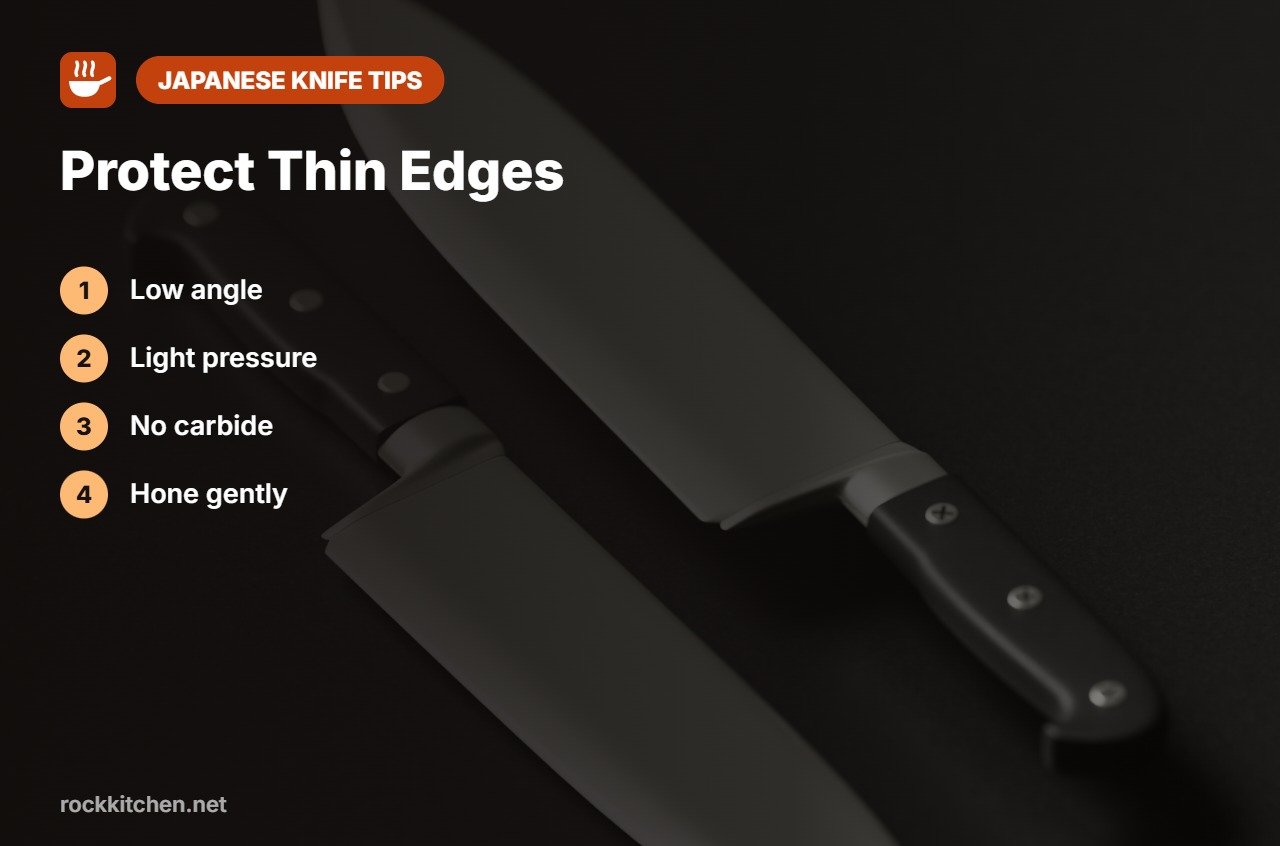
Carbide pull-throughs can chip edges.
Single Bevel
Single-bevel knives need stones.
Honing
Use ceramic or fine steel, gently.
Tips for Using a Knife Sharpener
- Clean the blade before and after sharpening.
- Use light, even pressure; let the abrasive work.
- Hone often so you sharpen less.
- Match the sharpener angle to your knife.
- Keep fingers behind the edge at all times.
Quick answers to common questions about the best knife sharpener for japanese knives.
Frequently Asked Questions
What is the best knife sharpener for Japanese knives?
A water stone like Shapton’s #1000.
Can I use an electric sharpener on Japanese knives?
Yes, at 15° and with light passes.
Are pull-through sharpeners safe for Japanese knives?
Avoid carbide; ceramic or diamond 15° slots are safer.
What about single-bevel knives?
Sharpen them on stones only.
Final Verdict
Our pick for the best knife sharpener for Japanese knives is the Shapton Kuromaku #1000. On a budget, choose the Kai Seki Magoroku.
Related Guides
Keep sharpening smarter with these guides:
Prices and availability change often. Check the current listing on Amazon before you buy.