
As an Amazon Associate we earn from qualifying purchases. Learn more about our affiliate disclaimer.
The best whetstone for Zwilling knives depends on the line: Zwilling Pro and Four Star use German stainless steel, while Kramer, Miyabi and Zwilling’s Japanese-made lines use harder steels. The Zwilling group sells Miyabi Toishi stones made in Japan, and Japanese specialist stones also work well.
We compared six stones on Amazon for Zwilling knives.
Quick Answer: The Best Whetstone for Zwilling
- Best Group StoneMIYABI Toishi Pro #1000 Medium Whetstone, Made in Japan (34536-002)
- Best ValueKING KW65 1000/6000 Combination Whetstone
- Fastest #1000Shapton Kuromaku #1000 (K0702, Orange)
- Best RepairMIYABI Toishi Pro #400 Rough Whetstone, Made in Japan (34536-001)
- Best FinisherMIYABI Toishi Pro #5000 Super Finishing Whetstone, Made in Japan (34536-005)
- Luxury FinisherKRAMER by ZWILLING 10000 Grit Glass Water Sharpening Stone (34999-043)
The Miyabi Toishi Pro #1000 is our top group-made stone for Zwilling knives. The King KW65 is the best value, and the Kramer by Zwilling #10000 glass stone is a luxury finisher.
Best Whetstone for Zwilling Comparison Table
| Product | Best For | Type | Key Feature | Buy |
|---|---|---|---|---|
| Miyabi #1000 | Best Group Stone | Ceramic whetstone | #1000, 210 x 70 x 25 mm | Check Price |
| King KW65 | Best Value | Combination soaking stone | 1000/6000 with plastic base, 8 x 2.5 x 1 in. | Check Price |
| Shapton Kuromaku 1000 | Fastest #1000 | Ceramic whetstone | #1000 medium, 210 x 70 x 15 mm | Check Price |
| Miyabi #400 | Best Repair | Ceramic whetstone | #400 coarse, 210 x 70 x 25 mm | Check Price |
| Miyabi #5000 | Best Finisher | Ceramic finishing stone | #5000, 210 x 70 x 25 mm | Check Price |
| Kramer #10000 Glass Stone | Luxury Finisher | Glass-backed finishing stone | #10000 ultra-fine finishing | Check Price |
The 6 Best Whetstones for Zwilling Knives
Chosen for Zwilling’s German and Japanese-made lines.

1. MIYABI Toishi Pro #1000 Medium Whetstone, Made in Japan (34536-002)
1. Miyabi Toishi Pro #1000.
👍 Pros & Cons
Pros
- About 120 ratings
- Full-size 25 mm stone
- Made in Japan
Cons
- Imported via Amazon.co.jp
- Single grit
📄 Detailed Review
- Grit: #1000 medium
- Size: 210 x 70 x 25 mm
- Material: Artificial ceramic
- Maker: Zwilling J.A. Henckels (Miyabi)
Miyabi’s Toishi Pro #1000 is the Zwilling group’s own Japanese-made sharpening stone.
It is a full-size 210 x 70 x 25 mm stone suited to Miyabi and Zwilling knives.

2. KING KW65 1000/6000 Combination Whetstone
2. 1000/6000.
👍 Pros & Cons
Pros
- Classic, affordable two-grit stone
- Covers sharpening and finishing
- Includes a base
Cons
- Needs soaking before use
- Softer stone; flatten regularly
📄 Detailed Review
- Grits: #1000 / #6000
- Size: 8 x 2.5 x 1 in.
- Base: Plastic
- Brand: King (Japan)
The KW65 is King’s best-known combination stone: #1000 on one side, #6000 on the other, 8 x 2.5 x 1 inches, with a plastic base.
It has introduced generations of cooks to whetstones because it is affordable and covers the two most important grits.

3. Shapton Kuromaku #1000 (K0702, Orange)
3. Hard, splash-and-go.
👍 Pros & Cons
Pros
- Cuts fast enough to double as a coarse stone
- Case doubles as a stone holder
- Hugely popular first stone
Cons
- Single grit only
- Thin compared with soaking stones
📄 Detailed Review
- Grit: #1000 (medium)
- Size: 210 x 70 x 15 mm
- Item: K0702
- Use: Rough or medium sharpening
Shapton describes the orange K0702 as a #1000 medium stone with enough bite to be used for rough or medium sharpening.
It is one of the most recommended first whetstones for kitchen knives because it cuts quickly and stays relatively flat.

4. MIYABI Toishi Pro #400 Rough Whetstone, Made in Japan (34536-001)
4. Miyabi #400.
👍 Pros & Cons
Pros
- 4.7 average (65 ratings)
- Restores neglected edges
- Full-size stone
Cons
- Too coarse for routine sharpening
- Imported listing
📄 Detailed Review
- Grit: #400 rough
- Size: 210 x 70 x 25 mm
- Material: Artificial ceramic
- Use: Very dull or damaged edges
The #400 Toishi Pro is the coarse stone in Miyabi’s range, for edges that a #1000 cannot fix quickly.
Follow it with a #1000 and a finishing stone.

5. MIYABI Toishi Pro #5000 Super Finishing Whetstone, Made in Japan (34536-005)
5. Miyabi #5000.
👍 Pros & Cons
Pros
- Polishes Miyabi’s hard steels
- Full-size stone
- Made in Japan
Cons
- Expensive
- Only 38 ratings
📄 Detailed Review
- Grit: #5000 super finishing
- Size: 210 x 70 x 25 mm
- Material: Artificial ceramic
- Maker: Zwilling J.A. Henckels (Miyabi)
Miyabi’s #5000 finishing stone polishes the thin edge of its hard-steel knives after a #1000.
It is a premium choice if you want to stay within the brand.

6. KRAMER by ZWILLING 10000 Grit Glass Water Sharpening Stone (34999-043)
6. Kramer #10000 glass stone.
👍 Pros & Cons
Pros
- Mirror-polish finish
- Glass backing stays flat
- Matches Kramer and Zwilling knives
Cons
- Very expensive
- Only 8 ratings
📄 Detailed Review
- Grit: #10000
- Type: Glass-backed water stone
- Brand: Kramer by Zwilling
- Size: 7.5 x 2.5 in.
This Kramer by Zwilling #10000 glass stone is an ultra-fine finisher for cooks who want a mirror edge.
It is a luxury, not a necessity, for most home kitchens.
How We Chose the Best Whetstone for Zwilling
To build this guide, we compared whetstones sold on Amazon US by grit, abrasive type (ceramic, diamond or natural stone), size, thickness, soaking needs, base and accessories. We then read patterns in verified-buyer reviews for cutting speed, dishing, flatness, ease of use and how well each stone suits the knives in question, and we noted when ratings are shared across variants or when the evidence is thin.
Most synthetic whetstones use aluminum oxide or silicon carbide abrasives, while diamond plates use industrial diamond, a material tracked by the U.S. Geological Survey industrial diamond data. Wash knives after sharpening to remove metal swarf before they touch food, following USDA Food Safety and Inspection Service cleanliness guidance. Our method is explained on the How We Test page; this is a research-based guide, not a lab test.
Buying Guide: Sharpening Zwilling Knives
Know Your Line
German Zwilling lines are softer; Kramer and Japanese-made lines are harder.
Angle
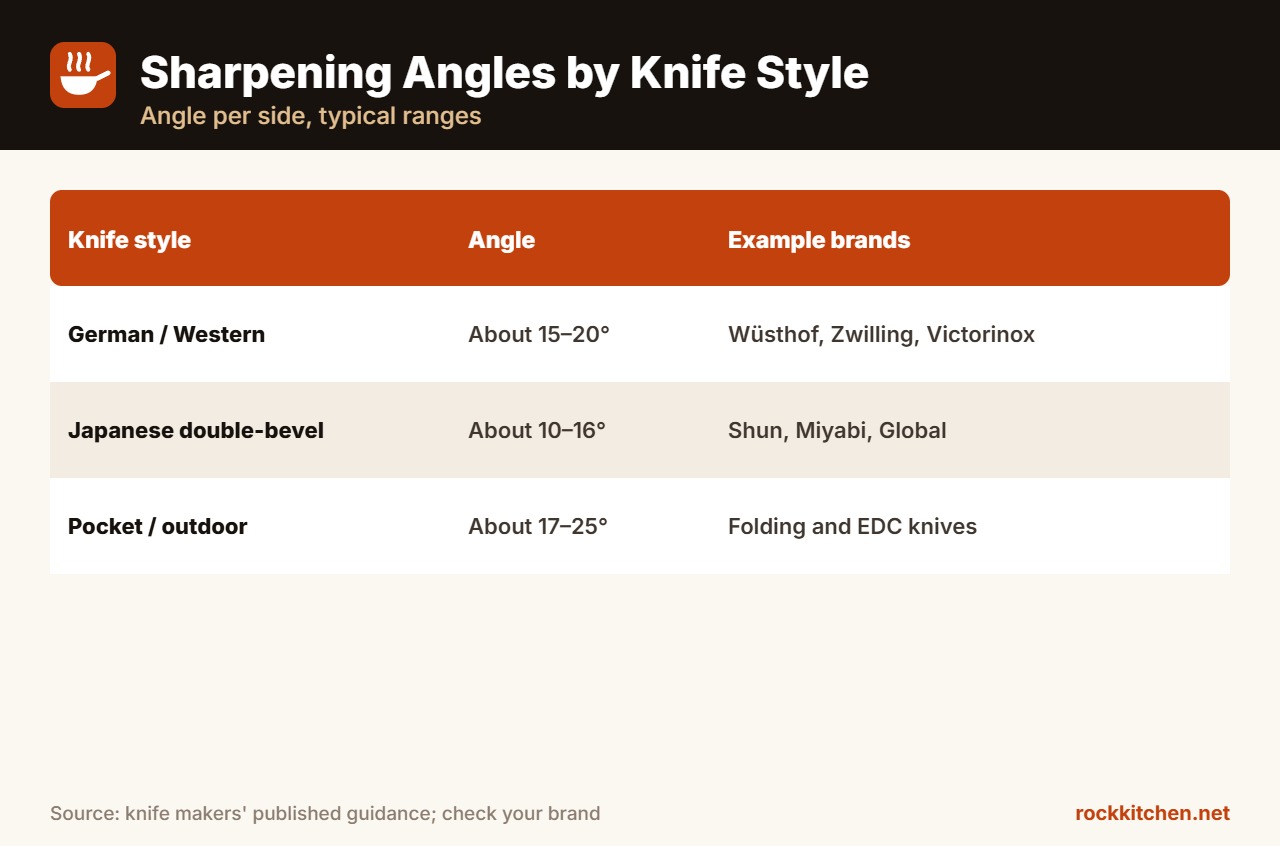
Zwilling generally recommends about 15° per side for its German knives; check your line.
Grits
#1000 to sharpen and #3000–#6000 to finish.
Hard Lines
Use hard stones and light pressure on Kramer and Miyabi blades.
Group Stones
Miyabi Toishi stones are sold by the Zwilling group.
Tips for Sharpening on a Whetstone
- Soak soaking stones until bubbles stop; splash-and-go stones only need a spray of water.
- Hold a steady angle and count strokes per side so both bevels stay even.
- Raise a small burr along the whole edge before moving to the next grit.
- Flatten stones every few sessions with a lapping plate or coarse diamond plate.
- Rinse and dry the knife after sharpening, then let stones air-dry before storing.
Quick answers to common questions.
Frequently Asked Questions
What is the best whetstone for Zwilling?
The Miyabi Toishi Pro #1000 or the King KW65.
Is Miyabi part of Zwilling?
Yes, Miyabi belongs to the Zwilling J.A. Henckels group.
What angle for Zwilling knives?
About 15° per side for many German lines.
Is a #10000 stone necessary?
No; it is a luxury finisher.
Final Verdict
Our pick for the best whetstone for Zwilling is the Miyabi Toishi Pro #1000. Choose the King KW65 for value.
Related Guides
Keep sharpening smarter with these guides:
Prices and availability change often. Check the current listing on Amazon before you buy.