

As an Amazon Associate we earn from qualifying purchases. Learn more about our affiliate disclaimer.
The best whetstone for yanagiba knives keeps a long, thin single-bevel slicer razor sharp for clean sushi and sashimi cuts. Yanagibas rarely need coarse stones; the key stones are a flat 1000 for the bevel and fine finishing stones from 5000 to 8000 or higher.
Below are the stones we would use for a yanagiba.
Quick Answer: The Best Whetstone for Yanagiba
- Best 1000 for YanagibaNaniwa #1000 Super Ceramic Water Stone with Base
- Best Finishing StoneKitayama #8000 Fine Grain Finishing Stone
- Best Mid FinisherSuehiro Rika #5000 Finishing Stone (No Base)
- Best Budget ComboKing KDS 1000/6000 Grit Double-Sided Whetstone
- Best Mirror PolishNaniwa Kagayaki #12000 Professional Whetstone
- Best Flattening PlateSHARPAL 145H 10 x 4 in. Diamond Lapping Plate
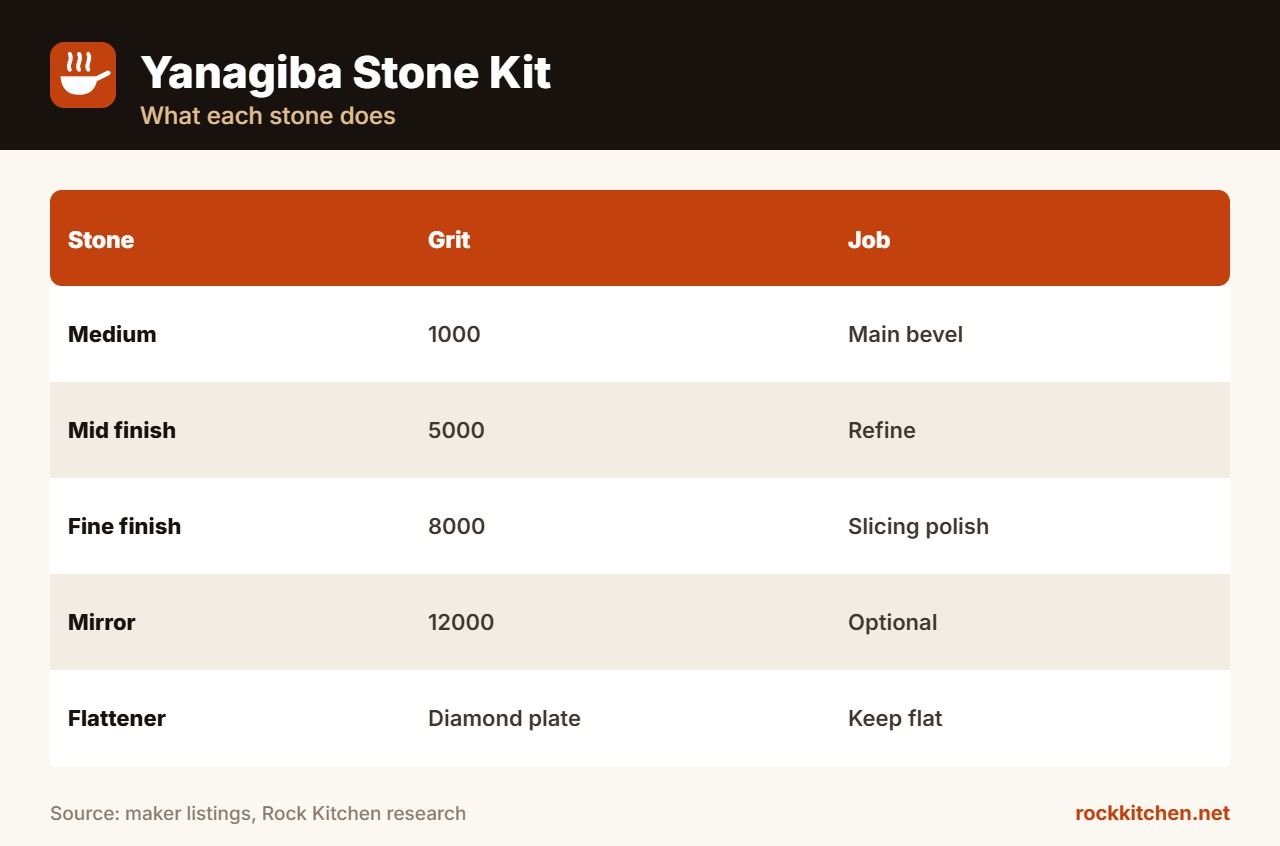
Pair a Naniwa 1000 for the main bevel with a Suehiro Rika 5000 or Kitayama 8000 to finish. Use a flattening plate often, because the long bevel shows any dip in the stone.
Best Whetstone for Yanagiba Comparison Table
| Product | Best For | Type | Key Feature | Buy |
|---|---|---|---|---|
| Naniwa #1000 | Best 1000 for Yanagiba | Ceramic whetstone | #1000 medium, 210 x 70 x 25 mm | Check Price |
| Kitayama 8000 | Best Finishing Stone | Finishing stone | #8000 fine grain | Check Price |
| Suehiro Rika 5000 | Best Mid Finisher | Finishing stone | #5000 ceramic, 900 g | Check Price |
| King KDS 1000/6000 | Best Budget Combo | Combination water stone | Harder King combination stone, soak before use | Check Price |
| Naniwa Kagayaki 12000 | Best Mirror Polish | Ceramic finishing stone | #12000 super fine with storage case | Check Price |
| SHARPAL 145H | Best Flattening Plate | Diamond lapping plate | 220 grit (60 µm), flat to ±0.002 in. | Check Price |
The 6 Best Whetstones for a Yanagiba
Medium, finishing and flattening stones.

1. Naniwa #1000 Super Ceramic Water Stone with Base
1. Naniwa.
👍 Pros & Cons
Pros
- The core grit of any whetstone kit
- Comes with a base and dressing stone
- Generous 25 mm thickness
Cons
- Single grit; budget for a finishing stone
- Higher price than combination stones
📄 Detailed Review
- Grit: #1000 (medium grinding)
- Size: 210 x 70 x 25 mm
- Includes: Base + 65 x 47 x 32 mm dressing stone
- Origin: Japan import
This Naniwa #1000 is a medium grinding stone in the same 210 x 70 x 25 mm format as the SS series, supplied with a base and dressing stone.
A #1000 is where most kitchen sharpening happens, so this is the Naniwa stone to buy first.

2. Kitayama #8000 Fine Grain Finishing Stone
2. Kitayama 8000.
👍 Pros & Cons
Pros
- Well-known #8000 polish
- Smooth, fine finish
Cons
- Few details in the listing
📄 Detailed Review
- Grit: #8000
- Brand: Kitayama
- Use: Final polishing
The Kitayama #8000 is a long-standing favorite for a fine, polished finish.
It works after a #1000–#3000 stone.

3. Suehiro Rika #5000 Finishing Stone (No Base)
3. Rika 5000.
👍 Pros & Cons
Pros
- Cult-favorite finishing stone
- Large and heavy
- Leaves a refined, polished edge
Cons
- Soaking type
📄 Detailed Review
- Grit: #5000
- Material: Ceramic
- Weight: 900 g
- Note: Current version has no surface markings
The Rika #5000 is one of the best-known Japanese finishing stones. This version has no base and weighs 900 g.
It gives a hazy-polished bevel and a very keen edge.

4. King KDS 1000/6000 Grit Double-Sided Whetstone
4. King KDS.
👍 Pros & Cons
Pros
- Harder than the classic KW65 stone
- Two useful grits in one block
- Long-trusted Japanese brand
Cons
- Needs soaking before use
- Needs flattening over time
📄 Detailed Review
- Grits: 1000 and 6000 (listing)
- Type: Soaking water stone
- Base: Plastic stand (listing)
King’s firmer combo stone.
The reviewed stone.

5. Naniwa Kagayaki #12000 Professional Whetstone
5. 12000.
👍 Pros & Cons
Pros
- Mirror-level polish
- Storage case protects the stone
- Listed for long-lasting cutting edges
Cons
- Thin 10 mm stone
- Benefit is small for everyday cooks
📄 Detailed Review
- Grit: #12000
- Size: 210 x 70 x 10 mm (8.3 x 2.8 x 0.4 in.)
- Includes: Storage case
- Use: Super fine sharpening and polishing
Kagayaki is Naniwa’s #12000 super-finishing stone, listed for super fine sharpening and a final polish that gives the edge shine.
It is a luxury step for sushi knives, single-bevel blades and anyone chasing a mirror finish.
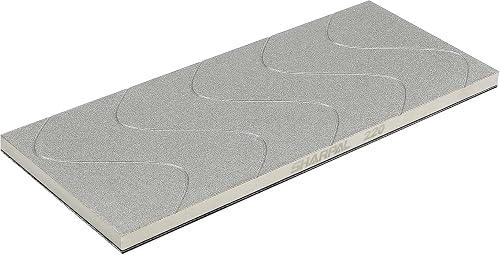
6. SHARPAL 145H 10 x 4 in. Diamond Lapping Plate
6. Diamond plate.
👍 Pros & Cons
Pros
- Stated flatness tolerance of ±0.002 in.
- Large surface flattens big stones
- Cheaper than most premium lapping plates
Cons
- Single grit only
- Not intended as a knife-sharpening surface
📄 Detailed Review
- Grit: Extra coarse 220 (60 µm)
- Size: 10 x 4 in.
- Flatness: ±0.002 in. (0.05 mm)
- Use: Flattening natural and synthetic stones
SHARPAL’s 145H is a dedicated flattener: a 10 by 4 inch plate with 220 grit (60 micron) monocrystalline diamond, precision ground to ±0.002 inch.
SHARPAL says the surface is 60% larger than standard plates, which helps when you flatten wide or long stones.
How We Chose the Best Whetstone for Yanagiba
For this best whetstone for yanagiba guide, we compared whetstones, diamond plates, oil stones and knife sharpeners listed on Amazon US by abrasive type, grit, size, hardness, angle control, speed and price, using product details from the listings and makers rather than a hands-on lab test. We then looked at common praise and complaints in buyer feedback for edge quality, wear, dishing, mess and learning curve. Prices and listings change often, so check the current listing before you buy.
Keep fingers behind the edge, sharpen on a stable non-slip base, keep metal swarf away from food, and wash knives before they touch food again, and follow USDA Food Safety and Inspection Service cleanliness guidance for kitchen hygiene. Our method is explained on the How We Test page.
How to Choose a Whetstone for Yanagiba
Long bevel
Use a wide, flat 1000 stone and work the blade in sections.
Finishing
5000 to 8000 grit gives a smooth slicing edge for fish.
Back care
Polish the flat back lightly on the finishing stone.
Flatness
Long blades need very flat stones; lap often.
Avoid
Pull-through and electric sharpeners damage single-bevel edges.
Tips for Safer, Sharper Edges
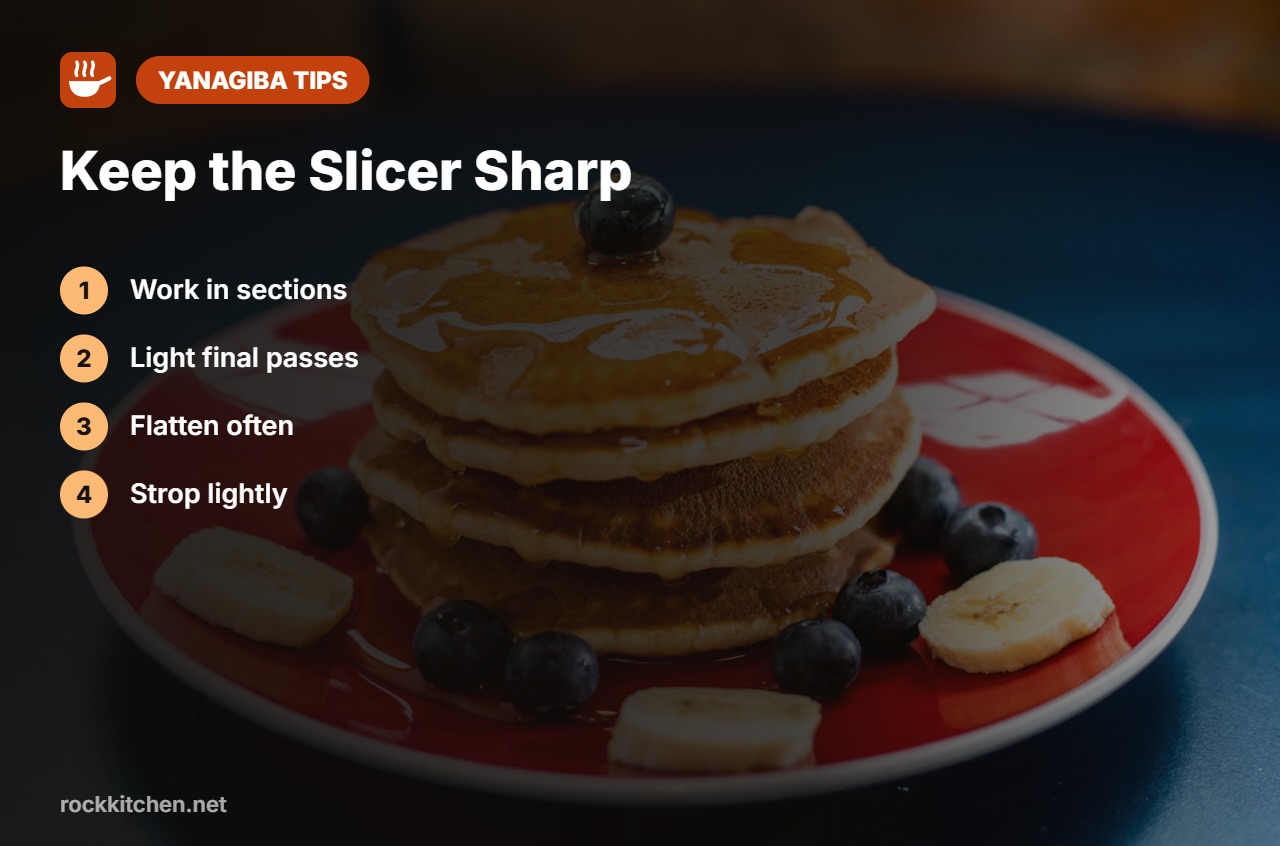
- Hold a steady angle; consistency matters more than the exact number.
- Raise a small burr along the full edge before moving to a finer grit.
- Use light pressure on finishing grits.
- Flatten water stones often so they do not dish.
- Rinse and dry knives, then wipe stones clean after use.
Quick answers to common questions about best whetstone for yanagiba.
Frequently Asked Questions
What grit for a yanagiba?
1000 to sharpen, then 5000 to 8000 to finish.
Do I need a coarse stone?
Only for chips or major repairs.
How often should I sharpen?
Touch up on the finishing stone often; go to 1000 when it stops cutting cleanly.
What is the best whetstone for yanagiba beginners?
A Naniwa 1000 plus a Kitayama 8000.
Final Verdict
The best whetstone for yanagiba knives is a pair: the Naniwa 1000 for the bevel and the Kitayama 8000 to finish.
Related Guides
Keep exploring knives and sharpening with these guides:
Prices and availability change often. Check the current listing on Amazon before you buy.