
As an Amazon Associate we earn from qualifying purchases. Learn more about our affiliate disclaimer.
There is no single answer to the best Japanese whetstone brand, because each maker is known for a different strength. Shapton is famous for fast, splash-and-go ceramic stones, Naniwa for its Chosera/Professional line, King for affordable classics, and Suehiro for soaking stones with a satisfying feel.
This guide compares six trusted Japanese makers through one representative stone each, so you can see how they differ in grit, size, soaking needs and value. We also explain how to choose a brand for the knives you own and the way you like to sharpen.
Quick Answer: The Best Japanese Whetstone Brand
- Best Overall Brand: ShaptonShapton Kuromaku #1000 (K0702, Orange)
- Best Premium: NaniwaNaniwa #1000 Super Ceramic Water Stone with Base
- Best Value: KingKING KW65 1000/6000 Combination Whetstone
- Best Soaking Feel: SuehiroSuehiro Cerax 1010 #1000 Stone
- Best Wide Stone: YoshihiroYoshihiro Toishi #3000 Whetstone
- Best Finisher: KitayamaKitayama #8000 Fine Grain Finishing Stone
For most home cooks, Shapton is the best Japanese whetstone brand to start with because the Kuromaku #1000 is fast, consistent and ready without soaking. King offers the best value, and Naniwa is the pick if you want a premium mounted stone.
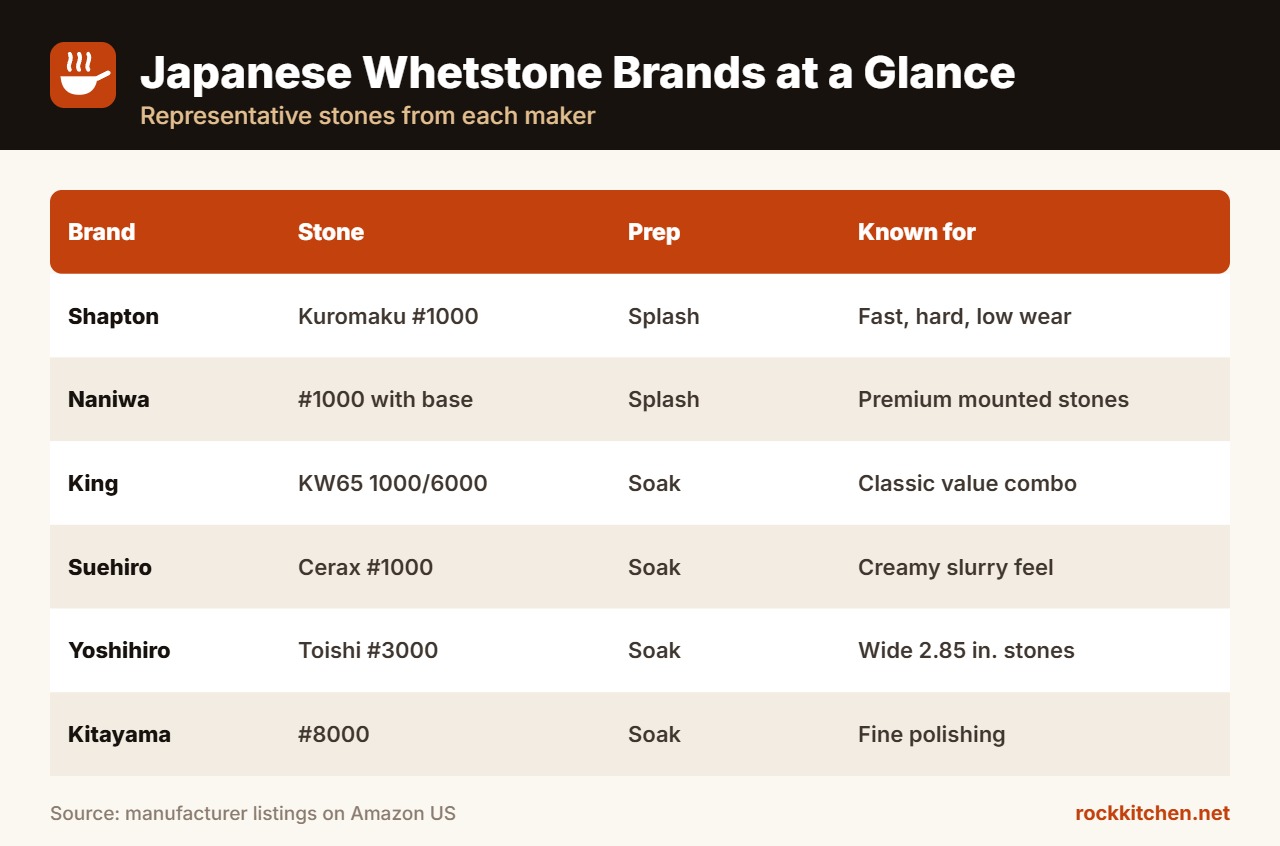
Best Japanese Whetstone Brand Comparison Table
| Product | Best For | Type | Key Feature | Buy |
|---|---|---|---|---|
| Shapton Kuromaku 1000 | Best Overall Brand: Shapton | Ceramic whetstone | #1000 medium, 210 x 70 x 15 mm | Check Price |
| Naniwa #1000 | Best Premium: Naniwa | Ceramic whetstone | #1000 medium, 210 x 70 x 25 mm | Check Price |
| King KW65 | Best Value: King | Combination soaking stone | 1000/6000 with plastic base, 8 x 2.5 x 1 in. | Check Price |
| Suehiro Cerax 1000 | Best Soaking Feel: Suehiro | Soaking stone | #1000 medium, immersion type | Check Price |
| Yoshihiro 3000 | Best Wide Stone: Yoshihiro | Soaking stone | #3000, 8 x 2.85 x 0.9 in. | Check Price |
| Kitayama 8000 | Best Finisher: Kitayama | Finishing stone | #8000 fine grain | Check Price |
The 6 Best Japanese Whetstone Brands (and the Stone to Buy From Each)
We picked the most representative stone from each maker, so you can judge the best Japanese whetstone brand by a stone you would actually buy.

1. Shapton Kuromaku #1000 (K0702, Orange)
1. Shapton’s orange #1000 shows why many sharpeners call Shapton the best Japanese whetstone brand: it cuts fast, stays flat and only needs a splash of water.
👍 Pros & Cons
Pros
- Cuts fast enough to double as a coarse stone
- Case doubles as a stone holder
- Hugely popular first stone
Cons
- Single grit only
- Thin compared with soaking stones
📄 Detailed Review
- Grit: #1000 (medium)
- Size: 210 x 70 x 15 mm
- Item: K0702
- Use: Rough or medium sharpening
Shapton describes the orange K0702 as a #1000 medium stone with enough bite to be used for rough or medium sharpening.
It is one of the most recommended first whetstones for kitchen knives because it cuts quickly and stays relatively flat.

2. Naniwa #1000 Super Ceramic Water Stone with Base
2. A thick 210 x 70 x 25 mm Naniwa #1000 supplied with a base and dressing stone, a premium setup that will last for years.
👍 Pros & Cons
Pros
- The core grit of any whetstone kit
- Comes with a base and dressing stone
- Generous 25 mm thickness
Cons
- Single grit; budget for a finishing stone
- Higher price than combination stones
📄 Detailed Review
- Grit: #1000 (medium grinding)
- Size: 210 x 70 x 25 mm
- Includes: Base + 65 x 47 x 32 mm dressing stone
- Origin: Japan import
This Naniwa #1000 is a medium grinding stone in the same 210 x 70 x 25 mm format as the SS series, supplied with a base and dressing stone.
A #1000 is where most kitchen sharpening happens, so this is the Naniwa stone to buy first.

3. KING KW65 1000/6000 Combination Whetstone
3. King’s classic 1000/6000 combination stone covers sharpening and finishing in one affordable block.
👍 Pros & Cons
Pros
- Classic, affordable two-grit stone
- Covers sharpening and finishing
- Includes a base
Cons
- Needs soaking before use
- Softer stone; flatten regularly
📄 Detailed Review
- Grits: #1000 / #6000
- Size: 8 x 2.5 x 1 in.
- Base: Plastic
- Brand: King (Japan)
The KW65 is King’s best-known combination stone: #1000 on one side, #6000 on the other, 8 x 2.5 x 1 inches, with a plastic base.
It has introduced generations of cooks to whetstones because it is affordable and covers the two most important grits.

4. Suehiro Cerax 1010 #1000 Stone
4. Suehiro’s Cerax #1000 is a durable soaking stone with the creamy, slurry-rich feel many traditional sharpeners prefer.
👍 Pros & Cons
Pros
- Well-loved #1000 with a smooth feel
- Durable
Cons
- Must be soaked
📄 Detailed Review
- Grit: #1000 medium
- Type: Immersion (soaking)
- Model: Cerax 1010
The Cerax 1010 is Suehiro’s #1000 medium soaking stone, known for durability.
It builds slurry easily, which many sharpeners enjoy.

5. Yoshihiro Toishi #3000 Whetstone
5. A made-in-Japan #3000 with a 2.85 in. surface that keeps long blades fully on the stone.
👍 Pros & Cons
Pros
- Wide 2.9 in. surface
- Made in Japan
Cons
- Higher price than mass-market #3000
📄 Detailed Review
- Grit: #3000
- Size: 8 x 2.85 x 0.9 in. (without base)
- Origin: Made in Japan
Yoshihiro’s professional-grade #3000 is 8 x 2.85 x 0.9 inches and made in Japan.
The extra width makes it easy to keep the whole edge on the stone.

6. Kitayama #8000 Fine Grain Finishing Stone
6. A long-time favorite #8000 for a fine, polished final edge after your medium stone.
👍 Pros & Cons
Pros
- Well-known #8000 polish
- Smooth, fine finish
Cons
- Few details in the listing
📄 Detailed Review
- Grit: #8000
- Brand: Kitayama
- Use: Final polishing
The Kitayama #8000 is a long-standing favorite for a fine, polished finish.
It works after a #1000–#3000 stone.
How We Chose the Best Japanese Whetstone Brand
To choose the best Japanese whetstone brand, we looked at each maker’s most popular stone on Amazon US and compared grit, dimensions, soaking requirements, accessories and the consistency of owner feedback over time. We favored makers whose listings state clear specifications and that sell a full range from coarse to finishing grits.
Whatever brand you choose, clean knives well after sharpening: metal swarf and slurry should be washed away before the blade touches food, in line with USDA Food Safety and Inspection Service cleanliness guidance. Our full approach is explained on our How We Test page.
Buying Guide: How to Choose the Best Japanese Whetstone Brand
Splash-and-Go or Soaking
Shapton stones are ready with a spray of water. King, Suehiro and Yoshihiro stones are usually soaked before use. If you sharpen in short sessions, splash-and-go saves time; if you enjoy the ritual, a soaking stone feels more traditional.
Hardness and Feel
Harder stones (Shapton, Naniwa Professional) cut fast and dish slowly. Softer stones (King, Suehiro Cerax) release slurry, feel forgiving and need flattening more often.
Grit Range
Choose a brand that sells the grits you need. A #1000 for sharpening plus a #3000–#6000 for finishing covers most kitchen knives; add a #320–#400 for repairs.
Size and Thickness
Thicker stones last longer. Naniwa’s 25 mm and King’s thick Deluxe stones offer years of use; 15 mm Kuromaku stones are lighter and easier to store.
Accessories
Bases, holders and dressing stones add value. Naniwa mounts many stones on bases; Shapton’s cases double as holders; King and Suehiro often include bases or nagura stones.
Tips for Building a Kit Across Brands
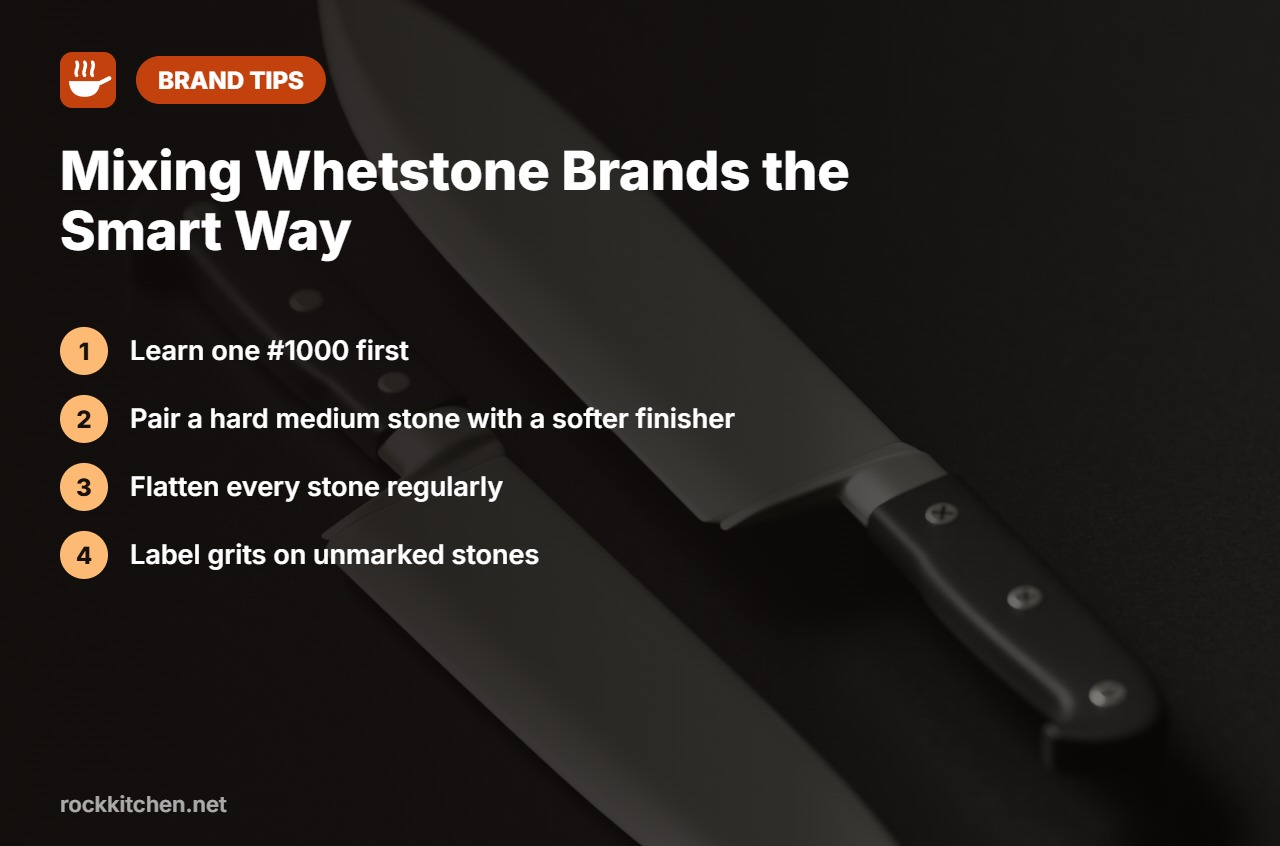
- Start with one brand’s #1000 and learn its feel before adding more stones.
- Mixing brands is fine: many cooks use a Shapton #1000 with a Suehiro or Kitayama finisher.
- Keep a flattening plate for whatever brand you choose.
- Store soaking stones dry and splash-and-go stones in their cases.
- Write the grit on the side of unmarked stones.
Here are quick answers about picking the best Japanese whetstone brand.
Frequently Asked Questions
Which is the best Japanese whetstone brand for beginners?
Shapton and King are the easiest starting points. The best Japanese whetstone brand for a beginner on a budget is King; for splash-and-go convenience, Shapton.
Are Naniwa and Chosera the same?
Chosera is a Naniwa product line. Many Chosera stones are now sold under Naniwa’s Professional (SS) name.
Do I need to soak Japanese whetstones?
It depends on the stone. Shapton Kuromaku and GlassStone are splash-and-go; King, Suehiro Cerax and many traditional stones are soaked first.
Is it fine to mix brands?
Yes. Grit numbers are close enough between Japanese makers that you can combine a medium stone from one brand with a finisher from another.
Final Verdict
Our final pick for the best Japanese whetstone brand is Shapton, starting with the Kuromaku #1000. Choose King for value, or Naniwa for a premium mounted stone.
Related Guides
Keep building your sharpening setup with these guides:
Prices and availability change often. Check the current listing on Amazon before you buy.